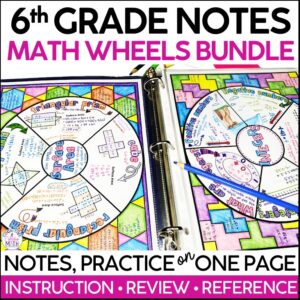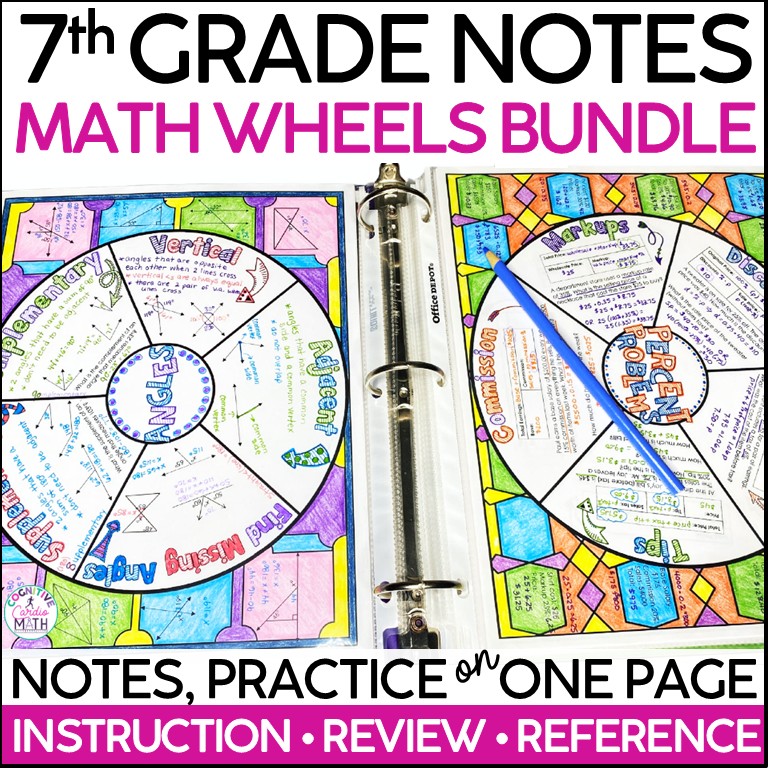
Teaching 2nd grade math is such a fun stage because your students are ready to move beyond simply finding the right answer. They’re beginning to explain their thinking, compare strategies, use new math vocabulary, and make connections between concepts. At the same time, those new expectations can feel overwhelming for your young learners. You’ll find that when you slow down, break big ideas into manageable pieces, and give your students visual tools, they build confidence alongside their math skills. That’s why you’ll love using math wheels during your 2nd grade math instruction.
Why 2nd Grade Math Builds the Foundation for Future Success
Second grade is a year of incredible growth in math. Your students are learning that there is often more than one way to solve a problem. They’re expected to explain why their strategy works instead of simply writing an answer. They begin exploring place value in greater depth, adding and subtracting within 100, skip counting, odd and even numbers, and other concepts that become the building blocks for everything they’ll learn in the upper elementary grades. Taking the time to develop a true understanding now pays off for years to come.

That is also why simply giving your students a worksheet isn’t always enough. Many of your second graders are still developing the organizational skills they need to keep track of all the information they’re receiving. If every lesson feels completely separate from the last one, it’s easy for your kiddos to forget what they learned just a few days earlier. They need opportunities to see how all of these ideas connect with a reliable resource they can refer to.
As your students begin connecting new ideas, they need more than repeated practice problems. They will benefit from seeing math concepts organized in a way that makes sense. Vocabulary, examples, and strategies work together rather than feeling like separate lessons. When your students can easily revisit what they’ve learned, they’re much more likely to make connections between skills and remember strategies when they need them. That’s one of the reasons I recommend using visual note-taking during your 2nd grade math class. It gives your students a place to organize their thinking while building confidence with each new concept.
Why Math Wheels Work so Well for 2nd Grade Math
One of the things I appreciate most about my 2nd grade math wheels is how intentionally they’re organized. Instead of presenting an entire lesson as a single long list of notes, each concept is divided into smaller sections. This is much easier for your young learners to process. Vocabulary, definitions, worked examples, and practice are grouped to naturally guide your students through the learning of the concept. They move through each part of the concept one step at a time rather than feeling overwhelmed by too much information at once.
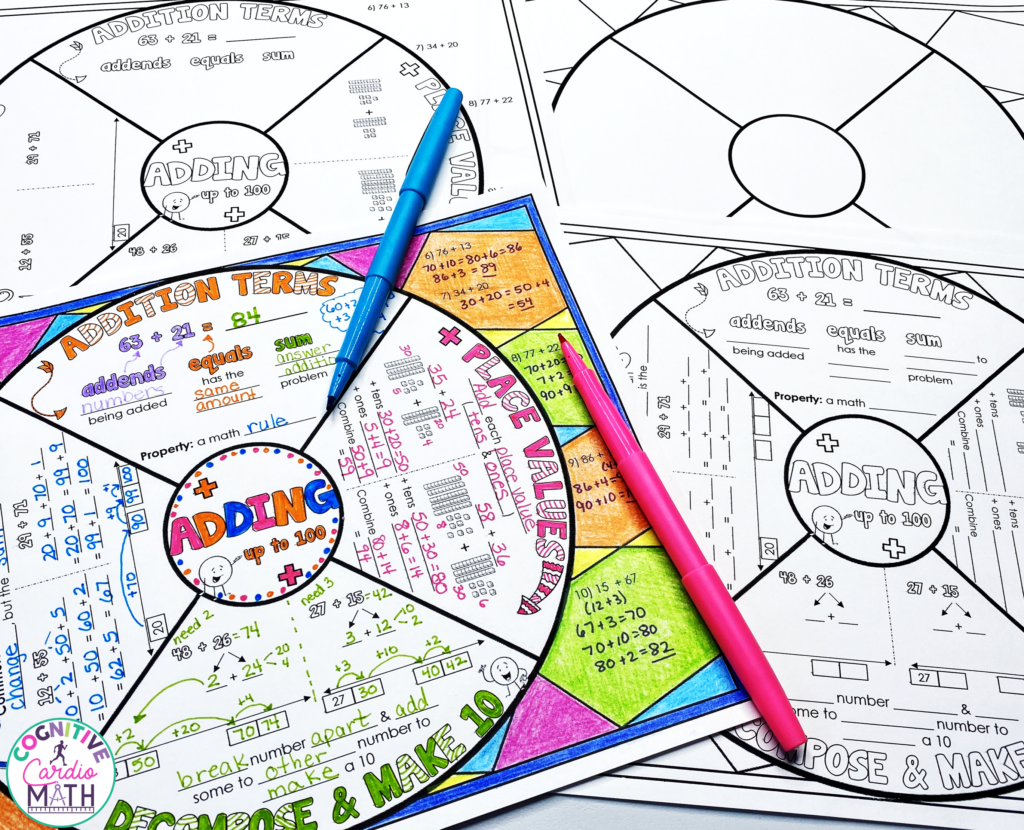
That organization also makes lessons easier to teach. One of the things I appreciate most is that you have the flexibility to teach at the pace that works best for your students. If your class is ready, you can complete an entire math wheel during one class period. If you’d rather slow things down, simply focus on one or two sections during each lesson. For example, if you’re introducing addition within 100, you might begin with the place value section. Project the wheel for your kiddos to see. Make sure to talk through how the addends are broken into tens and ones. Solve the first example together while thinking out loud. During your next lesson, return to the same wheel and introduce decomposing to make a ten.
Another reason these wheels work so well is that they don’t stop after the explanation. Once your students learn a concept and complete examples together, they can apply what they’ve learned through guided or independent practice. Rather than switching to another worksheet with a different format, your students can continue working with the same page.
How 2nd Grade Math Wheels Support Different Types of Learners
Every classroom includes students who learn in different ways, which is another reason these 2nd grade math wheels are impactful. Some of your students need to see a concept modeled several times before it clicks. Others learn best by talking through examples. Many benefit from visual supports. The combination of vocabulary, pictures, examples, and guided practice helps meet different learning needs without creating separate materials for every group of students.
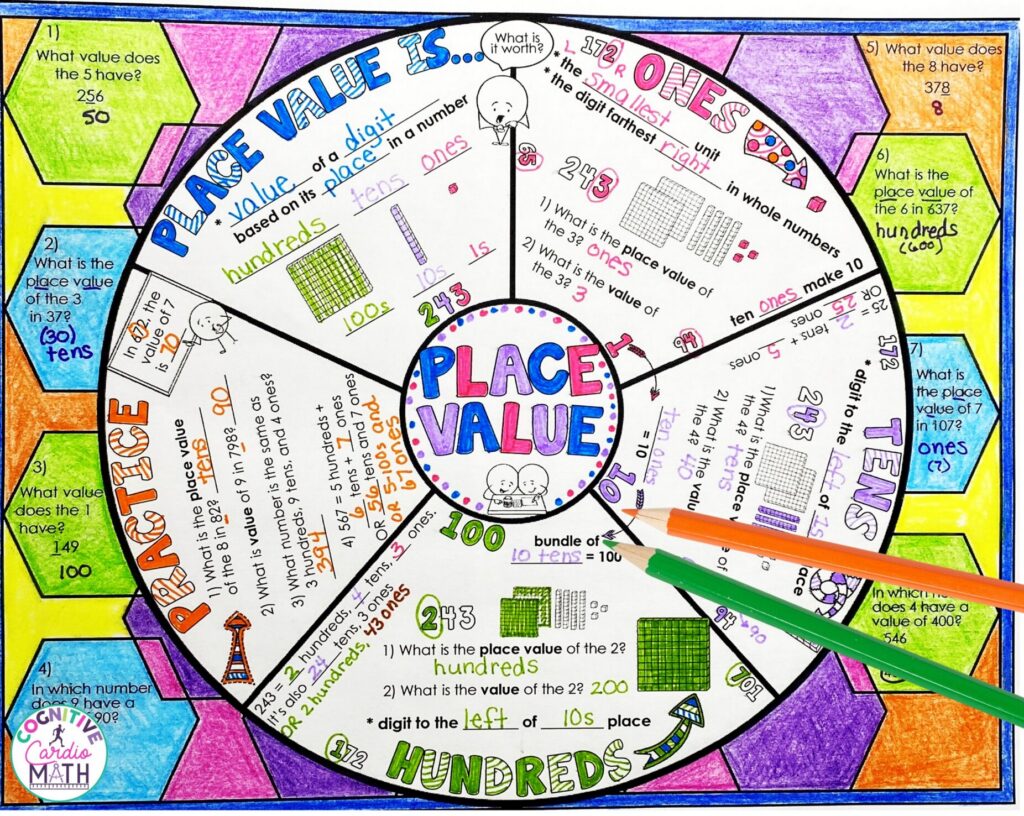
The multiple note-taking options also make differentiation feel manageable. If you have students ready to record all their own notes, the open version gives you complete flexibility during instruction. Your students who benefit from a little more structure can use the fill-in version so they spend less time copying. If you have a student who was absent, joins later in the year, or needs support, the pre-filled version allows them to participate without feeling behind.
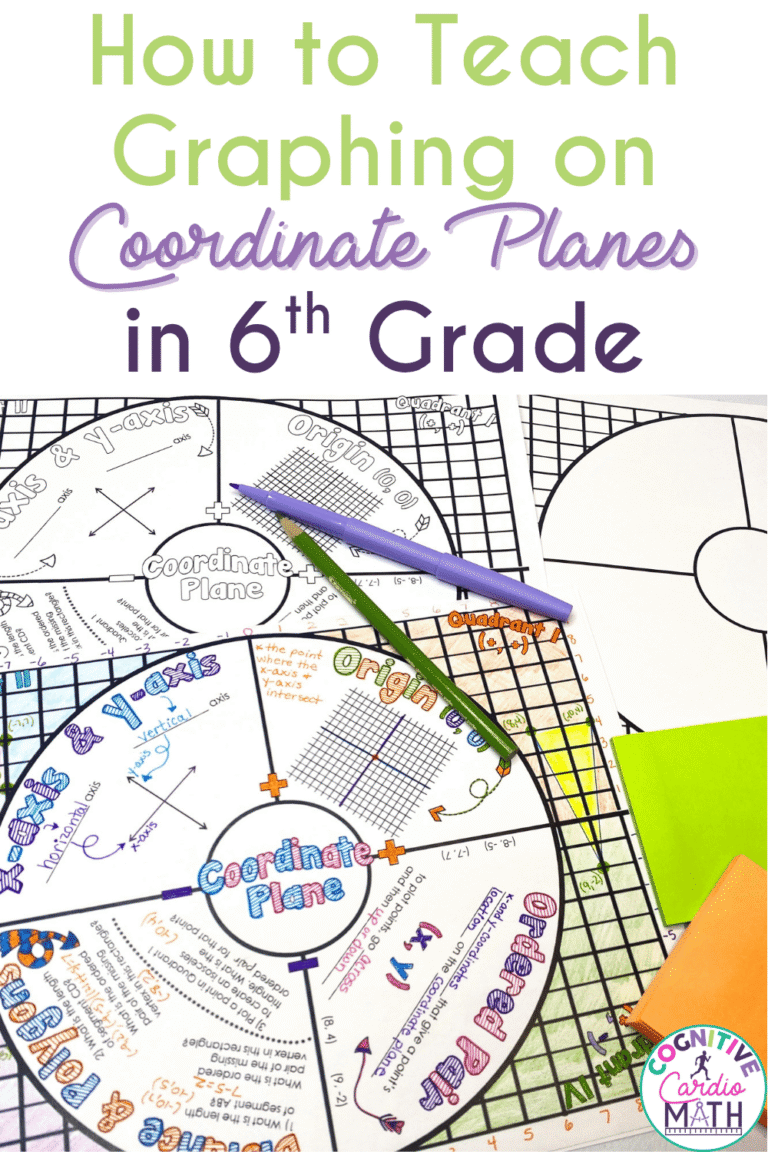
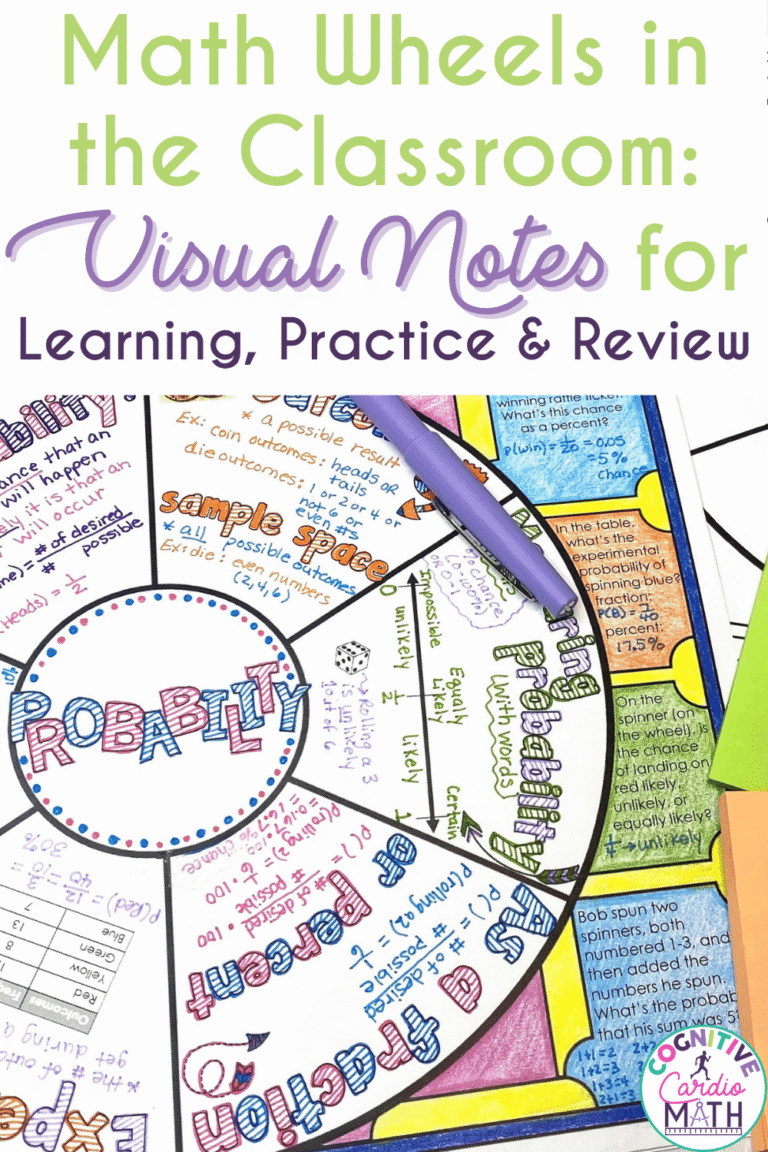
Every section of the math wheel focuses on one strategy or step of a concept. This makes it much easier for your second graders to organize new information. Instead of looking at one page filled with notes, your kiddos can immediately recognize where one idea begins and another ends. The illustrations, examples, and arrows all work together to guide your students through the learning process.
The color is just as purposeful. Rather than coloring for the sake of decorating, encourage your students to use the color you’re using as you complete each section with them. For example, in the Adding to 100 math wheel, the Place Value section might become pink while Decompose & Make 10 becomes green. Later, when your student forgets a strategy, you can simply say, “Let’s look back at the green section.”
Helping 2nd Graders Develop Note-Taking Skills
When we hear the words “note-taking,” we often picture middle school or high school students writing pages of information in a notebook. Your second graders are not ready for that yet. Honestly, they shouldn’t be. This is the perfect age to begin introducing note-taking in a way that feels manageable, visual, and interactive. My 2nd grade math wheels help them learn that notes are a way to organize important ideas.
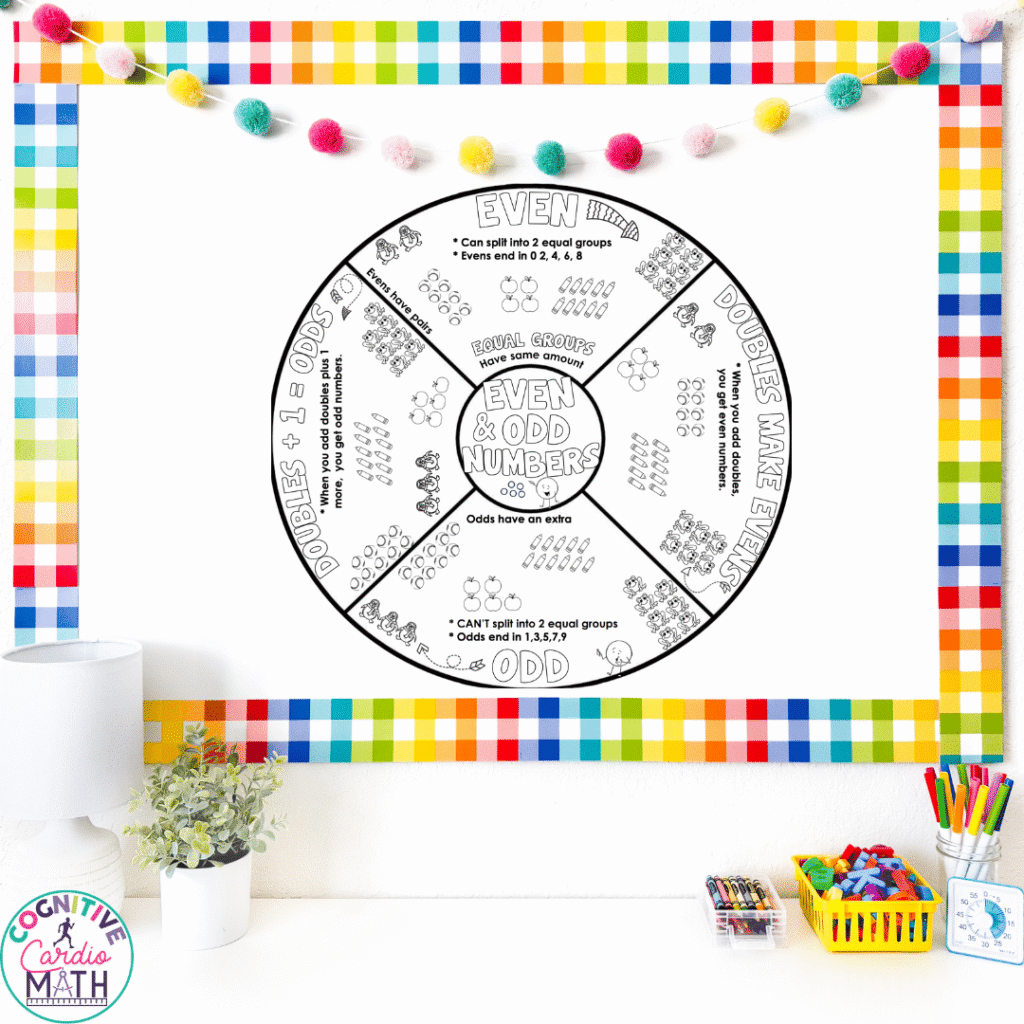
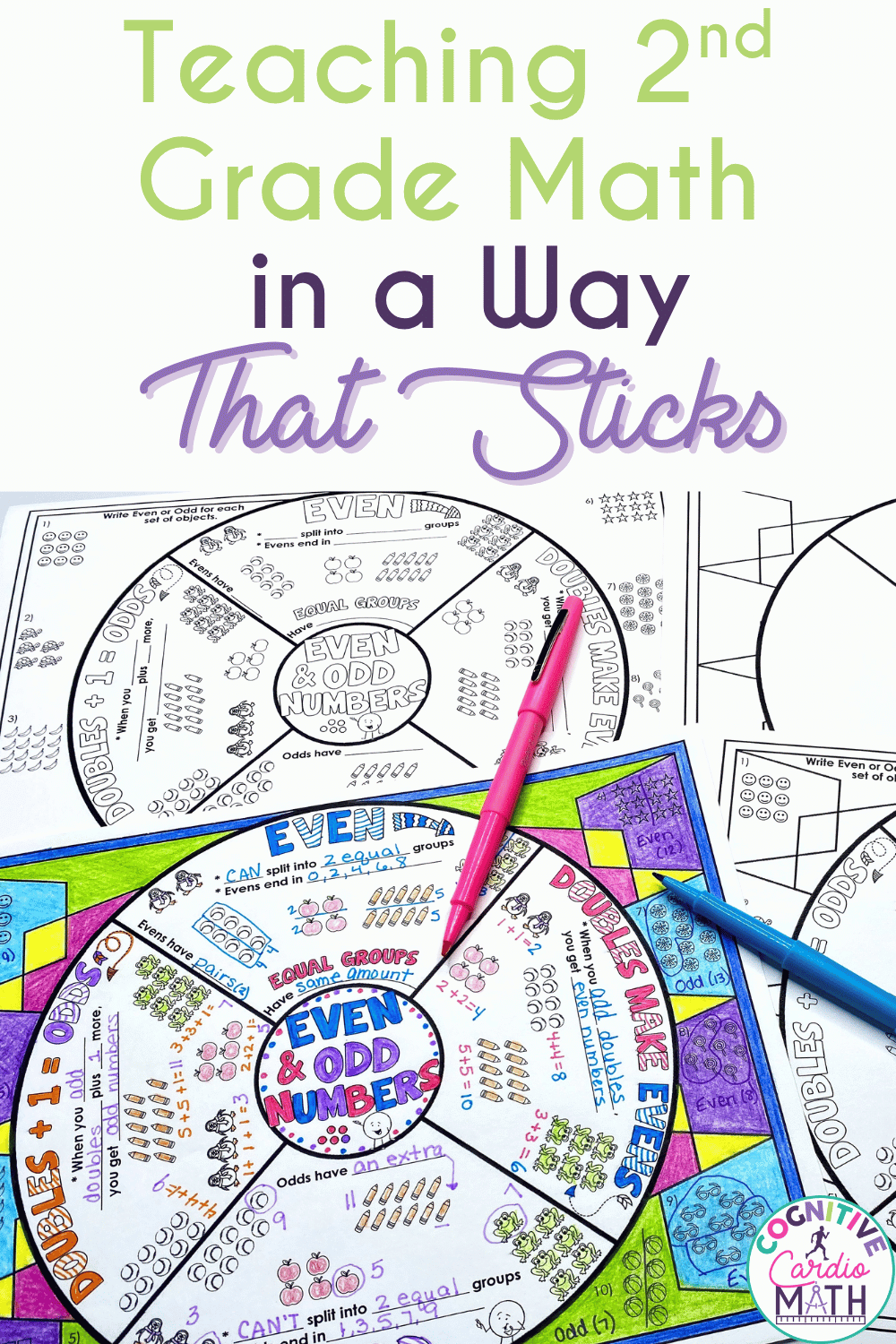
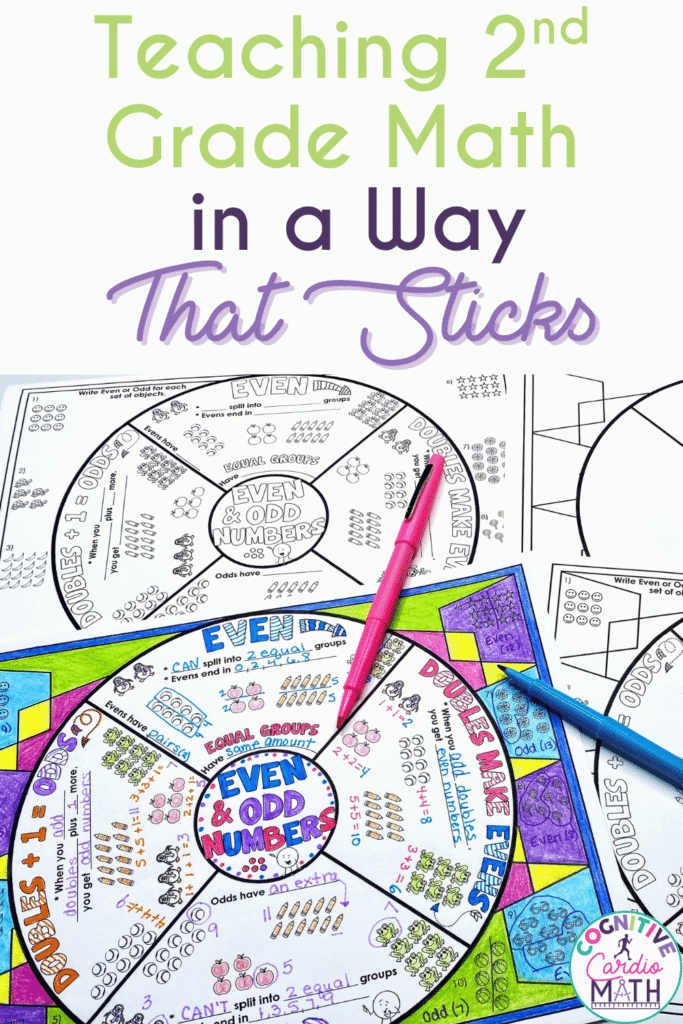
One of my favorite ways to use the wheels is to build the notes together as we learn. Let’s say we’re introducing even and odd numbers. Rather than handing your students a completed page, project the wheel and focus on the Even section only. Read the definition together, and look at the pictures showing equal groups. As you do, ask questions like, “What do you notice?” or “Why do you think this number is even?” As you write the notes on the board or under the document camera, your students should copy them onto their own wheels. By the end of the lesson, every student has built the same reference page with you.
Now, imagine your student, working independently, who suddenly forgets how to determine whether a number is even or odd. Instead of immediately answering the question, you might say, “Let’s look back at your math wheel. Which section reminds us what to do?” With consistency, your students will begin reaching for their notebooks on their own. They’ll catch on pretty quickly that the answers aren’t always coming from you. They’re learning to use their notes as a resource. That’s a study habit that will benefit them far beyond second grade.
What You’ll Find Throughout the 2nd Grade Math Wheels
Although each 2nd grade math wheel focuses on a different skill, you’ll notice a consistent structure throughout the collection. Your students are introduced to important vocabulary, work through examples, and apply what they’ve learned through guided or independent practice. That predictable routine helps your kiddos know what to expect every time you introduce a new wheel. Instead of spending instructional time explaining how to use the resource, you can focus your energy on teaching the math.
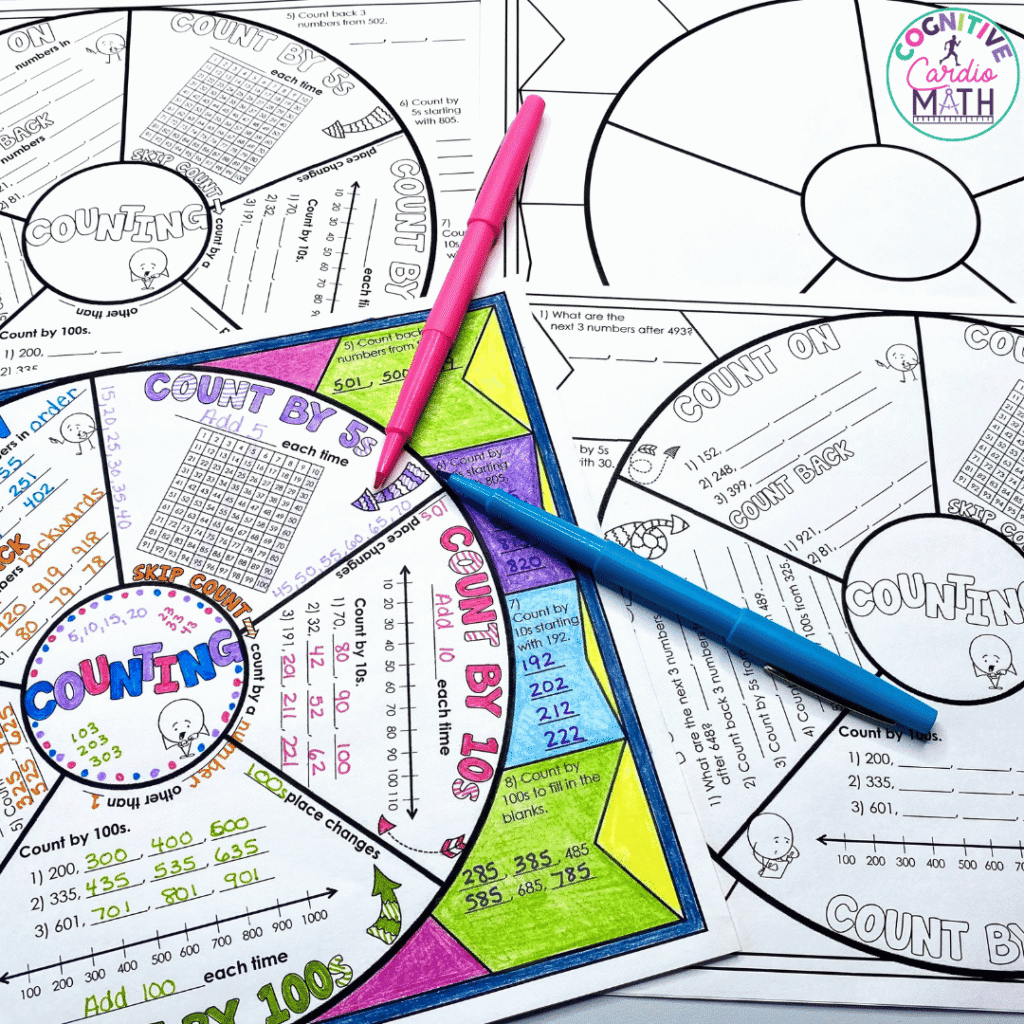
The wheels also include visual supports that make abstract ideas much easier for your young learners to understand. For example, my Counting and Skip Counting wheel uses hundreds charts and number lines. These help your students recognize patterns as they practice counting by 5s, 10s, and 100s. The Even and Odd Numbers wheel uses groups of objects to help your students see equal groups, partners, doubles, and the extra object that makes a number odd. My Adding Within 100 wheel walks your students through strategies using place value models, open number lines, decomposing to make a ten, and the commutative property.
Know that the learning doesn’t end when the notes are finished. Every wheel includes chances for your students to apply what they’ve learned through practice problems surrounding the wheel. That means your lesson flows naturally from introducing a concept, to modeling examples, to guided practice, and finally to independent application. When your students close their math notebooks at the end, they have a personal anchor chart filled with examples, strategies they practiced, and visuals.
Simple Ways to Use 2nd Grade Math Wheels in Your Classroom
One of the best things about the 2nd grade math wheels is how easily they fit into the routines you’re already using. They aren’t just for introducing a brand-new skill. You can pull them out to review before an assessment. Use them to revisit a concept after a long weekend or school break. Reinforce learning during math centers or provide additional practice during intervention time. It becomes something you and your students can return to whenever a concept needs a quick refresher instead of searching through multiple worksheets or notebook pages.
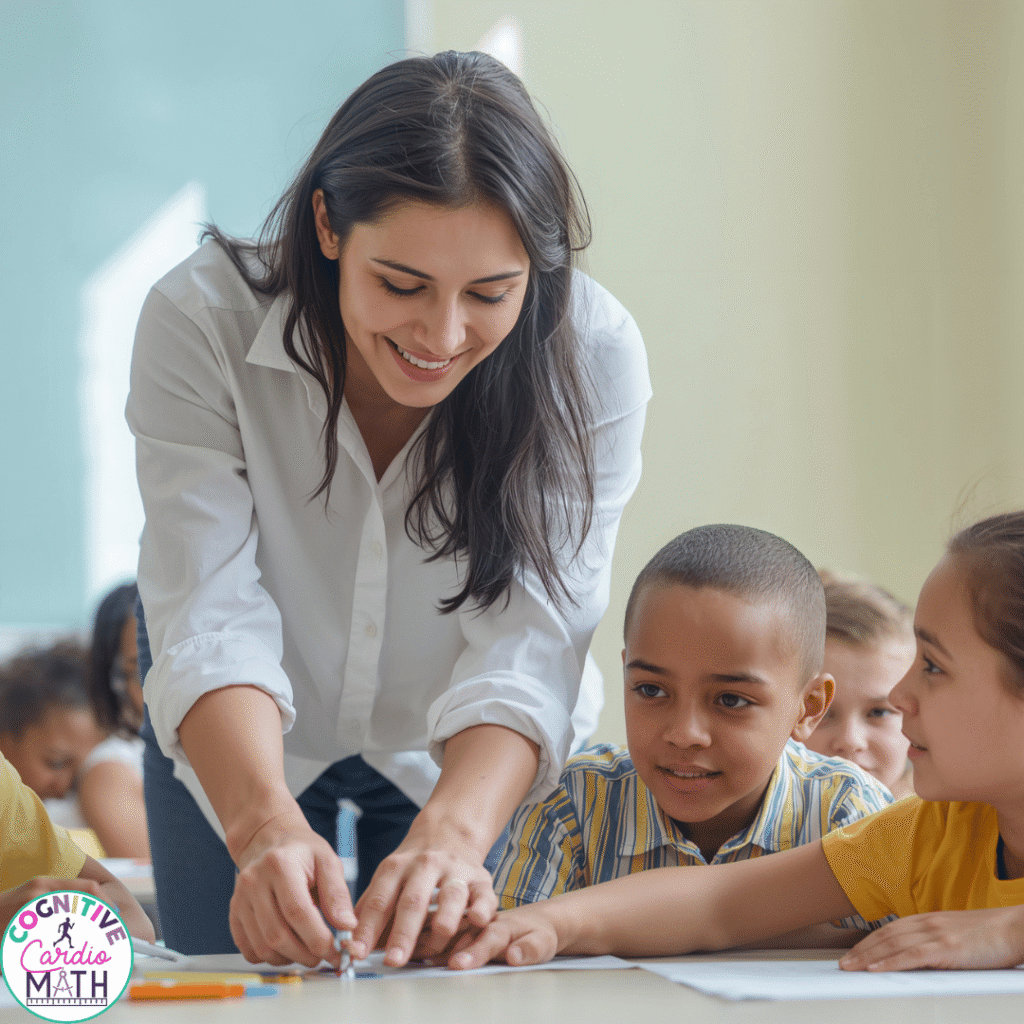
They also work well in small group instruction. Imagine meeting with a group of your students who are still struggling with adding within 100. Instead of creating an entirely new lesson, pull out the math wheel you’ve already completed as a class. Review the section that explains the strategy and work through another example together. Then, ask your students to solve a new problem while referring back to their notes if they get stuck. Having the vocabulary, illustrations, examples, and practice all on one page allows your students to focus on the math instead of spending time searching for information.
Your students will build an entire collection of math wheels inside their math notebooks or folders. Before a quiz or unit assessment, encourage them to flip back through previous wheels and review what they’ve already learned. During independent work, instead of immediately answering a question, you might say, “Let’s see if one of your math wheels can help you with that strategy.” Little by little, your students will begin viewing their notes as learning tools. That’s exactly the kind of independence you want to encourage as your second graders continue growing as mathematicians.
Explore the Complete Collection of 2nd Grade Math Wheels
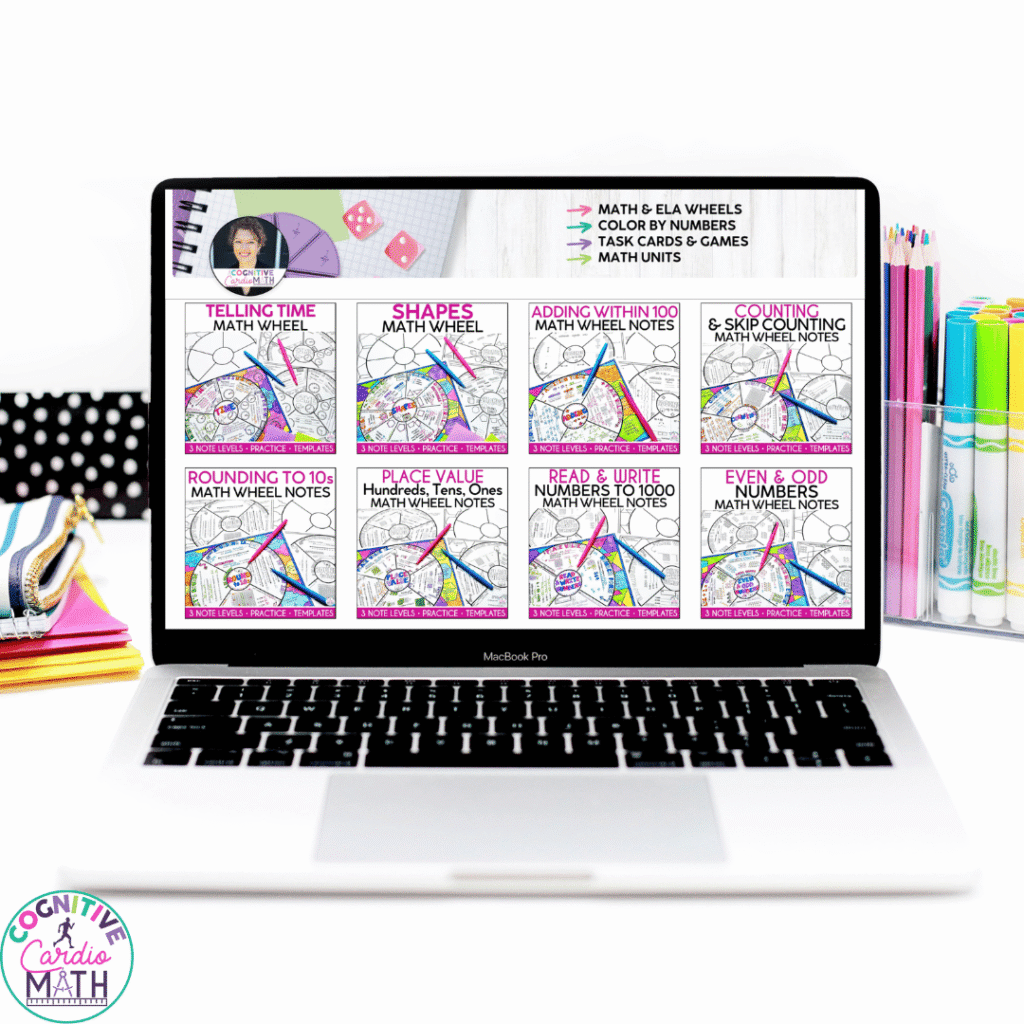
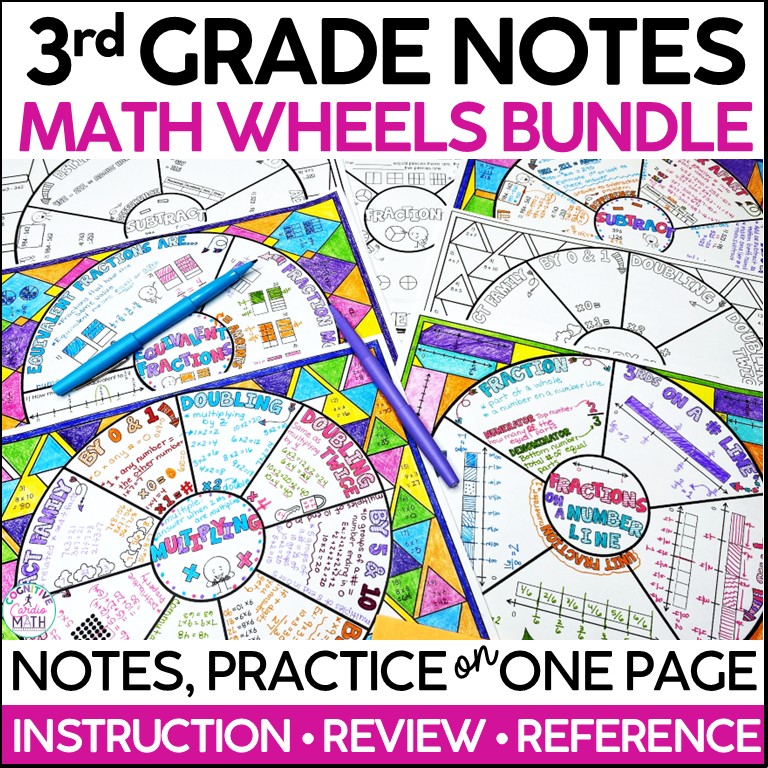
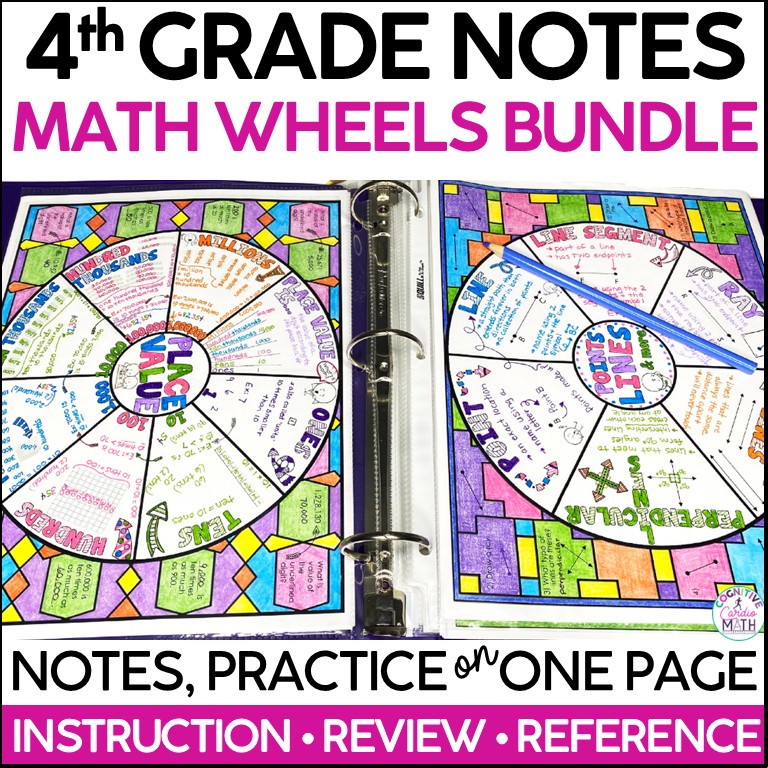
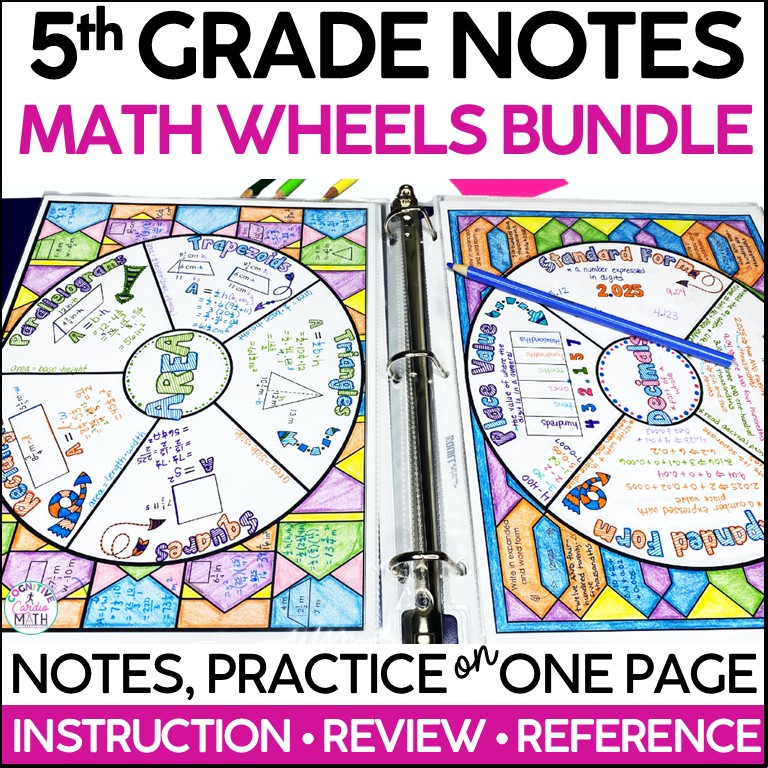
If you’re ready to spend less time creating guided notes and more time helping your students truly understand 2nd grade math, I’d love for you to explore the complete collection of 2nd Grade Math Wheels. I designed each wheel to simplify math concepts by combining vocabulary, visual models, examples, and practice into one easy-to-use resource. Instead of wondering how to explain a new strategy or organize your lesson, you’ll have a framework that helps your students build confidence while creating reference pages they can use all year long.
Whether you’re planning next week’s lessons, preparing for a new unit, or looking for a better way to review important skills, the 2nd Grade Math Wheels are ready to fit right into your classroom. Browse the complete 2nd Grade Math Wheels collection to find the topics that match your curriculum. I think you’ll quickly discover how much easier it is to teach new concepts when your students can actually see, organize, and revisit their learning every step of the way.
Helping Your Young Mathematicians Build Confidence One Lesson at a Time
One of my favorite things about teaching is watching my students realize they are capable of figuring out challenging math problems. That confidence doesn’t happen overnight. It grows little by little as they learn new vocabulary, practice strategies, make mistakes, ask questions, and begin recognizing patterns. When we give our students resources they can return to whenever they need support, we’re helping them rely on us less for every answer.
That’s exactly why you will enjoy using math wheels during your 2nd grade math instruction. They give your students opportunities to see concepts, discuss them, practice them, and organize their thinking. By the end, your students will have a collection of visual tools that remind them how much they’ve learned. They’ll also see how many strategies they now have available whenever they tackle a new math challenge.
Save for Later
Save this post to your favorite math teaching ideas or 2nd grade math Pinterest board. That way, you’ll have these classroom ideas and these math wheels ready whenever you’re planning future math units or looking for new ways to help your students build confidence and make their learning stick.