One of the quickest ways for me to see how the rest of the class would go was in the first few minutes after my students walked through the door. Some days, my students came in ready to learn. On many days, however, they arrived talking about lunch, a hallway conversation, a sporting event, or something that had happened in another class. If I jumped straight into instruction, I often found myself competing for their attention. Over the years, I learned that strong warm-up routines made all the difference. The right warm-up activities helped my students settle in, shift their thinking toward learning, and created a smoother start to class for everyone. Today, I’m sharing some of my favorite warm-up activities for middle school classrooms.
Why Warm-Up Activities for Middle School Matter
Middle school students rarely walk into class mentally prepared for the lesson you have planned. They are transitioning between environments all day long. One minute, they may be discussing a science lab. Next, they are expected to solve equations or analyze a text. A consistent warm-up routine helps bridge that gap and gives your students time to refocus.

Warm-ups also help establish expectations. When your students know exactly what to do when they enter the room, there is less downtime and fewer opportunities for off-task behavior. Instead of asking, “What are we doing today?” or waiting for instructions, your students can begin working immediately. This creates a calmer classroom environment and helps maximize your instructional time.
Most importantly, warm-up routines create consistency. Even your students who appear to thrive on chaos often benefit from predictable structures. Knowing that every class begins with a familiar routine helps your students feel more comfortable and allows them to focus on learning rather than figuring out what comes next. Those first few minutes may seem small, but they often set the tone for the entire class period.
How to Build Warm-Up Routines That Actually Work
The most successful warm-up routines are simple and consistent. Your students should know where to find the warm-up, what materials they need, how much time they have, and what happens when they finish. While the content may change from day to day, the process should remain predictable. The more consistent the routine becomes, the less time you will spend explaining directions.
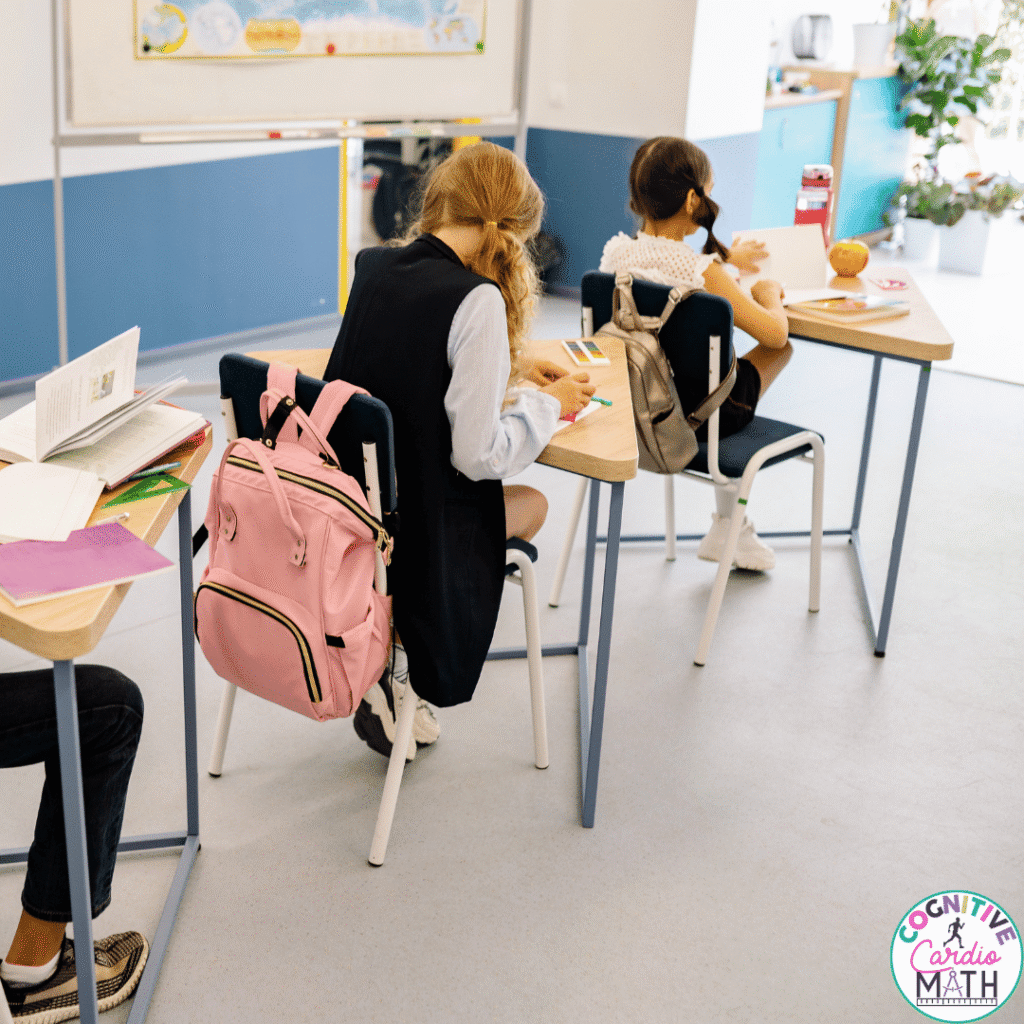
Most warm-up activities for middle school classrooms should take between five and ten minutes. The goal is not to create another lesson. Instead, warm-ups should activate thinking, review important concepts, or prepare your students for the day’s learning. Keeping them short helps maintain student engagement while still accomplishing their purpose.
It is also important to think about what you’ll be doing while your students complete the warm-up. This is often the perfect time to take attendance, check homework completion, answer a quick student question, or prepare materials for the lesson. When your students can begin independently, you gain valuable time while still keeping learning at the center of the classroom.
5 Warm-Up Activities for Middle School That Work
Not every warm-up routine serves the same purpose. Some warm-up activities for middle school classrooms focus on reviewing previously taught skills. Others encourage critical thinking, reflection, discussion, or problem-solving. The best warm-up routines are the ones that support your instructional goals while remaining easy to implement consistently.
Below are five warm-up ideas that are practical, classroom-friendly options that will work well with your middle school students. Each one includes ideas for implementation and examples so you can easily picture how it might work in your own classroom.
1. Spiral Review Warm-Up Activities
If I could choose only one warm-up routine for a middle school classroom, spiral review would be my choice every time. One of the biggest challenges in middle school is helping your students retain concepts long after a unit has ended. Your students may perform well during the unit or on a chapter test and then struggle to remember the same skill later. Spiral review helps combat that problem by continually revisiting previously taught concepts throughout the year.
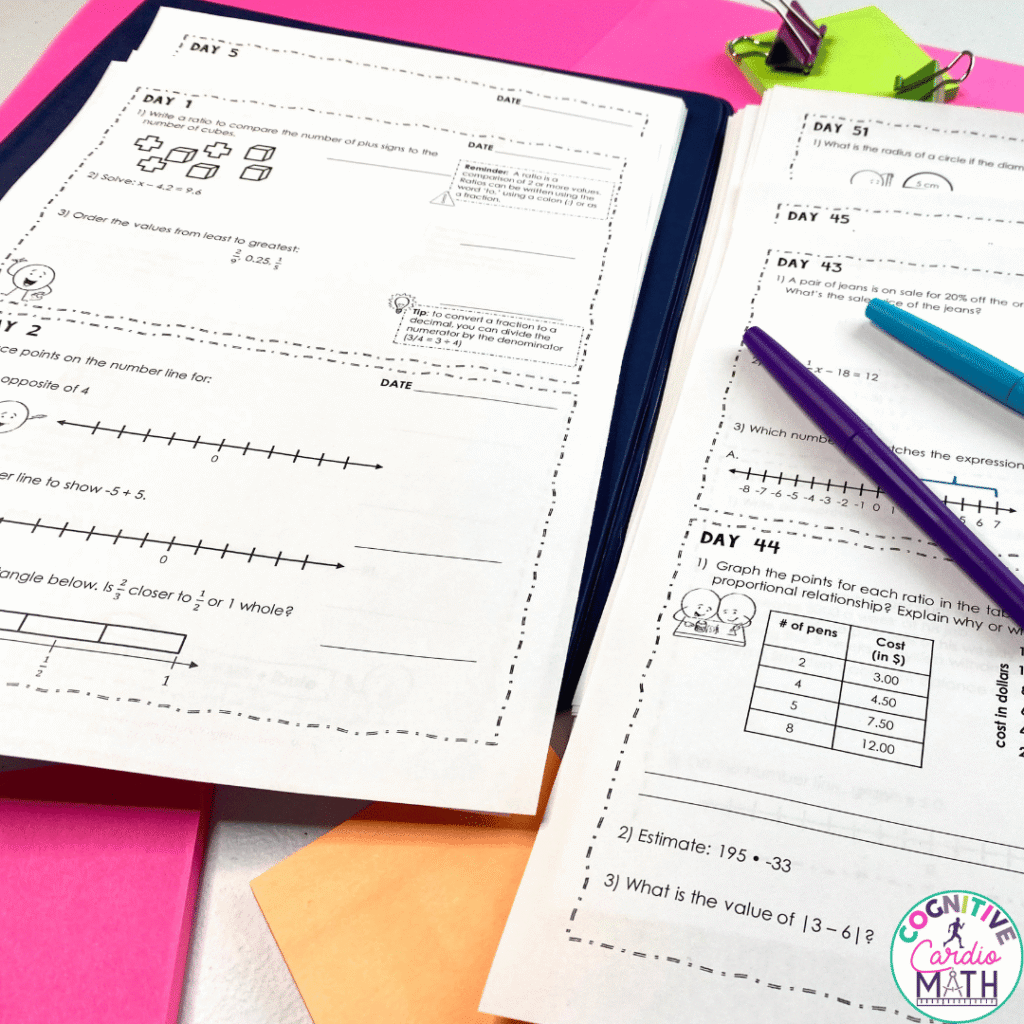
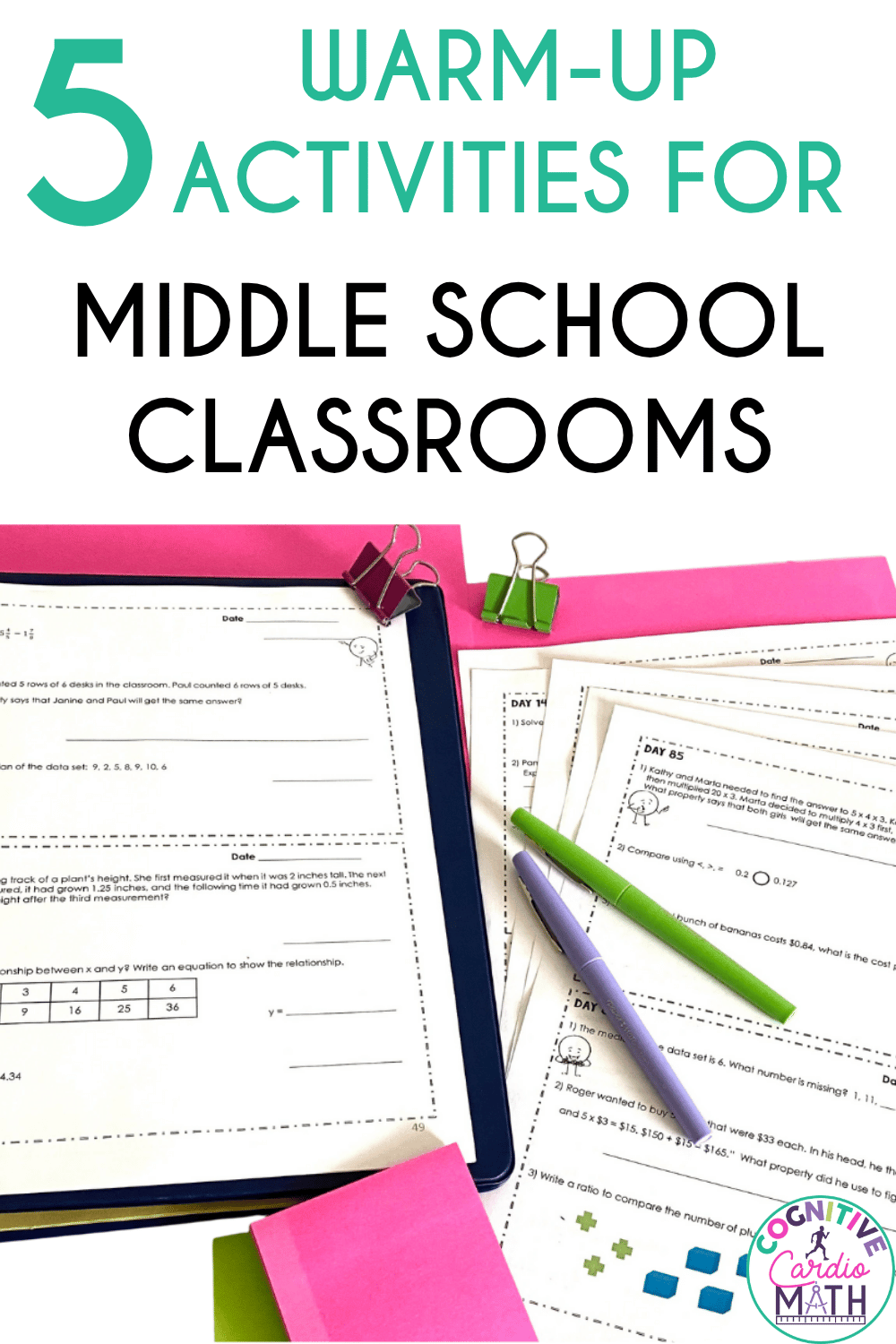
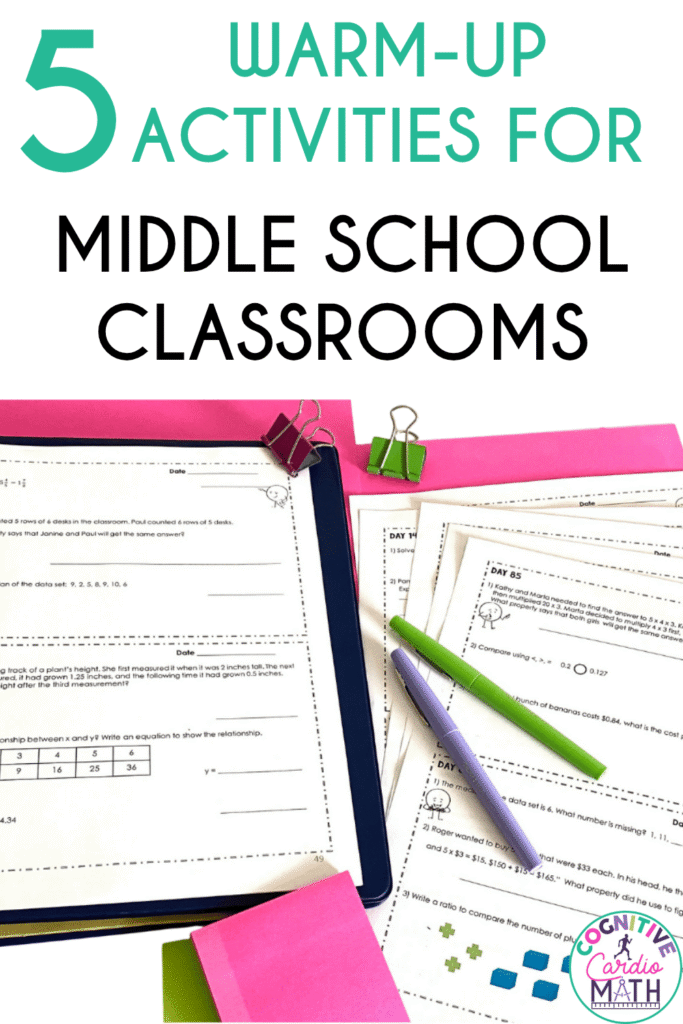
In my middle school math classroom, I used a daily spiral review that had 2 or 3 problems each day. I printed out the pages, and students kept them in their binders. But. . . if you have a limited number of copies, you can also project them on the board and have students answer on paper or in their notebooks. Either way, your students will have what they need to begin working right away while you take attendance and handle other responsibilities at the start of class. After five to seven minutes, quickly review the answers and address any common misconceptions before transitioning into your lesson. Since the routine stays the same every day, your students quickly learn what is expected.
My 6th Grade Daily Math Spiral Review and my 7th Grade Daily Math Spiral Review are designed specifically for this purpose. Each resource includes 180 days of review with two or three problems per day. They vary in levels of difficulty and offer frequent chances to work with word problems. There are helpful tips or reminder boxes along the way as well. Your students will continually revisit previously taught concepts while occasionally previewing upcoming skills. The resources also include PowerPoint slides and Google Slides options, making implementation simple and flexible to suit your style.
2. Retrieval Practice Warm-Ups
Retrieval practice is another highly effective warm-up routine because it requires your students to pull information from memory. Rather than looking at notes or examples, your students must recall what they have learned. This process strengthens long-term retention and helps your students identify concepts they may need to review further. This warm-up activity can work in any middle school classroom, any subject.

To implement retrieval practice, put two or three questions on the board before your students enter the room. Once they are settled, your students should work independently and rely only on their own memory. Allow about five minutes for completion. Once your students finish, review answers together and discuss any areas of confusion. The goal is not perfection but practice in retrieving information.
The math retrieval practice warm-up might ask your students to solve an equation, define a vocabulary term, or explain a concept from a previous unit. Questions could include prompts such as “What is the difference between a ratio and a rate?” or “Solve 4x + 7 = 31.” In other content areas, your students might summarize a previous lesson, identify key vocabulary, or answer questions about prior learning. The key is choosing content your students have already encountered so they can pull from their memory rather than guessing at new concepts.
3. Error Analysis Warm-Up Activities for Middle School
One of the most powerful ways your students learn is by examining mistakes. Error analysis warm-ups ask your students to identify and explain errors. Instead of simply solving a problem themselves, they must think critically about another person’s reasoning and determine where the mistake occurred.

To use this routine, project a question that contains a common student error. You can also use actual errors from previous assignments. Just make sure to rewrite the error or type it up to remove any identifying information (including handwriting). Then, ask your students to answer three questions: What mistake was made? Why is it incorrect? What would make this correct? Give your students about five to eight minutes to work independently before discussing the question as a class. Timing will depend on the complexity of the problem.
In math class, you might display the equation 3(x + 4) = 3x + 4 and have your students identify the mistake. Your students will need to recognize that the distributive property was not applied correctly and explain that the expression should be written as 3x + 12. This type of warm-up encourages deeper math thinking and often leads to meaningful classroom discussions.
In science class, students might find incorrectly graphed data or that an incorrect fact was used to draw conclusions. A poorly worded sentence can be the focus of error analysis in language arts. But it doesn’t have to stop with core subjects. A blueprint or diagram with a mistake can be used in shop class, and a coding error can be identified in computer science. Whatever class you teach, finding and correcting errors is a higher-level skill your students can use.
4. Would You Rather and Discussion Warm-Up Activities
Middle school students love sharing their opinions, as we all know. Warm-ups are a great way to channel the good in sharing opinions through discussion-based warm-ups that increase engagement. These activities encourage your students to compare ideas, evaluate strategies, and justify their thinking. While the questions may seem simple, the conversations they lead to can be valuable.

To start, present a prompt on the board and ask your students to make a choice and explain their reasoning in writing. After a few minutes, allow your students to discuss their responses with a partner or small group. Then, invite several of your students to share their thinking with the class.
These questions can be created for any subject and any topic. You can choose to keep the questions focused on what you are learning, or use them to build community in your classroom. The goal is not to find one correct answer but to encourage thoughtful discussion and communication.
5. Goal-Setting and Reflection Warm-Ups
Not every warm-up activity for middle school needs to focus on academic review. Sometimes your students benefit from taking a few minutes to reflect on their learning and set goals. Reflection warm-ups encourage your students to think about their progress, identify areas of strength, and recognize concepts they still need to improve. This routine works especially well after assessments, projects, or challenging lessons. You can have your students respond in notebooks, on sticky notes, or through a digital platform.

Prompts you might ask could include, “What concept do you feel most confident about right now?” or “What is one skill you still need to practice?” or “What is your goal after today’s lesson?” Over time, these reflections help your students develop greater ownership of their learning while providing valuable information about their understanding.
Common Warm-Up Activity Mistakes to Avoid
One common mistake is treating warm-up activities as busy work. Your students will quickly recognize when an activity lacks purpose. The strongest warm-ups support learning goals, reinforce important concepts, or help your students prepare for instruction. Every warm-up activity should have a clear reason for being included in your classroom routine.
Another mistake is allowing warm-ups to take too much class time. While reviewing answers is important, spending fifteen or twenty minutes discussing a five-minute warm-up can reduce the time available for instruction. Keep discussions focused and use the information gathered from the warm-up to guide your lesson.
Make sure to avoid changing routines too often. You might sometimes feel pressure to constantly introduce new activities in an effort to keep your students engaged. In reality, your students benefit from consistency. You can vary the content while maintaining a predictable structure. Familiar routines help your students settle into learning more quickly and allow the class to start smoothly every day.
No Prep Middle School Math Warm-Ups
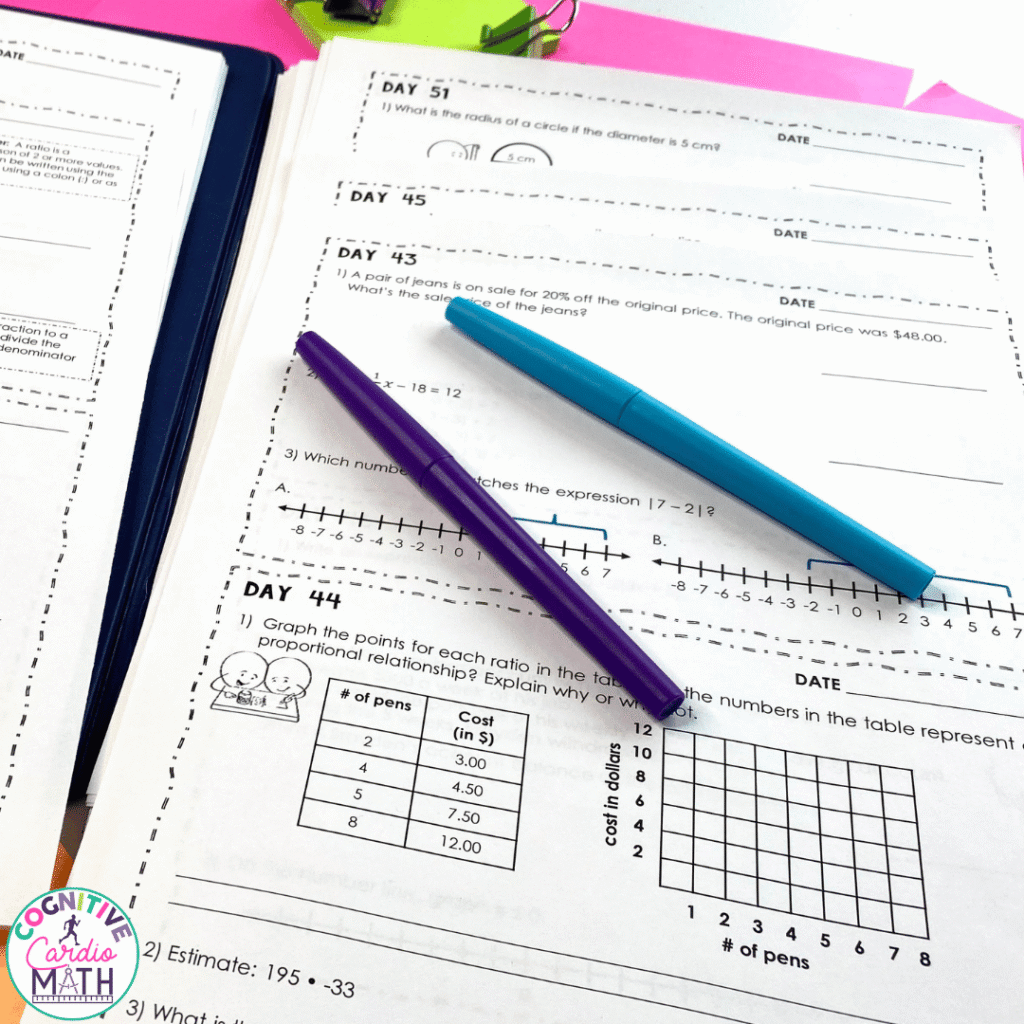
If you are a middle school math teacher, these are for you! If you’re looking for an easy way to build meaningful review into your middle school math classroom while improving transitions and strengthening skill retention, be sure to check out my Daily Math Warm-Ups Spiral Review resources. With reviews for the entire year, varied question types, and built-in support, these resources make it easy to establish a consistent warm-up routine that supports your students in retaining math concepts and developing their skills.
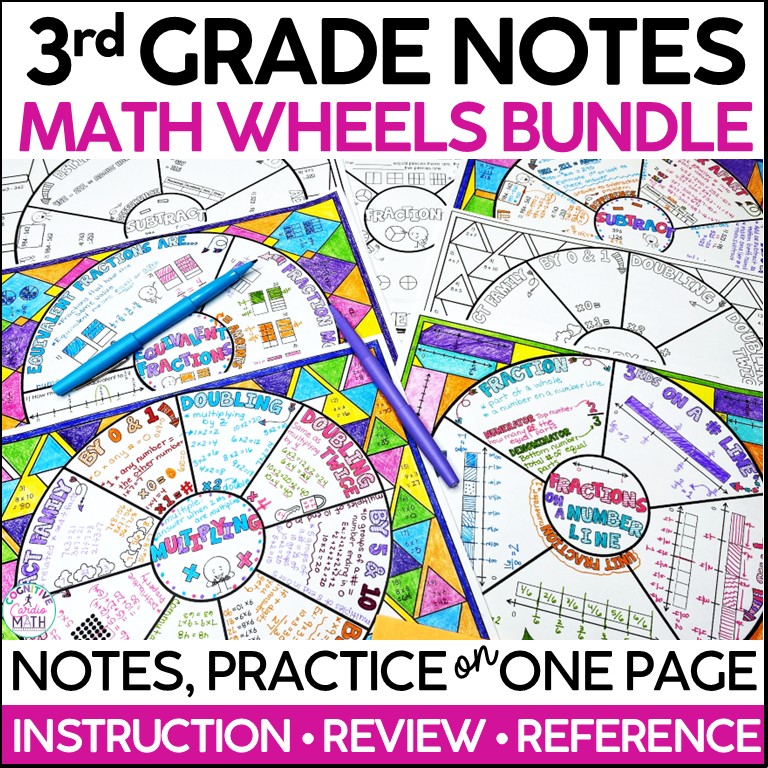
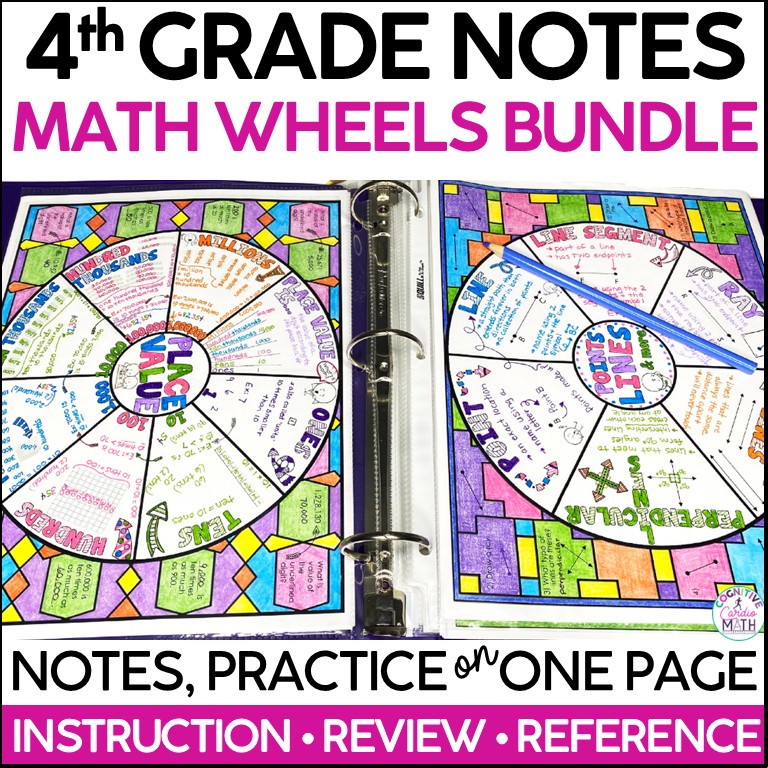
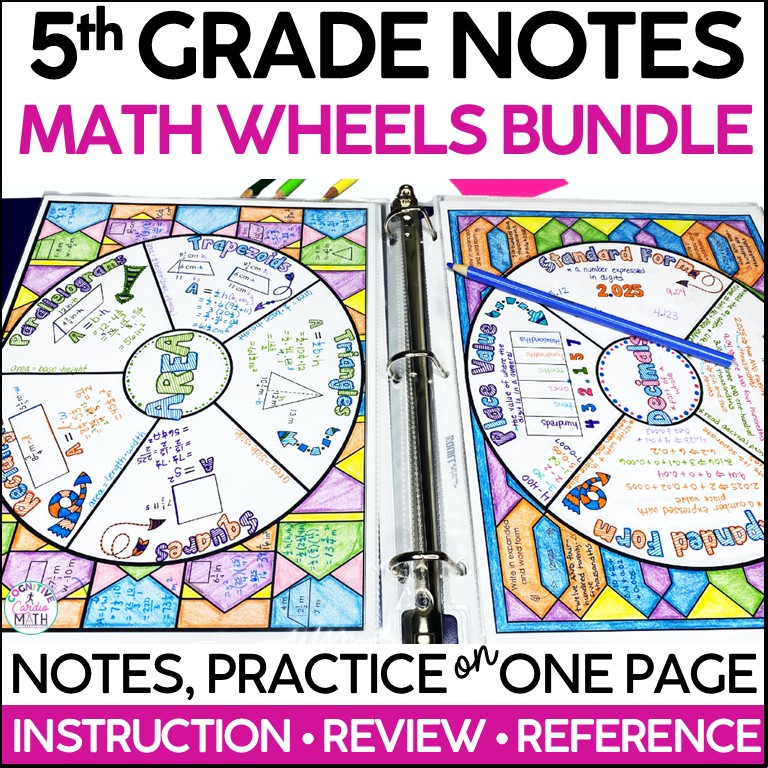
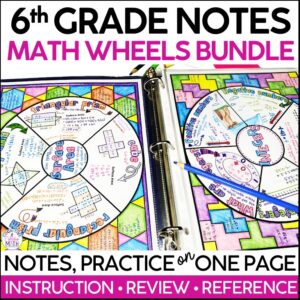
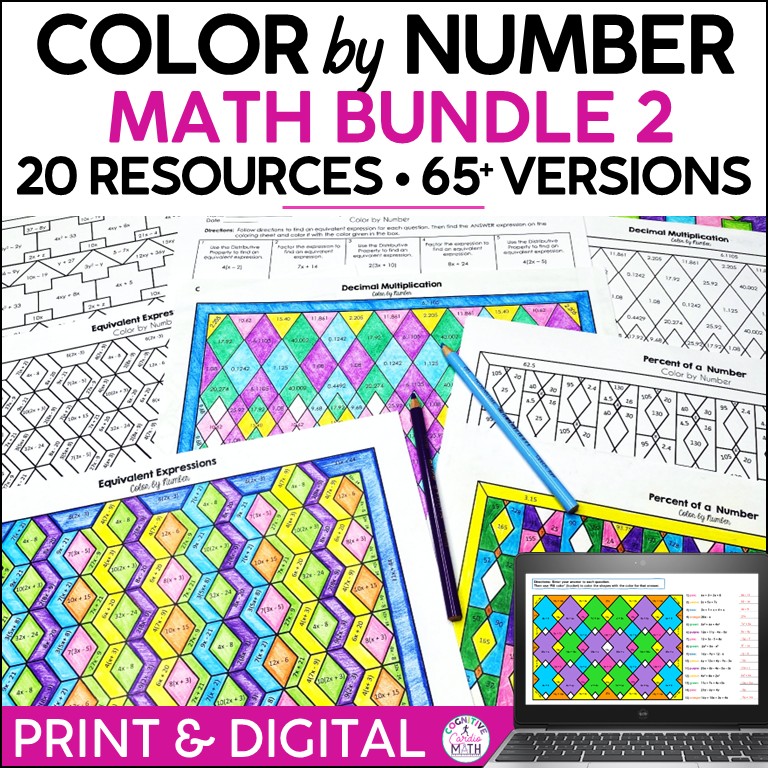
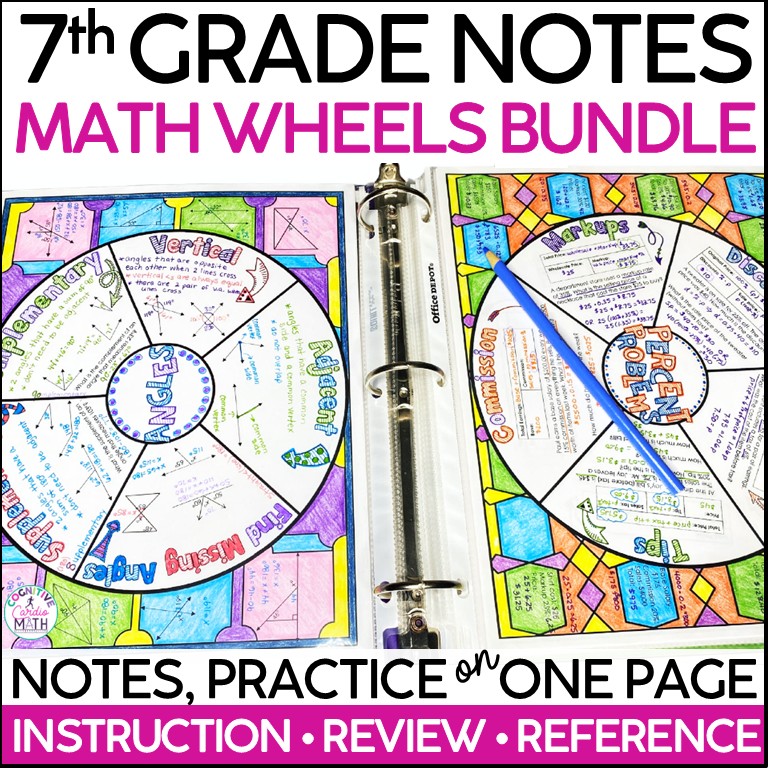
You can also explore my TPT shop for additional resources I created to engage your middle school learners. You’ll find full math units, review activities, practice pages, Math Wheels, Footloose and Truth or Dare task card games, and a variety of other resources that help your students practice skills in interactive ways. Whether you’re looking to improve classroom management, strengthen skill retention, increase student engagement, or simply make the start of class run more smoothly, having the right resources can make a difference.
The First Five Minutes Matter
The first few minutes of class often determine how the rest of the lesson will unfold. When your students enter a classroom with a clear purpose and a meaningful task waiting for them, they are more likely to settle quickly, focus their attention, and engage with the learning ahead. The good news is that effective warm-up activities for middle school do not need to be complicated. No matter the format of warm-ups, the goal remains the same, which is to help your students transition into a learning mindset. Those first five minutes may be brief, but they can have a lasting impact on student success throughout the entire class period.
Save for Later
Warm-up routines are one of those teaching strategies that seem simple but can completely transform the flow of your classroom. Save this post to your favorite middle school Pinterest board so you can come back to these ideas. Future you will be glad you have these warm-up activities for middle school ready to go!