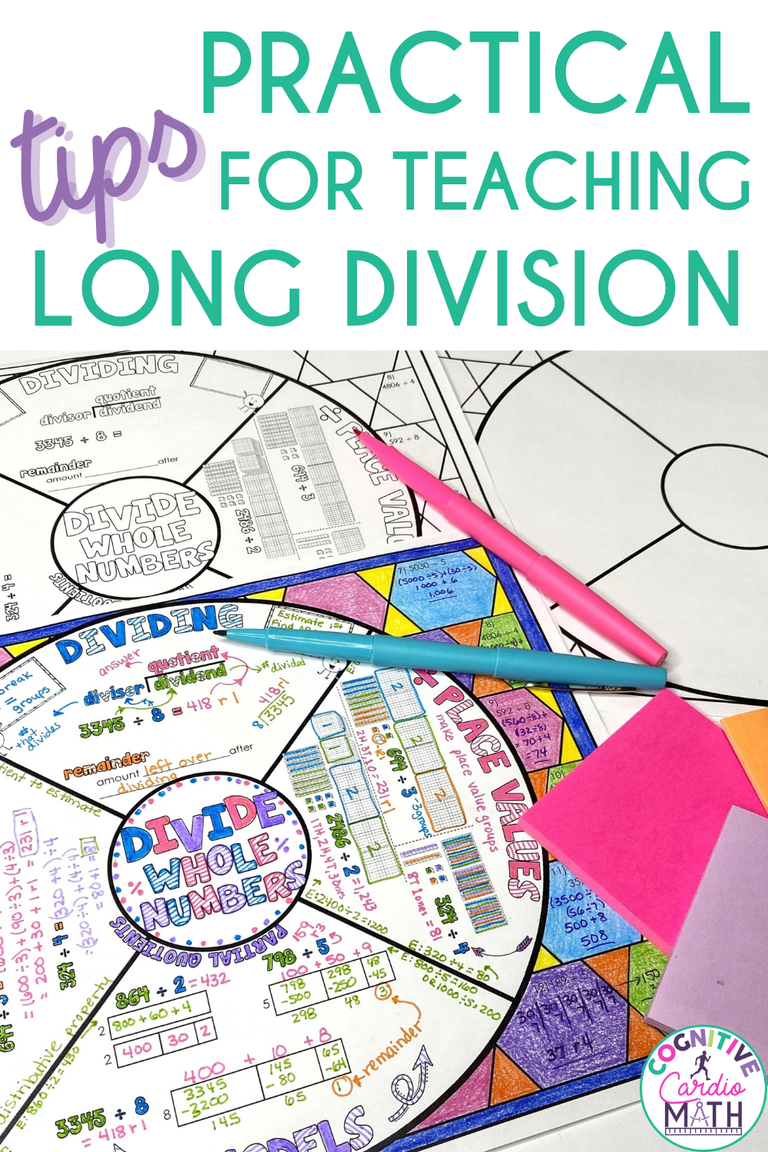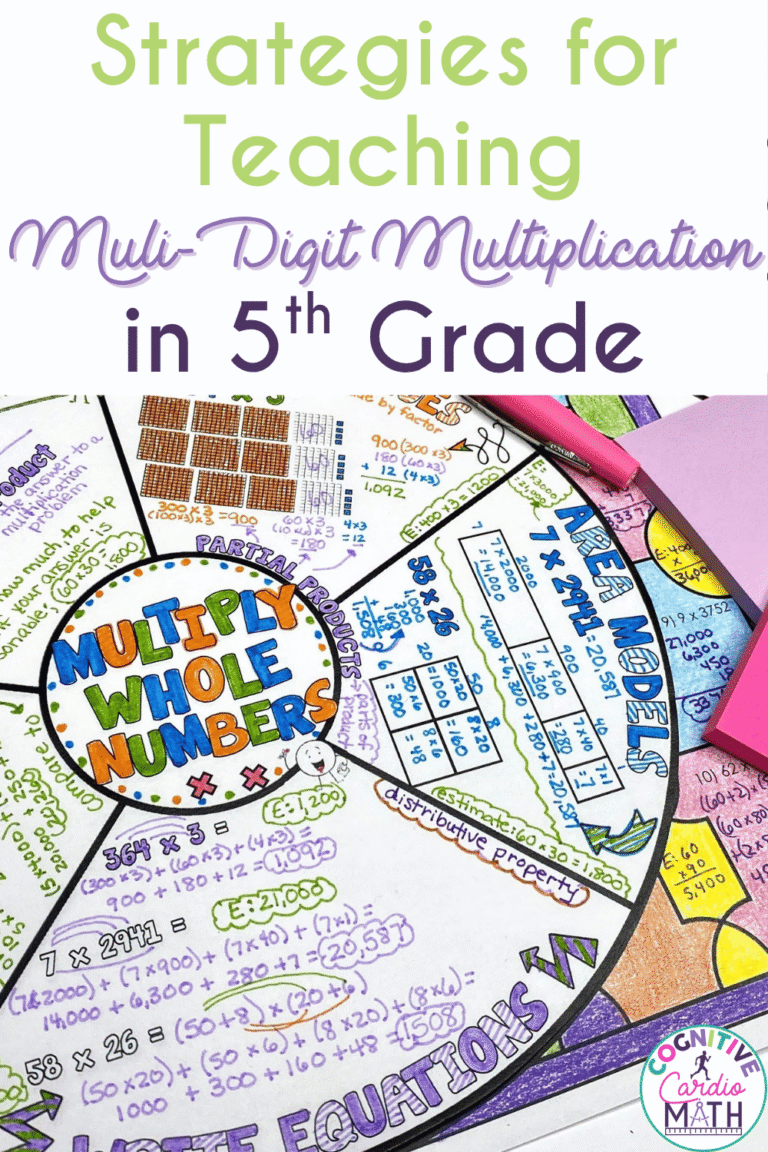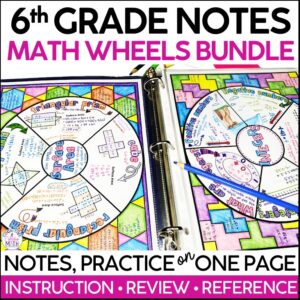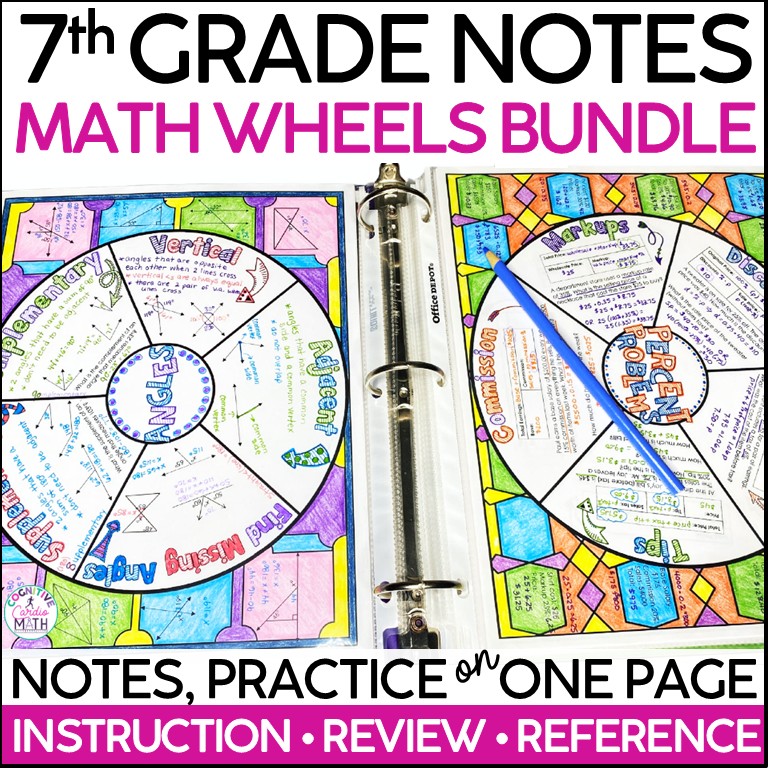
Have you ever looked around your classroom while your students were taking math notes and realized that everyone was having a completely different experience? One student is carefully copying every word you write. Another has already run out of room for the example problem. A third is so focused on making everything look perfect that they miss half of the explanation. Then, a few weeks later, when that skill comes back up, your students are flipping through pages of notes trying to remember where they wrote the formula or what the first step was. That’s exactly why I love using visual notes in math class. They help your students organize their thinking while creating a resource they can use during practice, review, and throughout the rest of the school year. In this post, I’ll review what math wheels are and then share a few ways teachers are actually using them in their classrooms.
What Are Visual Notes?
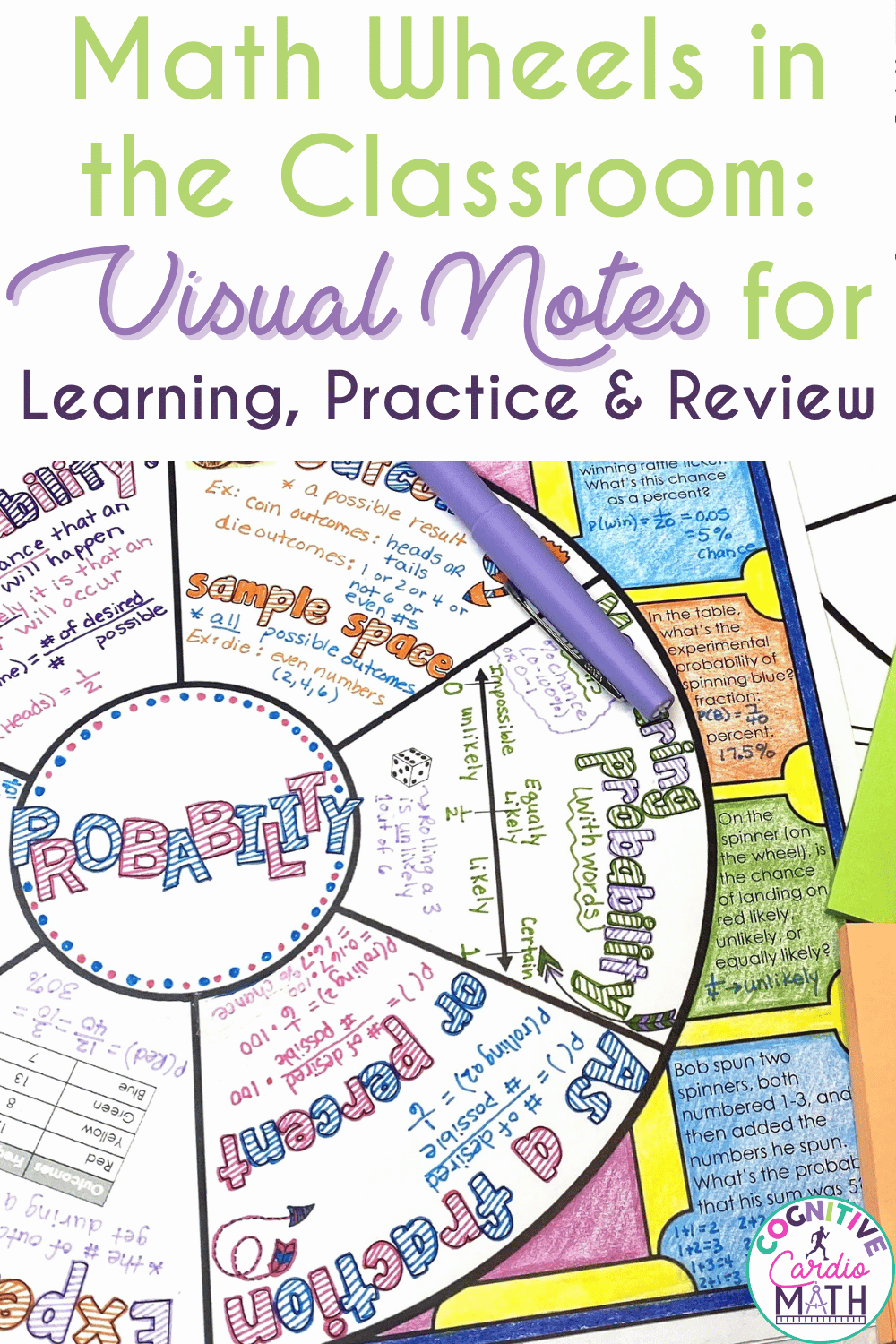
Visual notes organize information in a way that helps your students understand concepts instead of simply recording them. Rather than filling an entire notebook page with definitions, formulas, and examples, your students build their notes one section at a time. Each section focuses on a specific piece of the math concept. This makes the information much easier to follow and much less overwhelming.
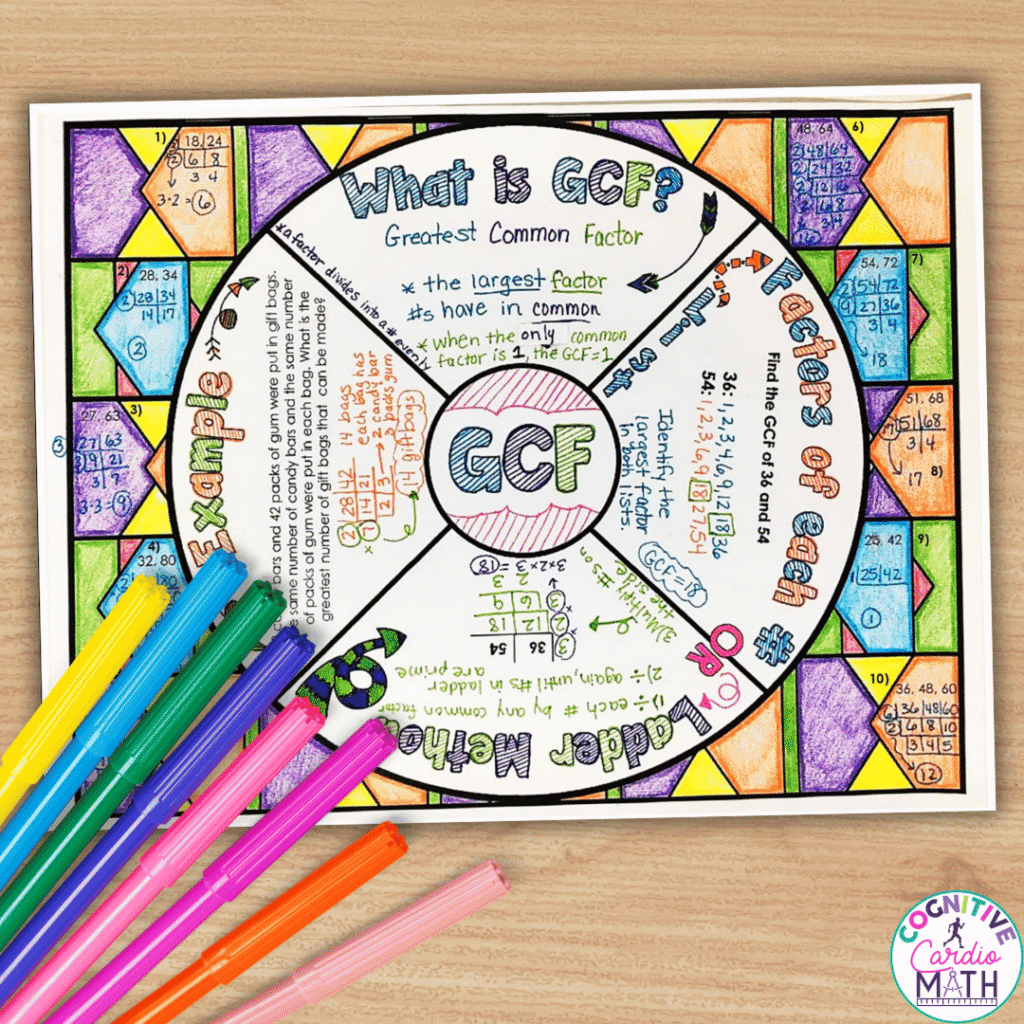
That’s one of the reasons I enjoy creating and using math wheels. Every wedge has a purpose. Sometimes a section introduces vocabulary. Another models a problem or explains one step in a process. Instead of searching through an entire page of notes, your students can quickly find exactly what they need because everything has its own place.
For example, think about teaching the greatest common factor. Instead of writing two different strategies somewhere in a notebook, my GCF Math Wheel gives each method its own section. Your students can compare the listing method and the ladder method side by side before looking at a word problem that helps them decide when it makes sense to find the GCF. Everything they need is on one page, making it much easier to revisit later.
Why Visual Notes Help Your Students Remember Math
One of the biggest reasons visual notes work so well is that they ask your students to actively participate in the learning. Instead of copying a page of notes as quickly as possible, your students interact with the lesson. They do this by adding examples, highlighting important ideas, and connecting different parts of the concept as you teach. They’re building something they understand instead of simply copying something they may never read again.

Visual notes also give your students multiple ways to remember the same concept. A vocabulary word might be paired with a diagram. A formula might sit beside a worked example. A simple sketch, an arrow, or a color-coded section can serve as a reminder that helps your students recall the lesson later. Research has shown that combining words with visuals and handwriting supports memory better than relying on text alone.
The good news is that your students don’t have to be artists for this to work. A quick number line, fraction model, or labeled diagram is often all it takes. The goal isn’t to create beautiful notes. The goal is to create notes that help your students remember what they learned when they need the information again.
What Makes Math Wheels Different?
There are plenty of ways to create visual notes, but I love my math wheels because they naturally encourage your students to slow down and learn one piece of the math concept at a time. Instead of introducing everything all at once, you guide your students through each section as the lesson unfolds. That keeps everyone focused on the same idea before moving to the next one.
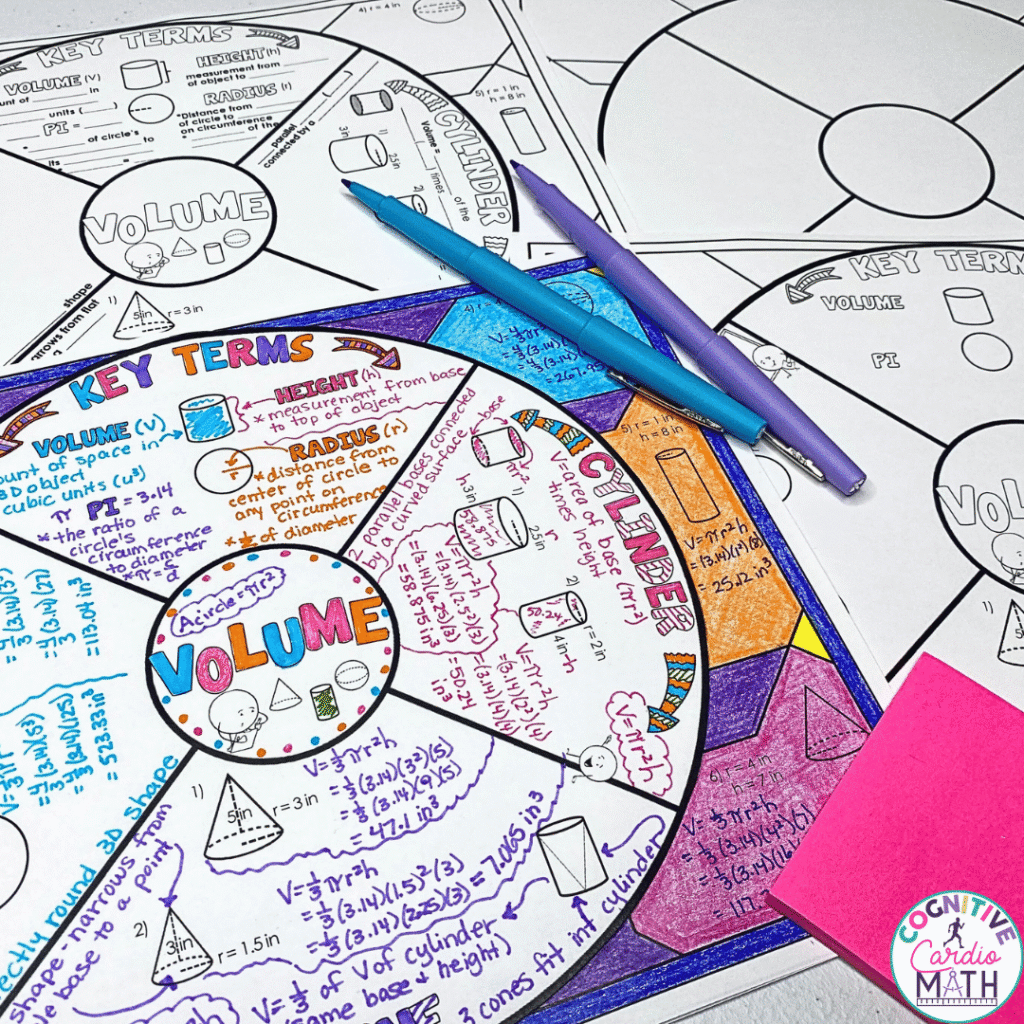
Let’s say you’re introducing volume with the Volume math wheel. On the first day, you might complete the first section of the wheel by defining volume and discussing its meaning. During the next lesson, you will add the section for rectangular prisms. Later in the week, your students complete the wedges for cubes and composite figures. By the end of the unit, they’ve created one reference tool instead of collecting four separate pages of notes that may or may not stay together. The flexibility of this graphic organizer is that if you don’t want to spread it out across a whole week, you can complete it in a class period.
I also love that the learning doesn’t stop when the notes are finished. Most of my math wheels include practice problems around the outside of the page. This helps your students to immediately apply the concept they just learned. Instead of closing their interactive notebook and pulling out another worksheet, they’re already practicing while the explanation and examples are still fresh and in front of them.
Four Ways to Use Visual Notes Throughout the Learning Cycle
One of my favorite things about visual notes is that they aren’t a “one-and-done” activity. Your students don’t spend one class period completing them and then shove them into a desk where they’re never seen again. Instead, visual notes can be part of your instruction from the first day you introduce a concept through the end of the year testing. That’s exactly why my math wheels have become such a staple in classrooms.
1. Introduce New Concepts One Section at a Time
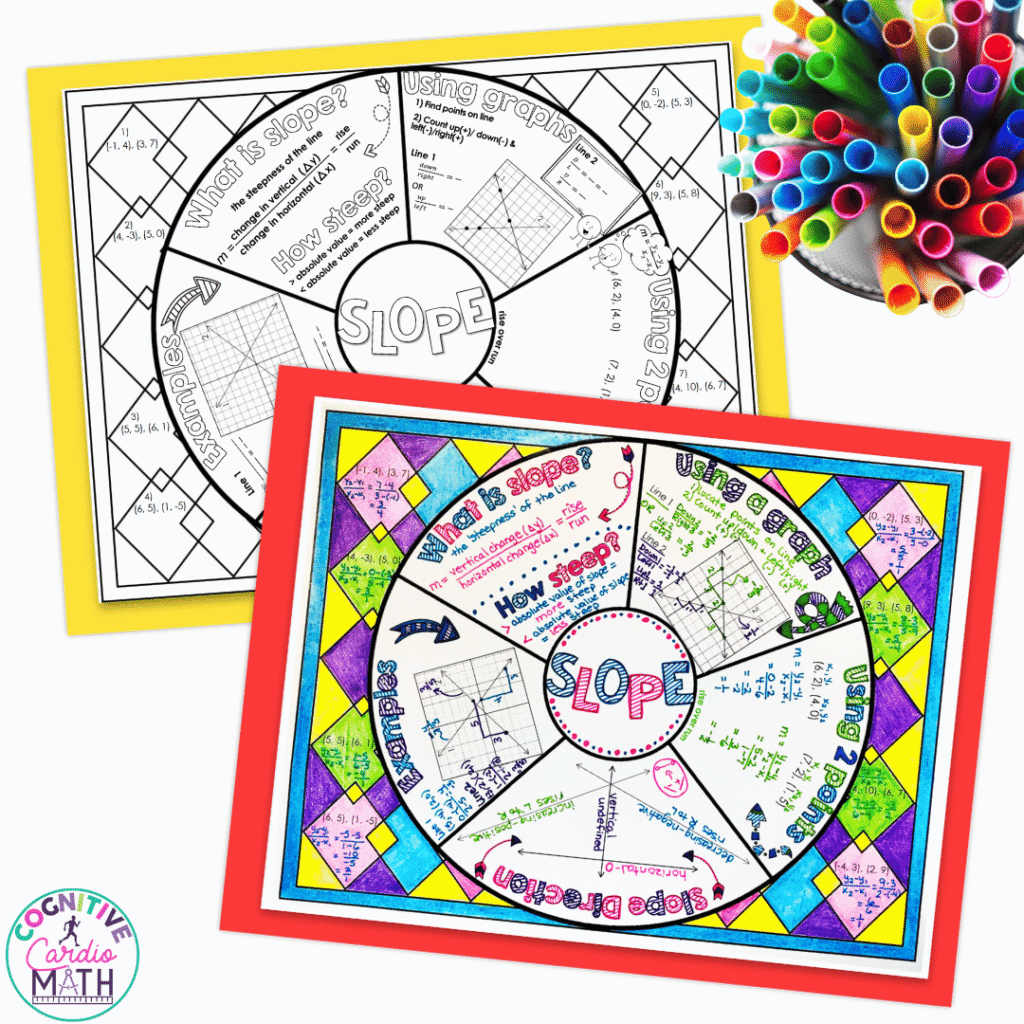
One mistake I think we’ve all made at some point is trying to teach too much at once. We explain the vocabulary. Model several examples. Introduce a formula. After all that, we then wonder why our students look overwhelmed. Visual notes naturally slow the pace of the lesson and encourage us to teach one idea before moving to the next.
For example, let’s say you’re introducing the concept of slope. Instead of handing your students a completed page of notes, you can project my Slope math wheel and work through one wedge together. You’ll start with the first section, where you can define slope. The second section explains how to use a graph to find its slope. The next section explains how to calculate the slope between two points, which will help you determine the direction of the slope. You’ll end with an example you can walk through with your students to help them apply what they learned in the previous sections. By the end of the unit, your students will have one page that tells the complete story of the concept, rather than several disconnected pages of notes.
Some teachers choose to use math wheels as a preview or pre-teaching tool, which they use in small groups or centers before jumping into the main lesson. Others use the math wheel sections as guided notes, with the whole class or small groups, and walk through the wheel section by section, as previously mentioned. Teachers also differentiate the notes by using the ‘open’ notes, fill-in notes, or pre-filled notes, depending on their students’ needs. This differentiation allows you to use math wheels in almost every situation, while meeting students where they are at.
2. Keep the Learning Going During Practice and Small Groups
The lesson doesn’t end once the notes are finished, and your visual notes shouldn’t either. One of the easiest ways to reinforce learning is to continue using the same math wheel during guided practice, in centers, in intervention groups, or even for homework. Since your students created the notes with you, they already know where to look for a reminder.
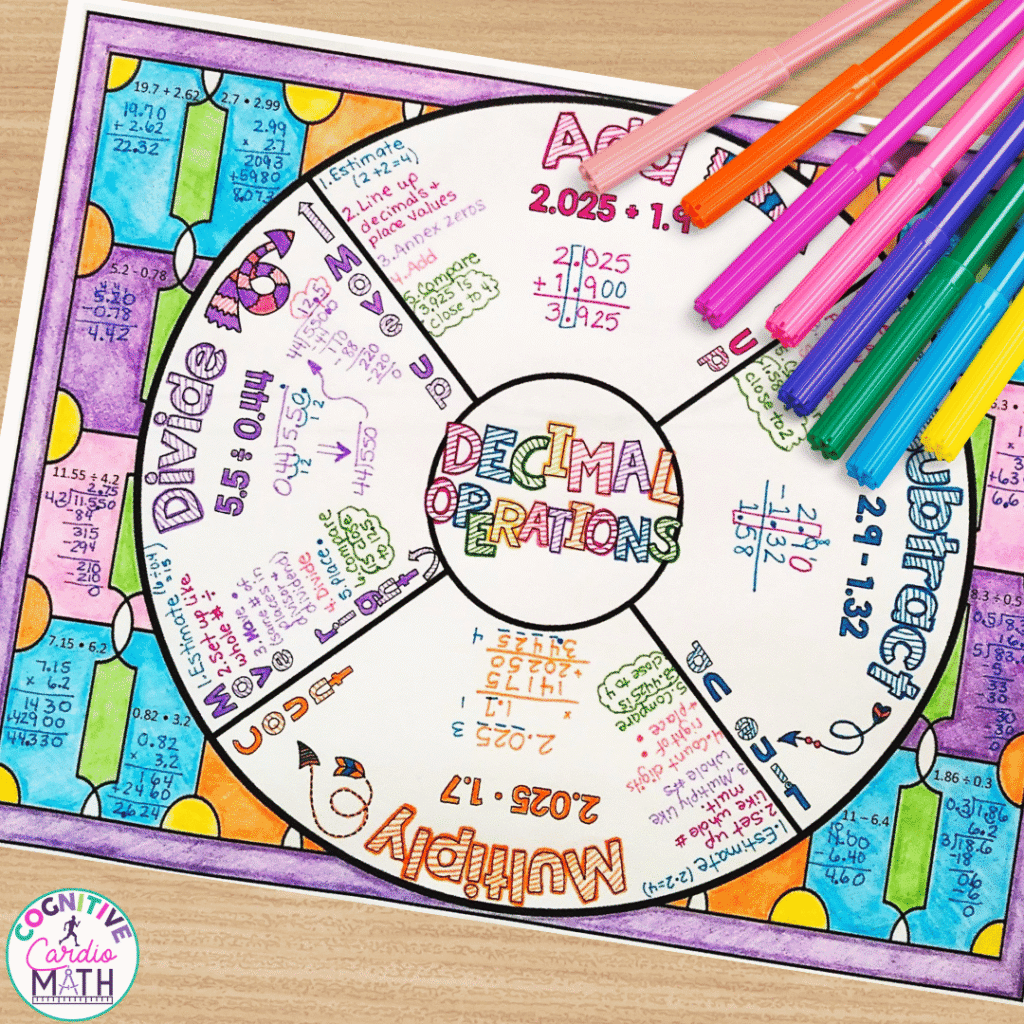
Imagine you’re meeting with a small group that’s still struggling with decimal operations. Instead of reteaching every rule from the beginning, ask your students to grab their Decimal Operations math wheel. Spend a couple of minutes together reviewing the section that is causing the struggle. Solve a couple of problems as a group. Then, let your students work through the practice problems printed around the outside of the wheel or provide them with similar problems. You’ve just provided a meaningful review without having to create another activity from scratch.
Some teachers are using these visual notes as early finisher activities. Rather than handing your students extra worksheets, encourage them to complete the practice problems, color-code important vocabulary, or add another example to one of the sections. Those few extra minutes help reinforce the learning while giving your students another reason to revisit the notes they created earlier.
Other teachers are even sending the wheels home as homework helpers. One teacher has shared….”I had something similar that was used as a home-school connection for math. I plan to use this instead. It’s a great resource for reinforcing skills and could be used as a homework helper as well.” Keeping an empty page protector in a homework folder can allow your students to slip in the math wheel that applies to the assignment they are working on, then exchange it once you move to a new unit.
3. Turn Your Students’ Notes Into Study Guides
When test review rolls around, many of us spend valuable time creating study guides. One of my favorite things about visual notes is that your students have been building their study guide all along.
Think ahead to the future where each of your students has completed math wheels. Every definition, worked example, and important reminder is already organized in one place. Instead of reviewing random notebook pages, your students can quickly find the exact concept they’re looking for. That’s especially helpful for your students who sometimes struggle to keep their notebooks organized.
Teachers are using the wheels in many simple ways to review with visual notes. Partners can quiz each other by covering one section and explaining it from memory. Small groups can work through the practice problems together before checking the examples. Some teachers even allow students to use completed math wheels during open-note quizzes. Many teachers use the entire year’s worth of wheels as review for state test prep, a time when concepts taught at the beginning of the year may have become fuzzy or hard to recall. The goal is to help your students apply their learning, not simply memorize procedures.
4. Create a Resource Your Students Will Use All Year
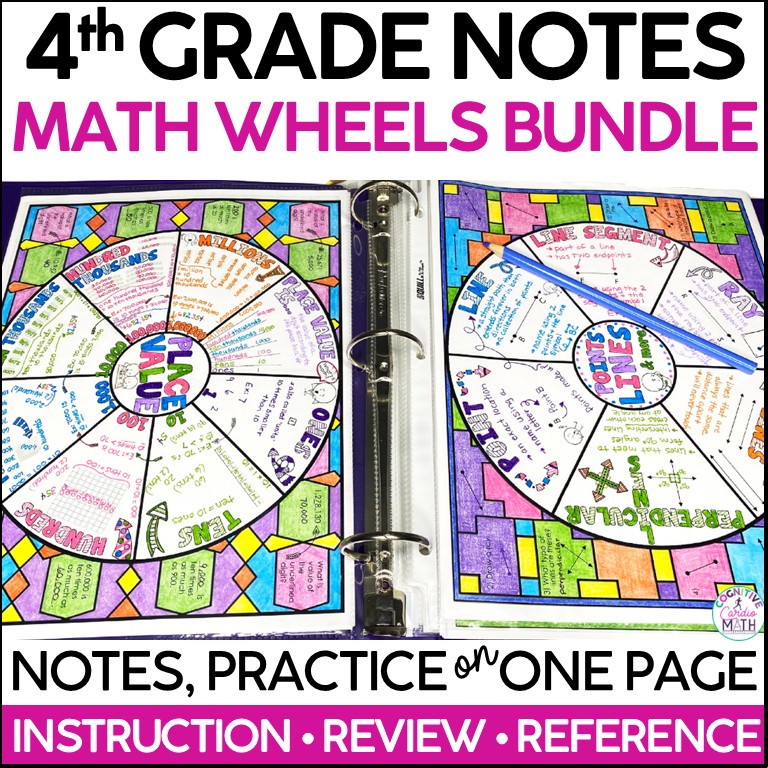
Math is one of those subjects where learning is constantly connected. A skill you taught in September often reappears during lessons in November, January, and even May. Students keep their wheels on rings, in binders, in folders, and in interactive notebooks. This way, they are always accessible for the current unit and for any review when a topic needs to be revisited.
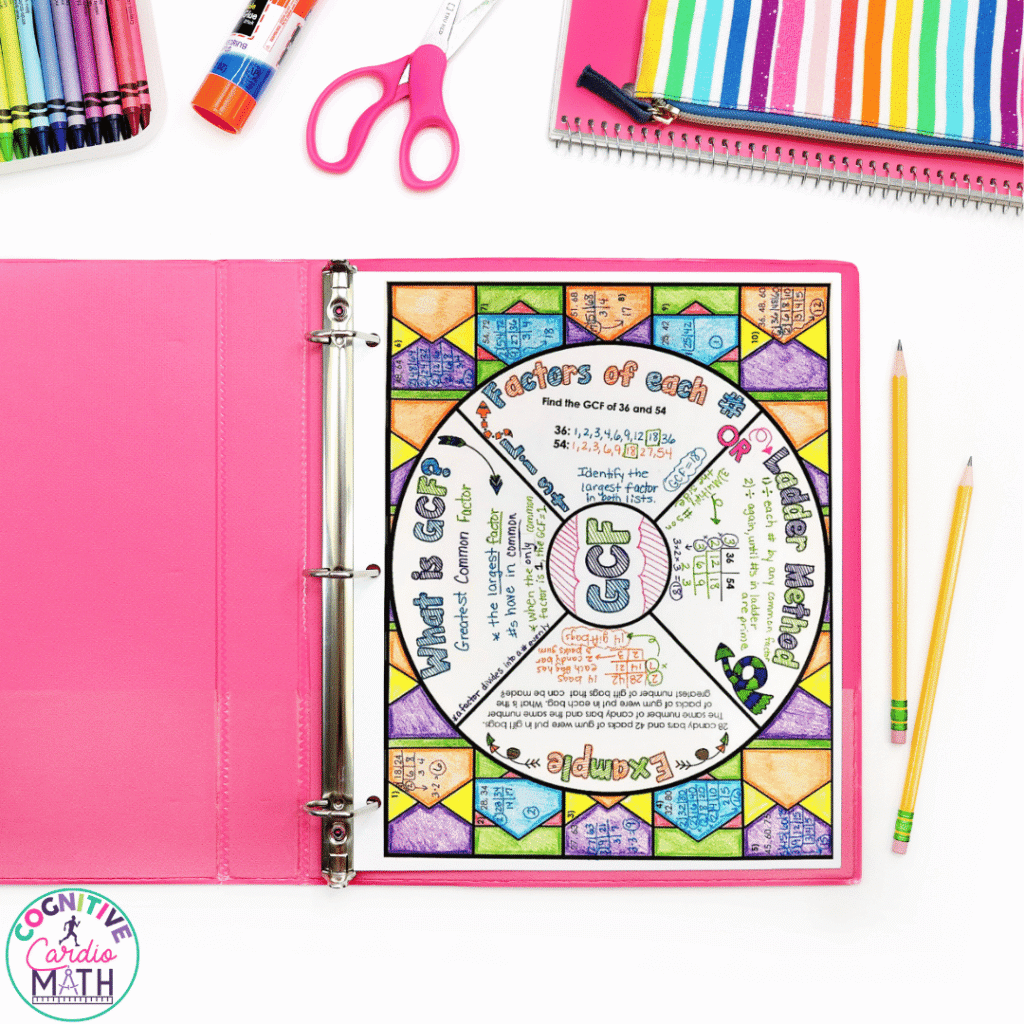
Picture this. You’re working on simplifying fractions. Someone suddenly forgets how to find the greatest common factor. Instead of stopping the lesson to reteach the concept, simply ask everyone to pull out their GCF math wheel. Within a couple of minutes, your students are reviewing both methods, checking the worked examples, and getting right back to work. The same thing happens with divisibility rules, integer operations, exponents, and so many other skills that continue popping up throughout the year.
One of my favorite moments was watching my students reach for their math wheel before they raised their hand. That small habit showed they were becoming more independent learners. Instead of immediately relying on me for an answer, they learned to use the resources they had already created. In my opinion, that’s one of the biggest impacts of visual notes.
Visual Notes Support All Learners in Your Classroom
Walk into any math classroom, and you’ll see that no two students learn the same way. Some of your students can listen to a lesson once and immediately understand the concept. Others need to see a model, work through an example, or revisit the information several times before everything clicks. One of my favorite things about visual notes is that they naturally support all of those learners without requiring you to create completely different materials for each group.

Think about your students who feel overwhelmed by traditional note-taking. Instead of staring at a full page of information, they’re working through one manageable section at a time. Your visual learners benefit from diagrams, models, and color coding that help them make connections between ideas. Multilingual learners can pair new vocabulary with worked examples and visuals. Your students receiving intervention or special education services often benefit from the layout and built-in examples. The math doesn’t change, but the way your students access the learning becomes much more manageable.
One of my favorite pieces of feedback is hearing that students begin using this same note-taking style in other subject areas. After building visual notes in math, some of your students will naturally start organizing information in science, social studies, or even language arts using similar layouts. To me, that’s one of the biggest wins. We’re helping our students develop a note-taking strategy they can carry with them throughout every subject and every year.
Creating Your Own Visual Notes
One of the things I enjoy most about visual notes is how flexible they are. We do not all introduce a concept the same way, and that’s okay. As you begin planning a wheel, think about what your students really need to understand. Are you introducing several new vocabulary words? Teaching a multi-step process? Comparing two different strategies? Answering those questions first will help you decide how to arrange the information before you ever start designing the page.
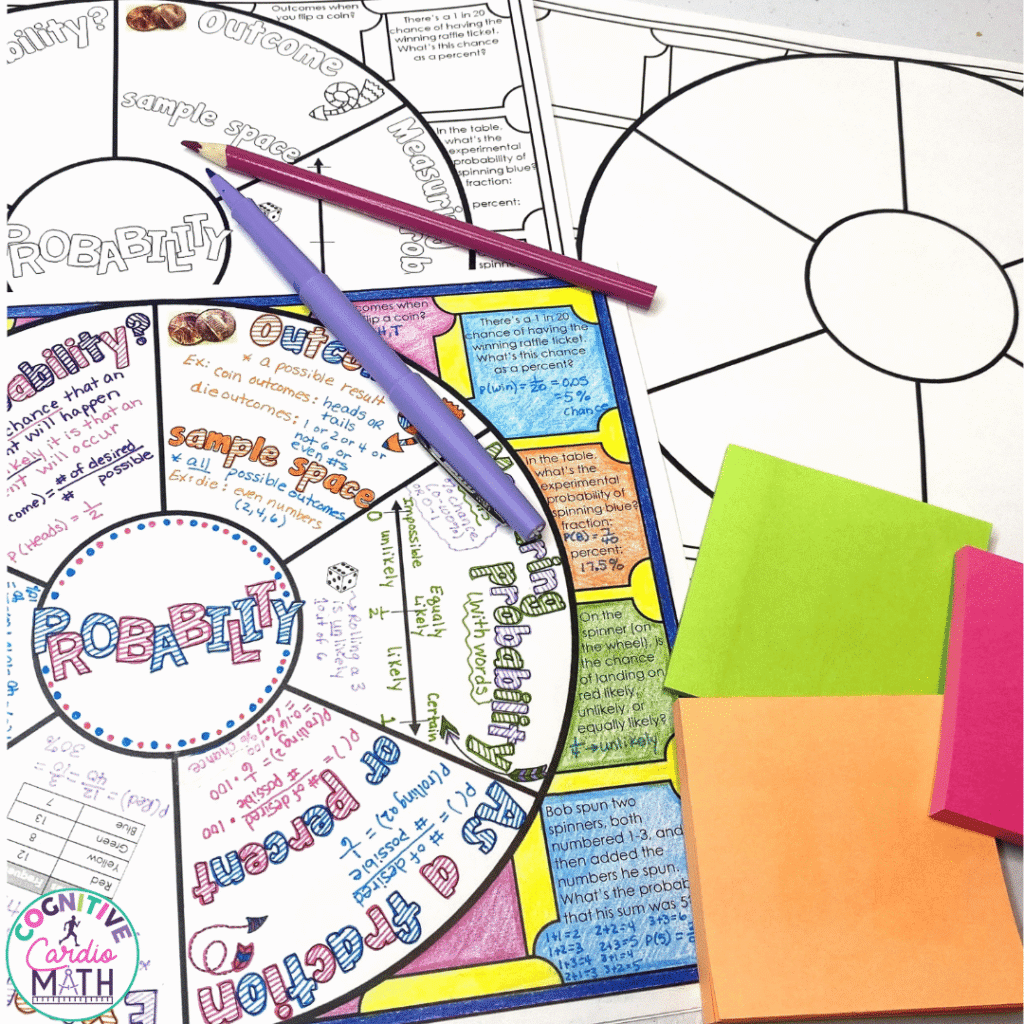
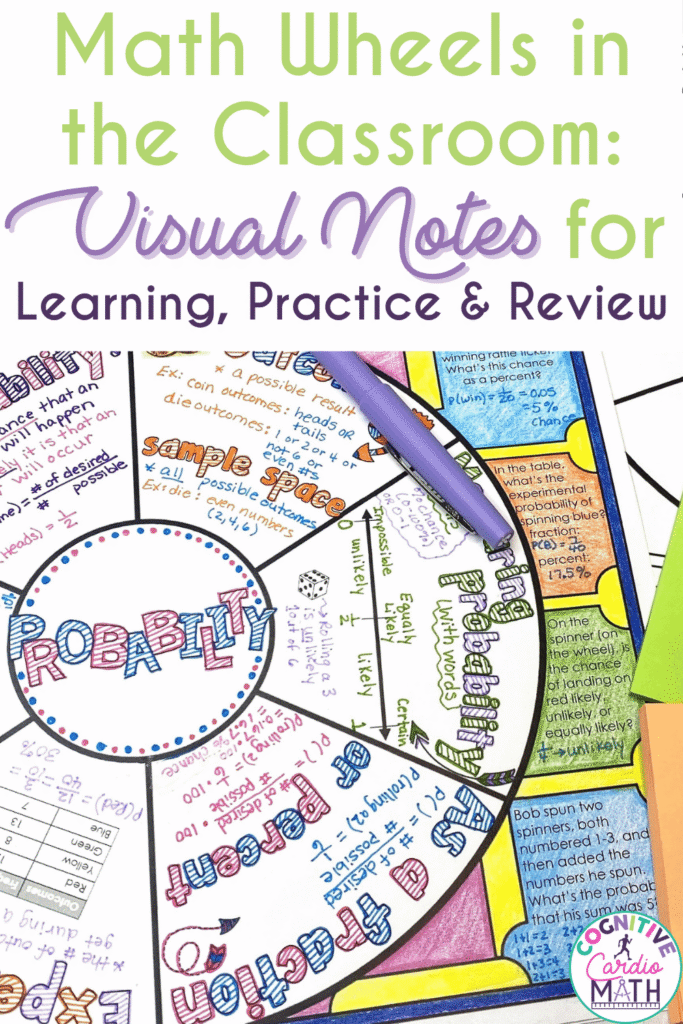
For example, if you’re creating a math wheel for probability, you might dedicate one wedge to vocabulary. Then you might include a section on theoretical probability and another on experimental probability. You can use the remaining sections for examples and practice. Another math wheel might gather information in a completely different way because your students need quick-reference examples rather than multiple strategies. Every topic lends itself to a slightly different layout, and that’s part of what makes visual notes so effective. The nice thing is that you don’t have to start from scratch. Every math wheel includes completely blank, editable templates you can use for any topic in your classroom.
Bring Visual Notes Into Your Classroom
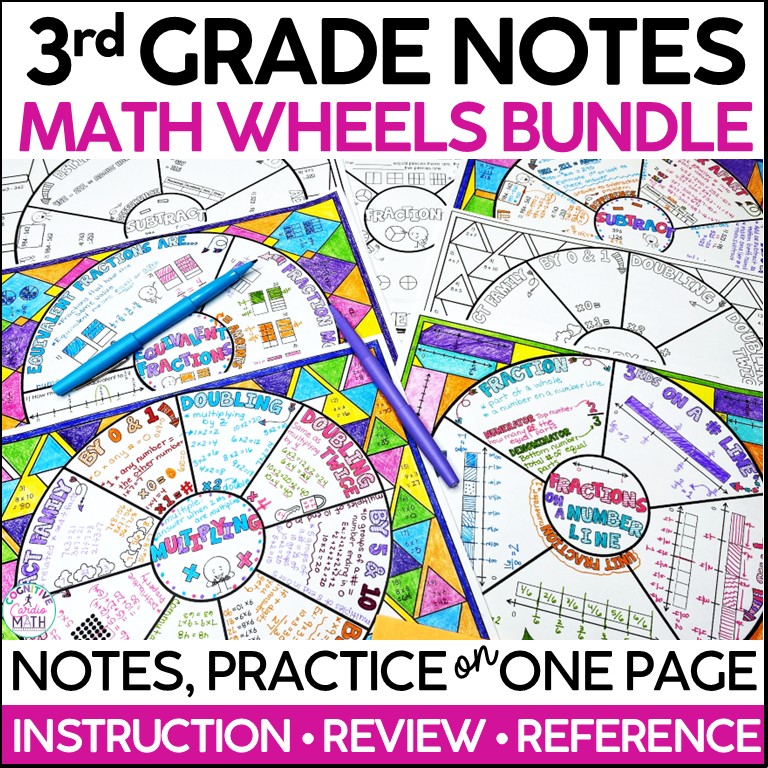
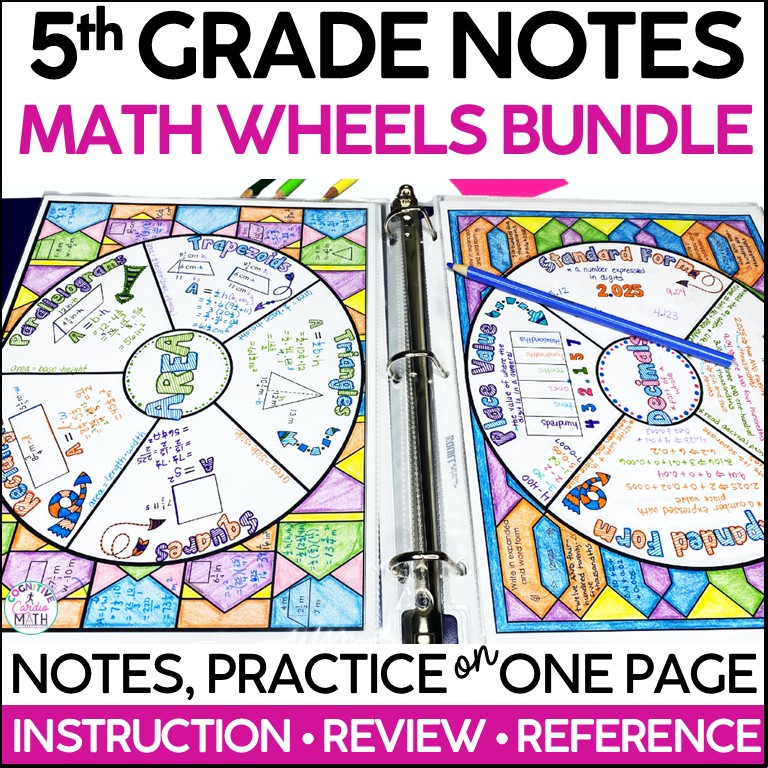
If you’re ready to spend less time recreating notes and more time helping your students build lasting understanding, I’d love for you to explore my collection of math wheels. You’ll find visual notes for grades 2–8 covering topics like fraction operations, ratios, geometry, probability, algebra, statistics, and so much more. I designed each wheel to help your students approach learning, practice skills, and create a tool.
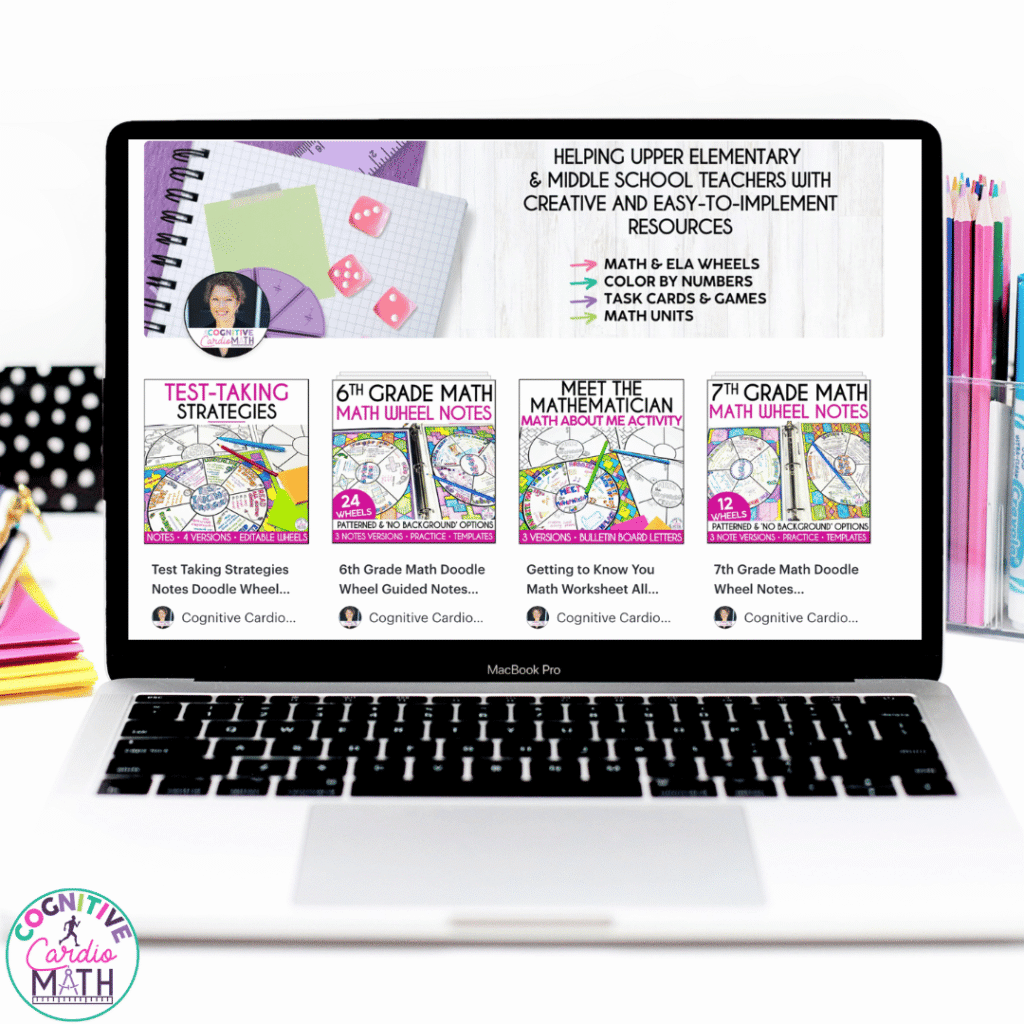
If you enjoy customizing your lessons, you’ll also find blank templates included. They will let you or create your own wheels for your curriculum and teaching style. Whether you’re introducing a new concept, reteaching a challenging skill, or preparing for an upcoming assessment, you’ll have an effective resource that’s ready to support both you and your students from the very first lesson.
More Than Just Another Set of Notes
At the end of the day, visual notes aren’t about making folders or notebooks look prettier. They’re about giving your students a resource they’ll actually use. Your students will spend less time feeling frustrated and more time building confidence when they know exactly where they can find helpful information.
That’s what I love most about math wheels. They don’t disappear after one lesson or quiz. They grow alongside your instruction, support your students during practice, and become a familiar reference. When your students begin reaching for their notes before they reach for your help, you’ll know those visual notes are doing exactly what they were designed to do.
Save for Later
If you’re looking for new ways to make math note-taking more meaningful, don’t forget to save this post to your favorite math Pinterest board. That way, you’ll have these visual note ideas ready the next time you’re planning a new unit or searching for a review strategy that your students will actually use.