Some math topics can feel daunting before you ever start teaching them. Long division can definitely be one of them. Students have to keep track of so many steps, and one small mistake can change everything. Even your students who usually feel confident in math may start second-guessing themselves. You may see a different side of some of your students during this unit. Your student who normally jumps right into math may suddenly hesitate, shut down, or say, “I can’t do this.” You may see math anxiety creep in as the problems get longer. When several of your students need something different, long division can start to feel overwhelming for you, too.
That’s why I think it’s so important to build your own toolbox of strategies. The more ways you can explain and support long division, the more tools you can give your students. Sometimes they need another explanation, but sometimes they need extra tools like a highlighter, graph paper, or a visual reference. Let’s fill your toolbox with strategies you can pull out when your students need them.
Build Understanding Before Teaching Long Division
Before jumping into long division, spend time making sure your students understand what division represents. Go back to the idea of separating a quantity into equal groups. Then, connect those groups to the place value of the dividend. This gives you something concrete to return to when all the steps start feeling abstract.
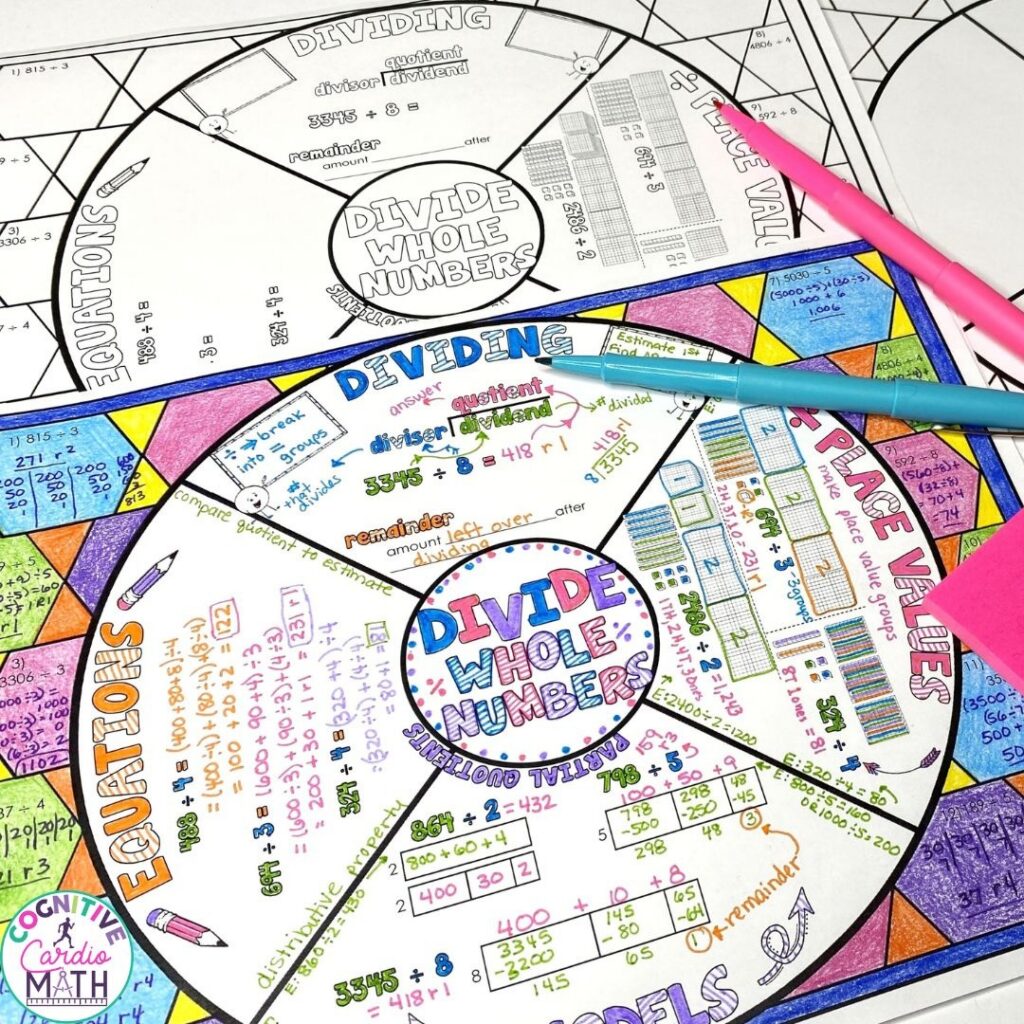
For example, try 324 ÷ 4. Ask your students, “Can we divide 3 hundreds equally among 4 groups?” There aren’t enough hundreds, so those 3 hundreds need to become 30 tens. Combined with the 2 tens already there, you now have 32 tens to divide among four groups. Your students can then use 32 ÷ 4 = 8 to determine that each group gets 8 tens. Suddenly, that regrouping makes sense. Later, when your students work through the long division steps, you can connect their written steps back to this thinking.
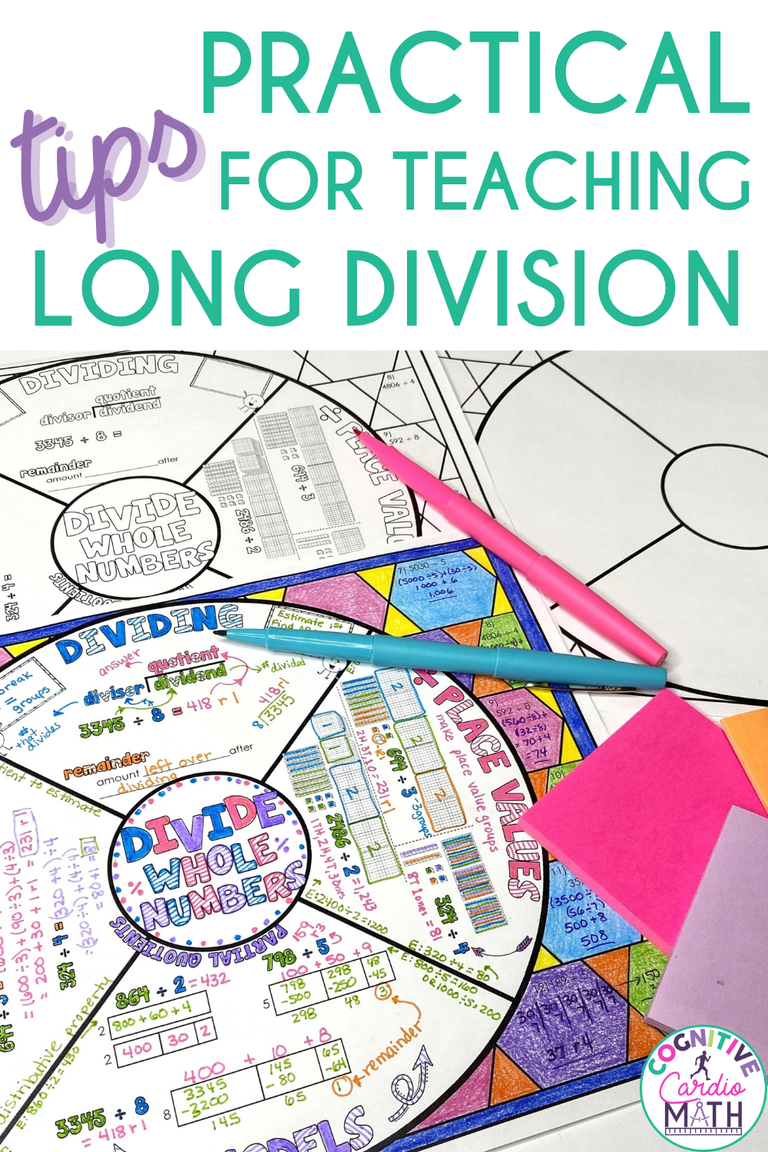
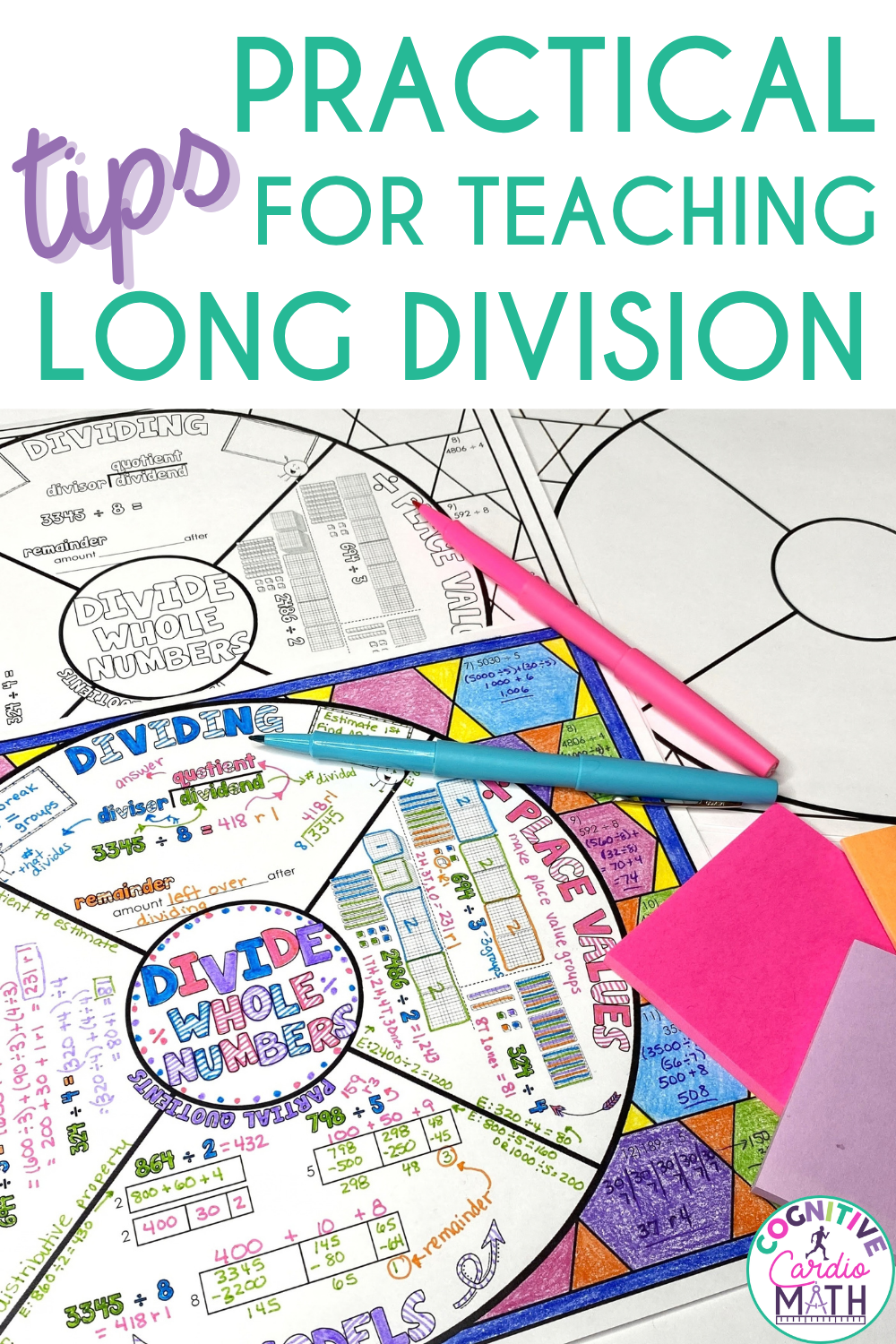
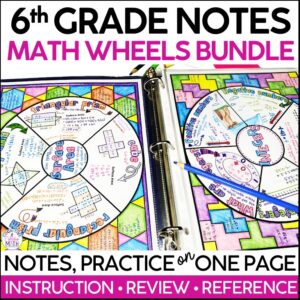
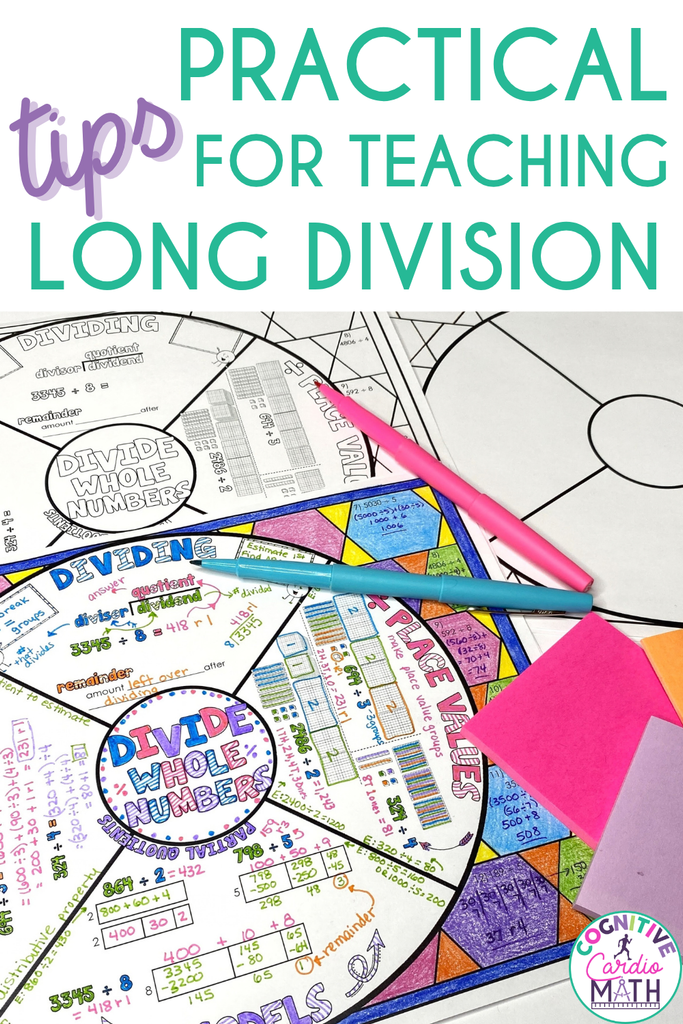
This is where I would use my 4th Grade Dividing Whole Numbers Math Wheel. It includes place value, models, partial quotients, equations, and division vocabulary. You can use it before introducing long division or return to it when your students need more support. Sometimes going back to the “why” is exactly what helps the steps start making sense.
Introduce Long Division Without Rushing the Process
Once your students have that foundation, you can begin connecting their understanding to the long division process. This is one place where I wouldn’t rush. Your students are learning a process they’ll repeat several times within one problem. Give them time to get comfortable with that routine.
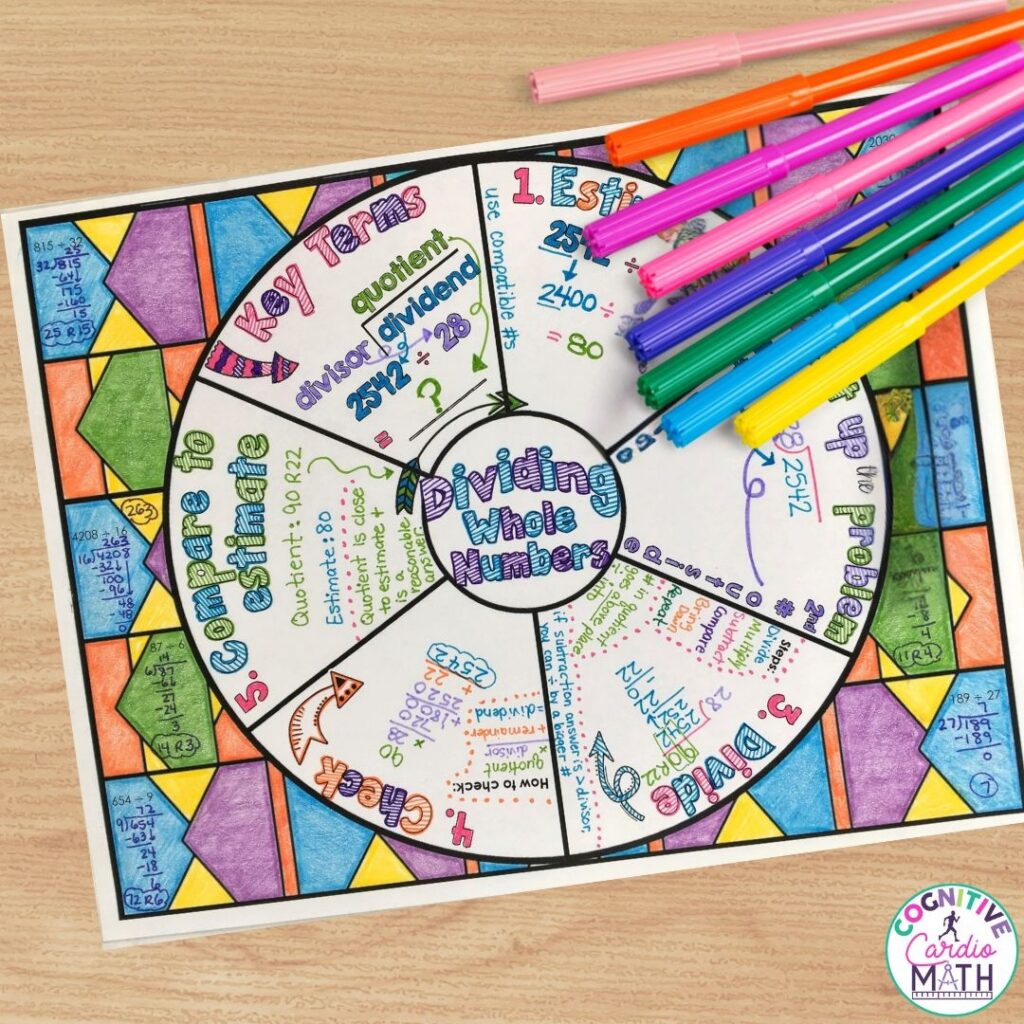
As you model, use consistent language for each step. Ask your students, “How many times can my divisor fit into this number?” Then ask, “What do I multiply to find how much I’ve used?” Subtract to see what’s left, bring down the next digit, and repeat.
I also like to talk through my thinking as I solve. Your students need to hear more than the steps. They need to hear how you decide which digit to use and why your quotient digit belongs where it does. Those little decisions can feel obvious to us but may not be obvious to our students.
This is a great place to introduce my 5th Grade Long Division Math Wheel. On this math doodle wheel, your students will work through key terms, estimating, setting up the problem, dividing, and checking. Once you’ve completed it, your students can keep the wheel in their notebooks as a reference. That gives them somewhere to look besides immediately asking you, “What do I do next?”
I also wouldn’t rush to take that reference away. Long division already asks your students to keep track of quite a bit. Let the wheel serve as training wheels while the process becomes more familiar. You can gradually encourage your students to try the next step before looking back.
Make Long Division Easier to See
Sometimes your students don’t need another explanation of long division. They know what they’re supposed to do, but they’re losing track of where they are. Before reteaching the entire process, try changing what the problem looks like. A few simple visual supports can make a surprisingly big difference for your learners.
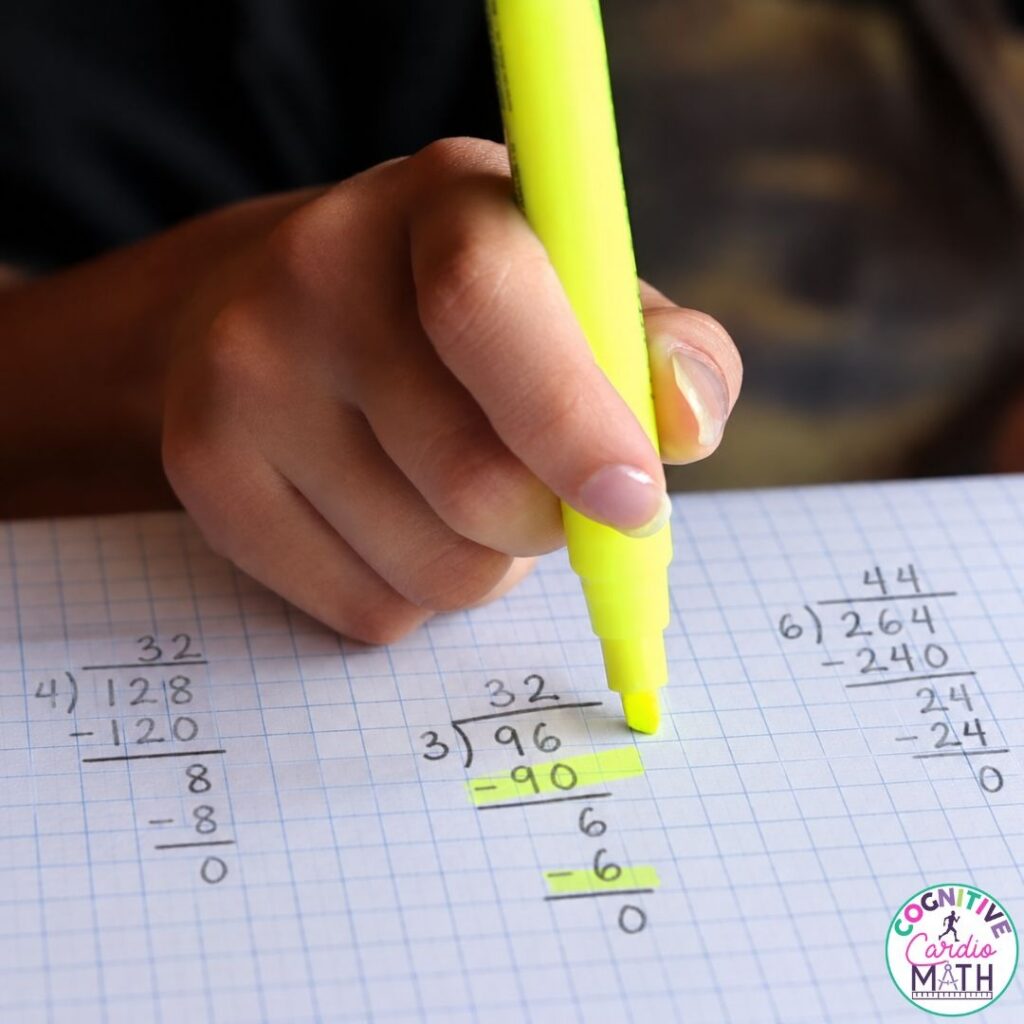
One of my favorite supports was the highlighter trick. Suppose your students are solving 2,574 ÷ 28. Start with the 2, then 25, and ask whether 28 can fit into either number. When it can’t, lightly highlight or underline 257.
Tell your students, “This is the number I’m working with right now.” That gives their eyes one place to focus instead of asking them to process the entire dividend. Once they finish that part and bring down the 4, their attention moves with them. It’s a small change, but it can make a crowded problem feel much more manageable.
Graph paper is another tool I recommend, especially for students whose numbers seem to wander across the page. Have them place one digit in each square. Keep the quotient above the correct place value, and keep multiplication and subtraction aligned underneath. You can also draw vertical lines on notebook paper if you don’t have graph paper handy.
Before deciding your student needs another lesson, ask them to talk you through a problem. If they know what comes next but continually misalign digits, you may have an organization problem. Try graph paper before assuming they don’t understand division. Sometimes changing the workspace is more helpful than explaining the process for the fifth time.
Use Estimation as a Long Division Safety Net
Estimation can easily become something your students do because the worksheet has a box that says “estimate.” You want it to have a bigger job than that. An estimate gives your students a target before they start working through a long division problem. It also helps them recognize when an answer doesn’t make sense.
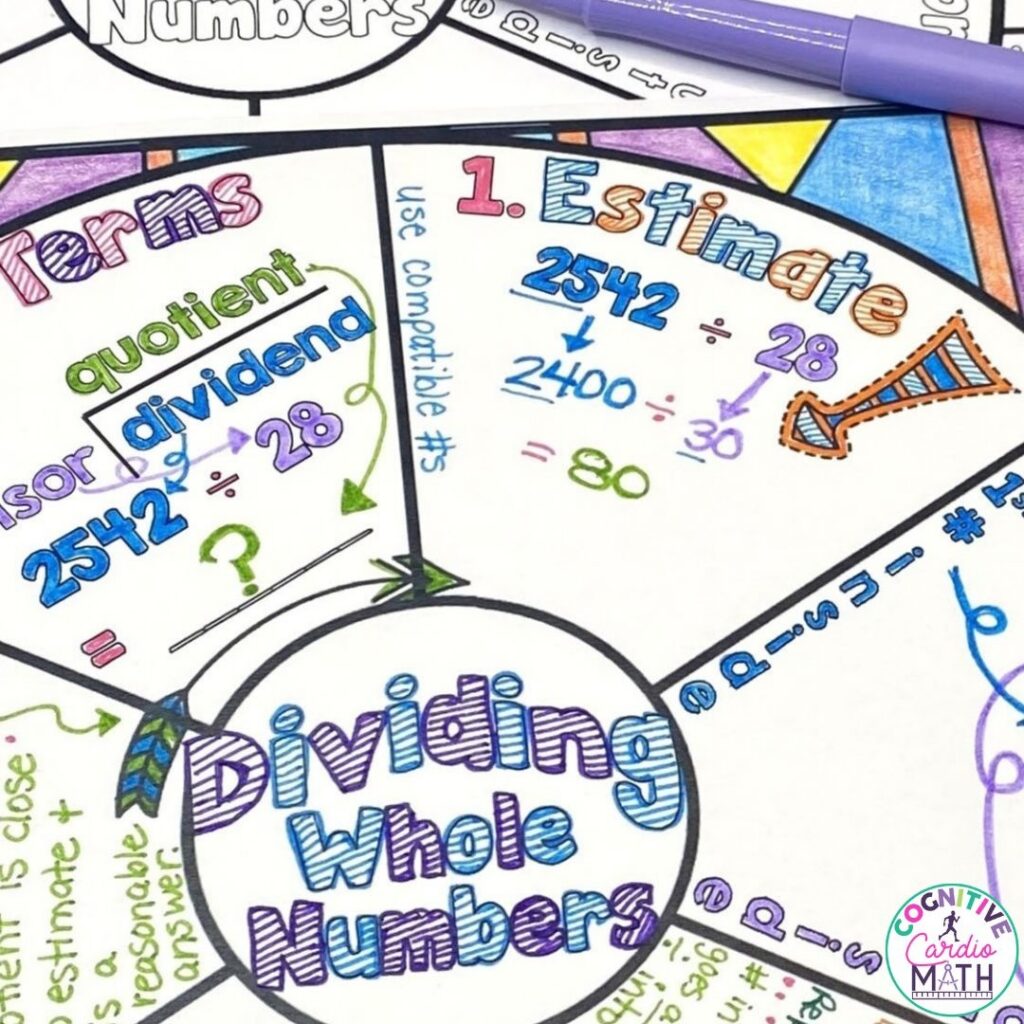
For example, your students might be solving 2,542 ÷ 28. Before doing any long division, look for compatible numbers together. You might use 2,400 ÷ 30 and estimate a quotient of about 80. Have your students write that estimate beside the problem so they don’t forget it.
Next, solve the problem; when you finish, come back to the prediction you made earlier. If a student gets something like 908, don’t immediately tell them where they made a mistake. Take a minute and ask them, “Our estimate was around 80. What do you notice about your answer?” Now the estimate is doing some of the work for you.
This can be especially helpful for your students who assume any number at the bottom of the problem must be correct. Long division has enough steps that an early mistake can travel through the entire problem. Estimation gives your students a reason to stop and question the result. That’s a habit you want them carrying into other areas of math, too.
Give Your Students Time to Practice Before Adding More
Once your students understand the process, give them time to get comfortable with it. I do not recommend rushing from introducing the concept straight into every possible type of long division problem. Start with problems without remainders so your students can concentrate on the routine. You’re giving the process a chance to become more familiar before adding another decision.
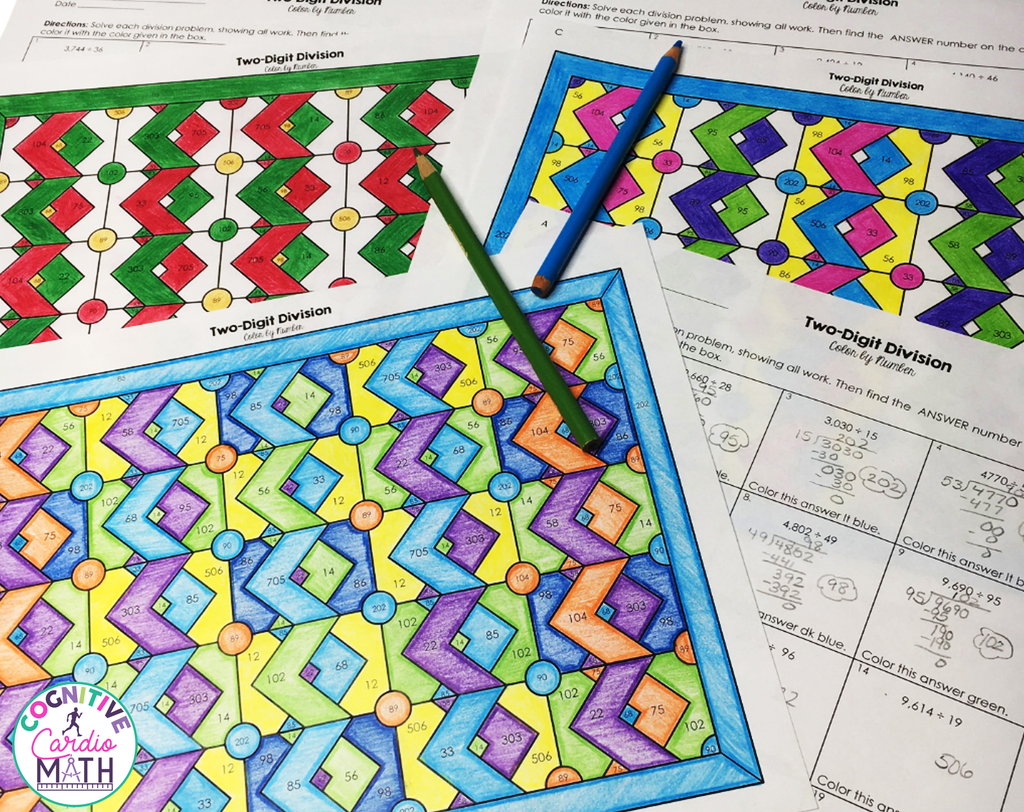
This is also when you want to start watching how your students use the tools we’ve introduced. Who still needs their math wheel beside every problem? Who reaches for graph paper without being reminded? Does anyone start with a highlighter but realize halfway through that they don’t really need it anymore? That’s what you want to see. The goal isn’t for all your students to use every strategy. You want your students to begin recognizing where they get stuck and which tool helps them move forward.
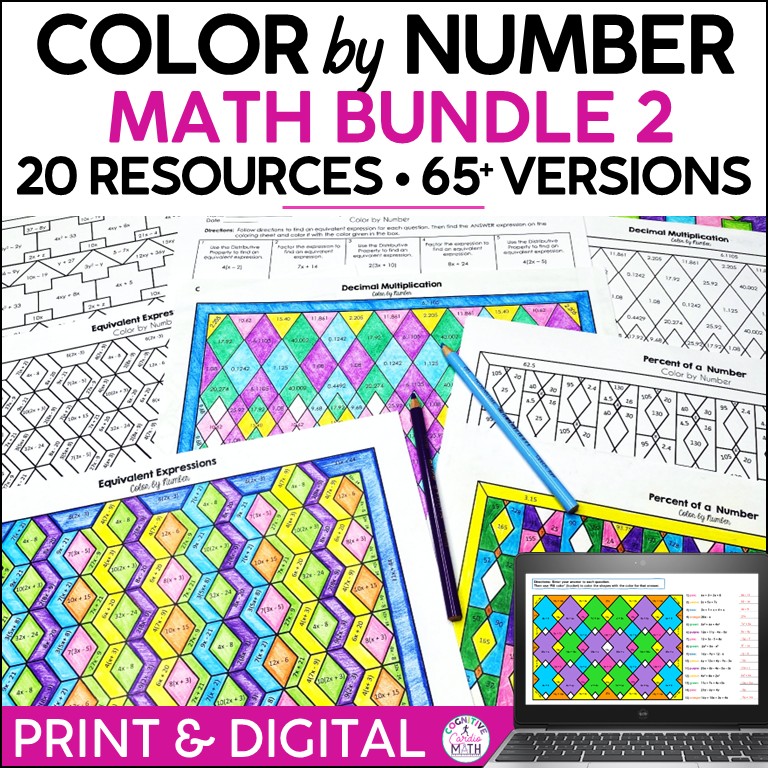
My Long Division Color by Number Without Remainders activity fits well during this stage. It gives students extra practice after they’ve learned the process, rather than while they’re still figuring it out. The resource includes three versions, coloring pages, answer keys, and a digital option to meet your classroom’s needs. Equally important, it creates an approachable practice opportunity for your learners.
As your students work, you get a chance to listen instead of doing all the talking. If you notice an error, try asking, “Show me where you think things changed.” Having your students find their own mistakes builds a much more useful skill than you circling it or giving them the answer.
Build Independence Before Moving On
After some initial practice, look for signs that your students are ready for a little more independence. Can they begin a problem without waiting for you? Can they recover when they forget a step? Are they checking a reference instead of immediately raising their hand?
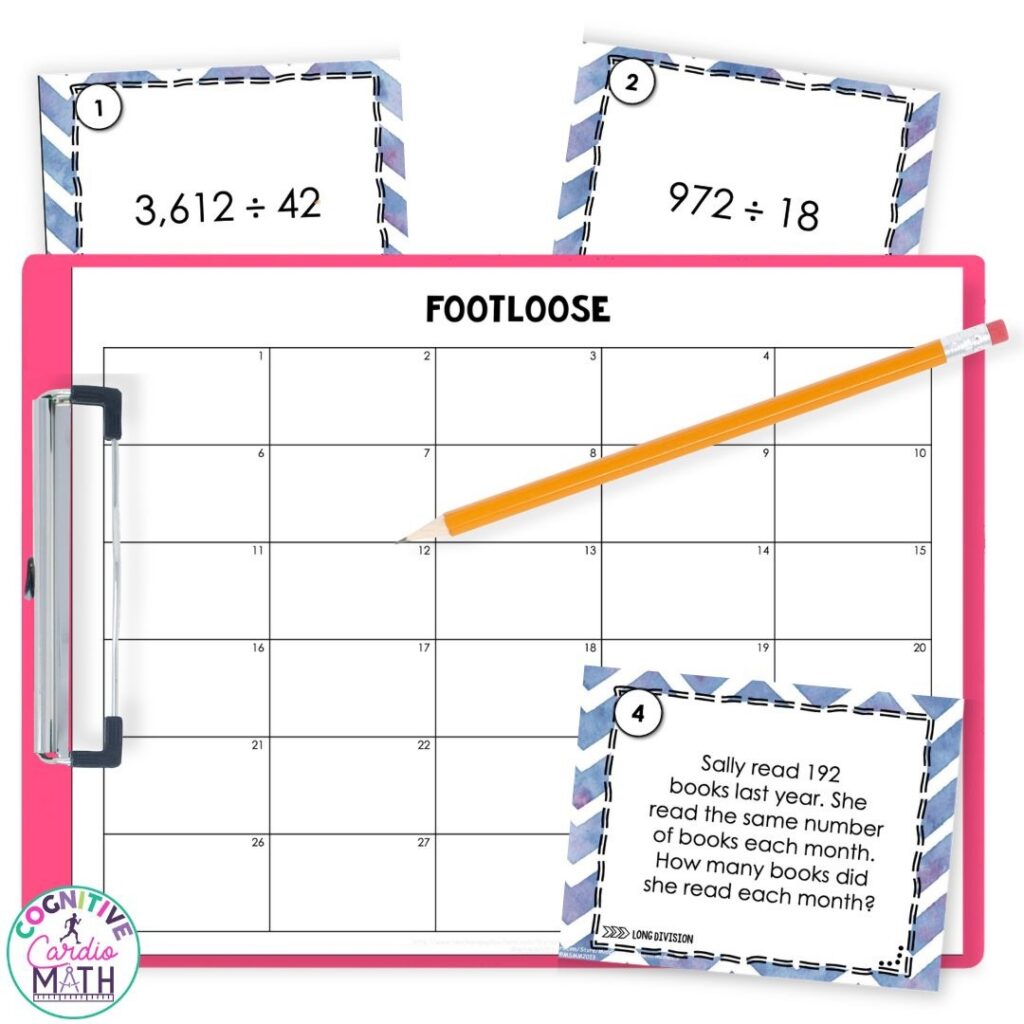
When you start seeing those changes, give your students more opportunities to practice without changing everything at once. My Long Division Footloose Task Cards work well here. While solving the math problems on each task card, your students will divide three- and four-digit numbers by two-digit divisors, without remainders. The set also includes word problems requiring long division.
You can give each student a card and have them exchange it after solving. You can also place the cards around the room and let your students move between problems. They record each answer on their Footloose grids as they work, while showing their work.
You and your students will like the movement here because your students have already practiced the process more quietly. Now you’re changing the format without asking them to learn another new skill. You can circulate, check in, and pay attention to which students are actually ready for the next step. If someone is still struggling, you don’t have to stop everyone else. Pull out the tool that matches the problem you’re seeing. Maybe that’s the math wheel, graph paper, a highlighter, or a quick return to place value.
Add Remainders When Your Students Are Ready
Once your students are comfortable with problems that divide evenly, you can add remainders. I recommend framing this as an extension of what your students already know. You aren’t throwing out the long division process and starting over. You’re figuring out what happens when your groups aren’t perfectly even.

As you model, spend time explaining what the remainder represents. Ask questions as you model, such as, “What is left after we’ve made as many equal groups as possible?” Connect that leftover amount to the remainder in the written problem. That helps keep the remainder from becoming a random number your students tack onto their quotient.
You can also ask your students to compare the remainder to the divisor. The remainder should always be smaller than the divisor. If it isn’t, the divisor can still fit into that amount at least one more time. Teaching your students to check for this gives them another way to catch their own mistakes.
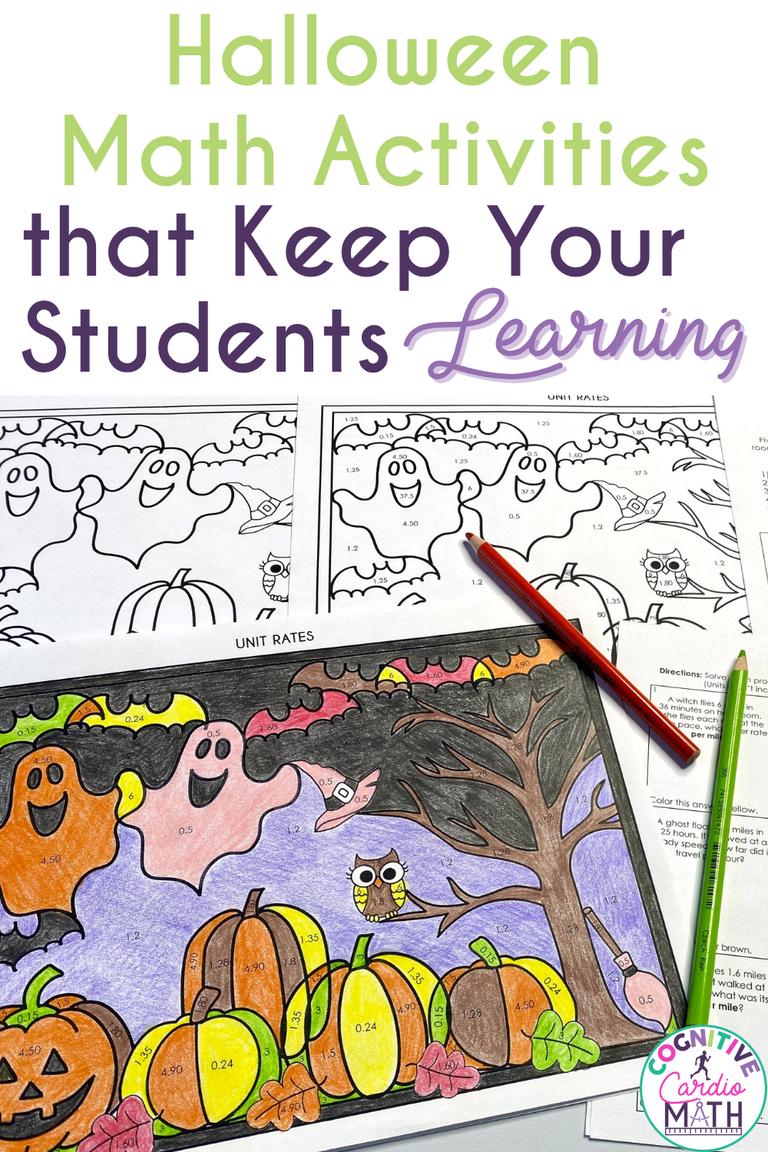
My Long Division Color by Number With Remainders is great practice for these skills when your students are ready. In this activity, your students solve 20 division problems and use the remainders to determine how they color the page. I made sure the remainder matters to the activity instead of being something your students can ignore after solving.
Don’t Let Long Division Disappear After the Unit
We all know what can happen after a unit test. You move on, several weeks pass, and suddenly your students look at a division problem as if they’ve never seen one before. That’s why I recommend bringing long division back in small doses throughout the year through spiral review.
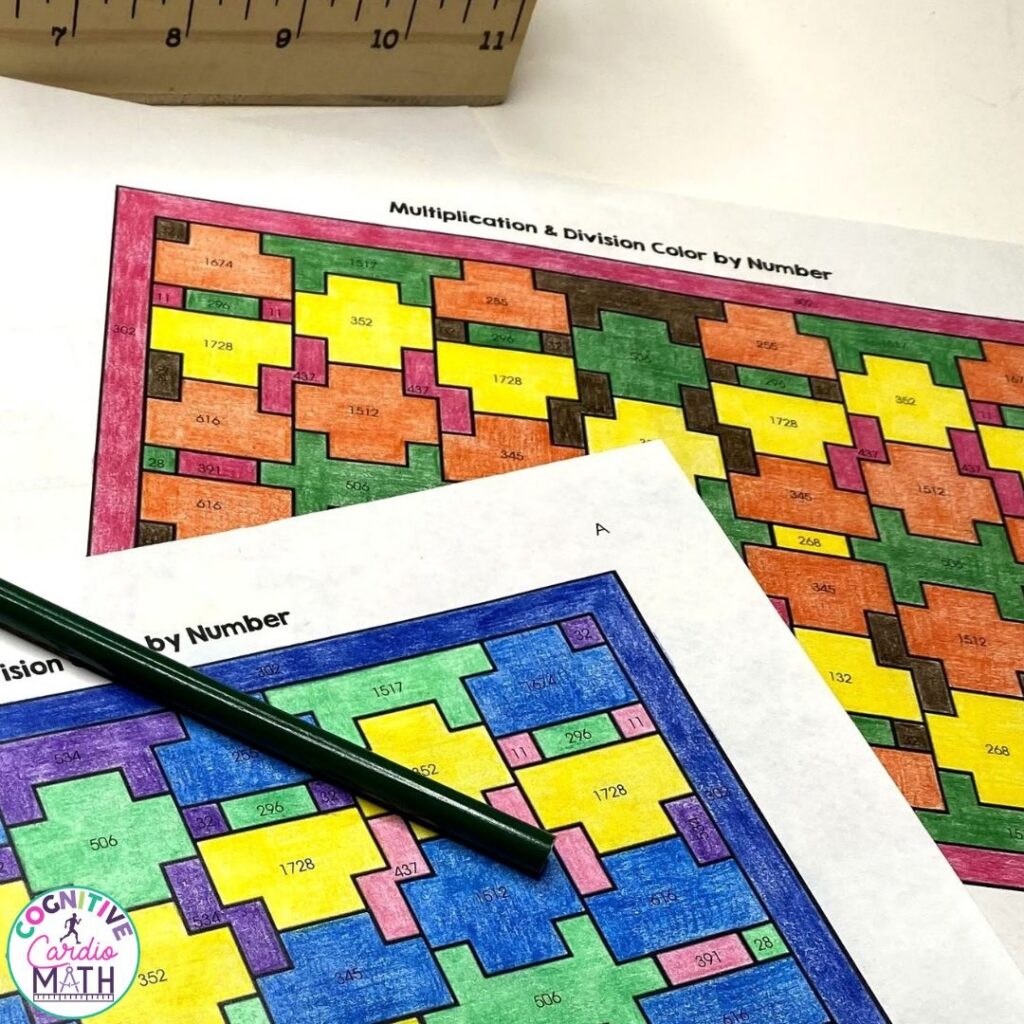
Later in the year, you can also take away the giant clue that says, “This is a division lesson!” Mix multiplication and division problems together. Add word problems where your students have to decide which operation makes sense. Now they’re practicing when to use division, not only how to complete the process.
My Multiplication and Division Color by Number works well for this kind of spiral review. In this version of the activity, your students will solve multiplication and long division problems, including word problems requiring either operation. This is also a good time to see which tools have stuck. Ask your students, “What would help you solve this?” Some may still pull out their math wheel or grab graph paper. Others may realize they can tackle the problem without either one.
That’s really what you want all along. You’re not trying to make your students dependent on a collection of tricks. You’re giving them options while they build enough understanding and confidence to decide what they need.
Find More Math Resources to Support Your Students
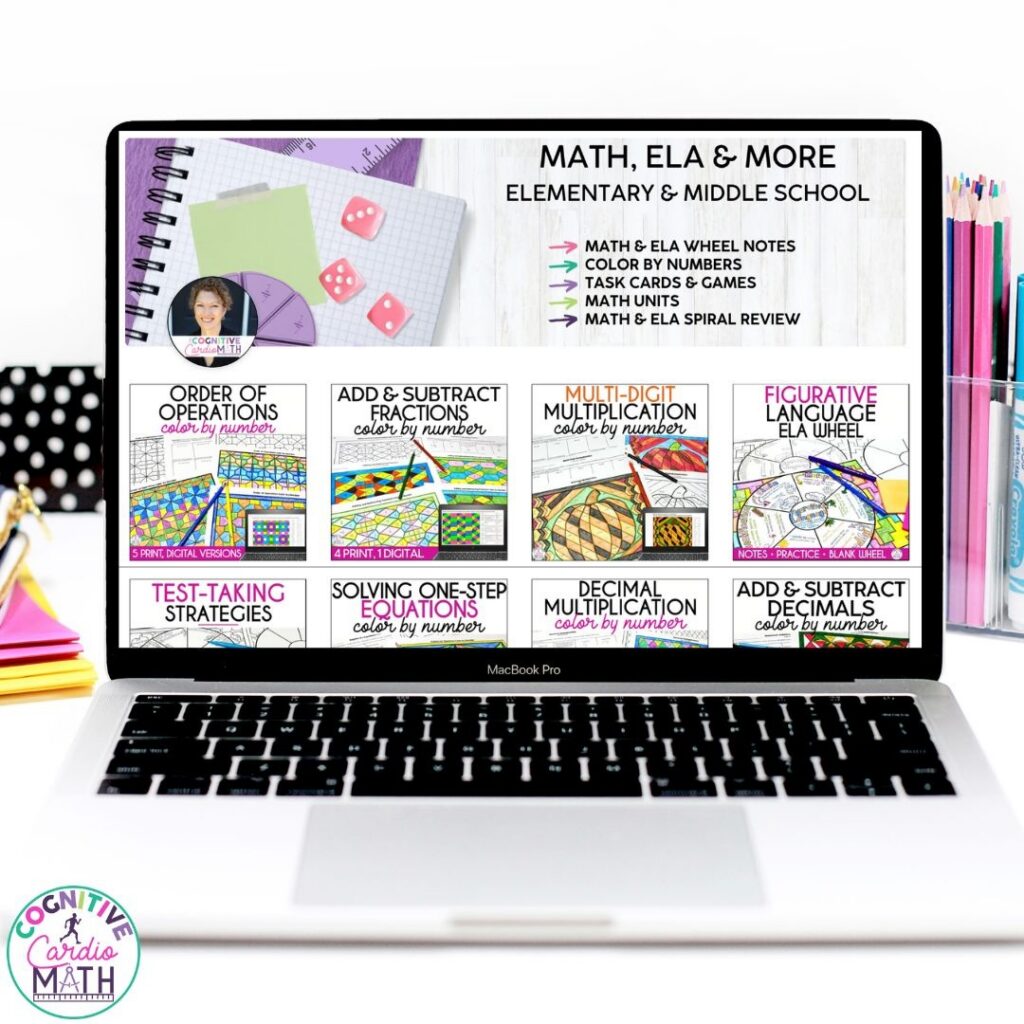
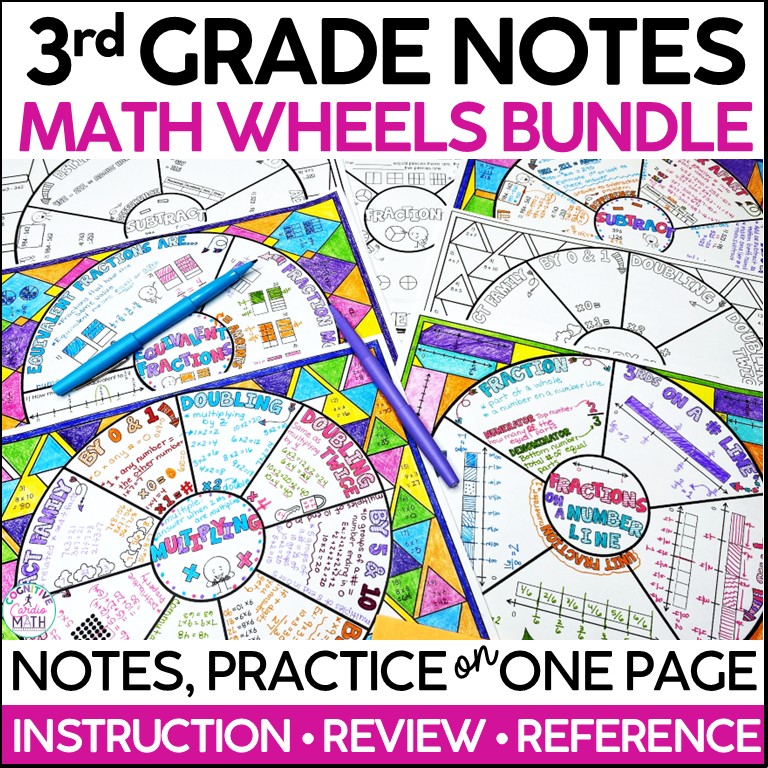
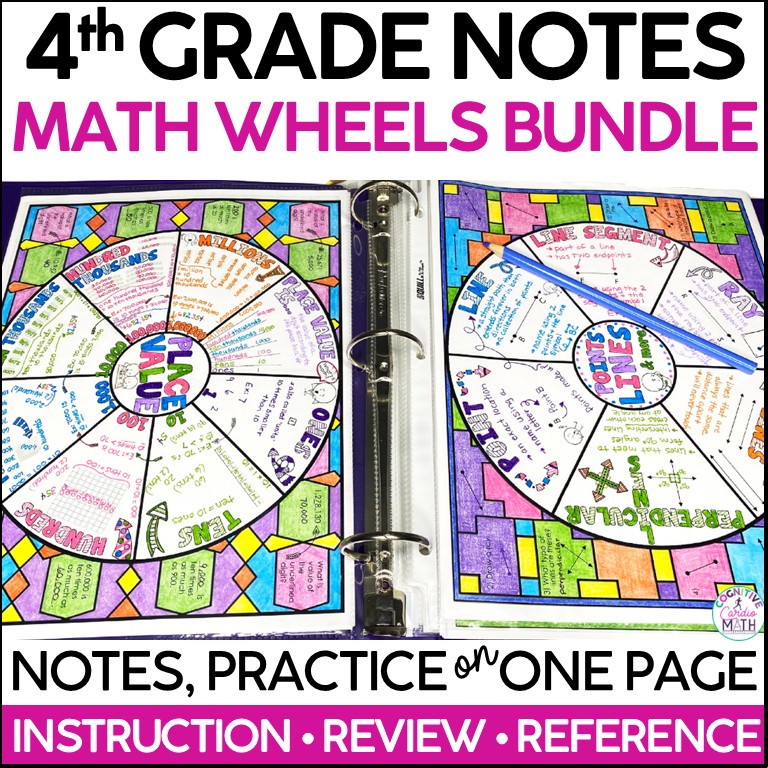
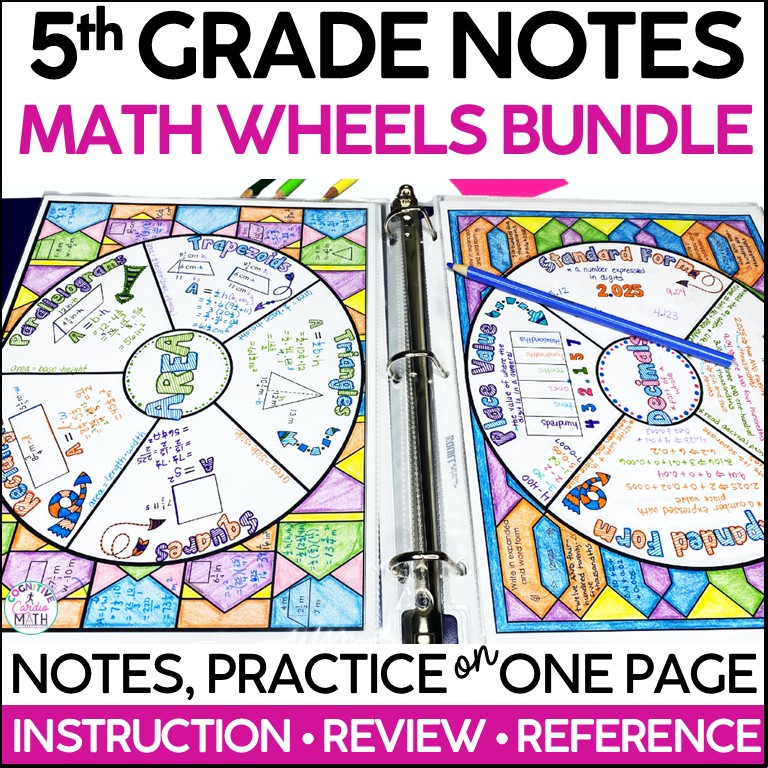
No matter where your students are in their math learning, having the right resources ready can make your planning a whole lot easier. You may need a complete unit to guide your instruction, a task card game for extra practice, or a review activity to bring a skill back later. These options give you more flexibility to meet your students where they are.
Having several strategies in your toolbox means you don’t have to panic when the first explanation doesn’t click. You can look at what your student is doing and choose your next move. Even better, you can help your students begin making those choices for themselves.
You can find even more math resources in my TPT shop. Browse the shop and find something that supports what your students need right now while making your teacher life a little easier.
Save These Long Division Tips for Later
Save this post to your favorite math Pinterest board so these long division strategies are easy to find. Then, when your student gets stuck, you’ll have a few more tools ready to pull out.