

Spiral review is one of the most effective ways to help our students retain math skills over time, but keeping it engaging can be a challenge. Your students don’t learn concepts once and move on forever. They need regular opportunities to revisit, apply, and strengthen their understanding. We often think of spiral review as one resource for the whole year that spirals back on a daily basis to review concepts that were already taught. However, there are other ways to implement some spiral review. It could be weekly review centers that spiral back to concepts already taught, or different types of daily warm up. It could even be one review day per month where a variety of concepts are revisited. To make spiral review effective, it’s important to choose intentional, engaging formats. Color by number activities offer a way to keep spiral review consistent while adding visual interest, structure, and accountability that help our students stay focused and invested.
Why Spiral Review Builds Math Confidence

Spiral review works because it reflects how learning actually happens. Understanding deepens with repeated exposure, not just learning it once. When your students encounter familiar skills over time, they begin to recognize patterns, apply strategies more flexibly, and retain concepts longer. In many cases, students don’t ‘get’ the concept during the unit, but suddenly understand it after repeated exposure.
Spiral review also sends an important message to your students that learning isn’t linear. Revisiting a skill doesn’t mean something went wrong. It means the brain is strengthening connections. That mindset shift can be incredibly powerful, especially for your students who struggle with confidence in math.
Over time, spiral review helps reduce anxiety. When your students know they’ll see skills repeatedly throughout the year, mistakes feel less permanent. That sense of predictability creates a classroom environment where your students are more willing to engage and take risks.
How Color by Number Keeps Spiral Review Engaging

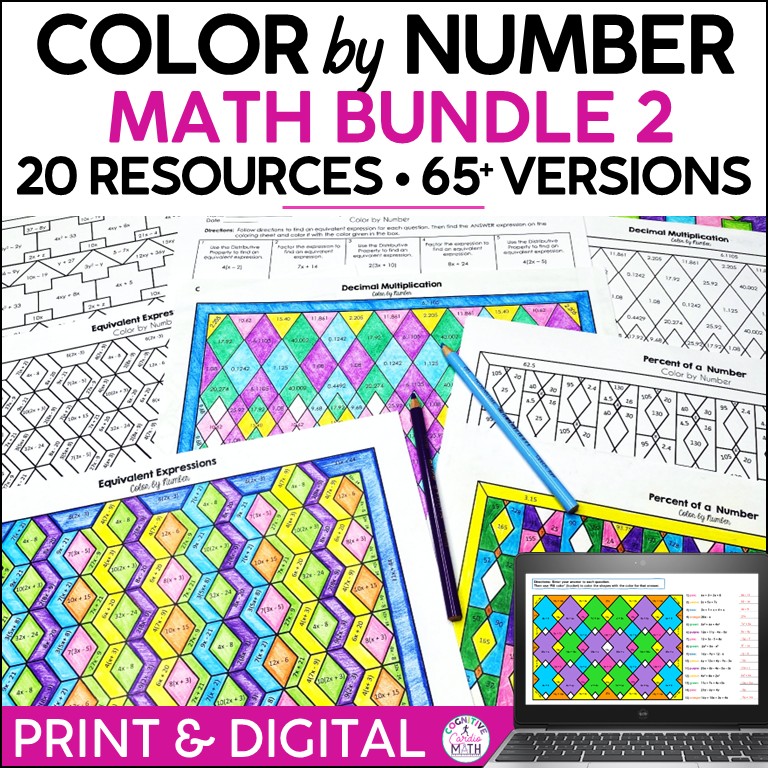
One of the biggest challenges with spiral review can be keeping it engaging week after week. When practice always looks the same, your students might disengage. Color by number activities solve that problem by adding a visual element without lowering expectations.
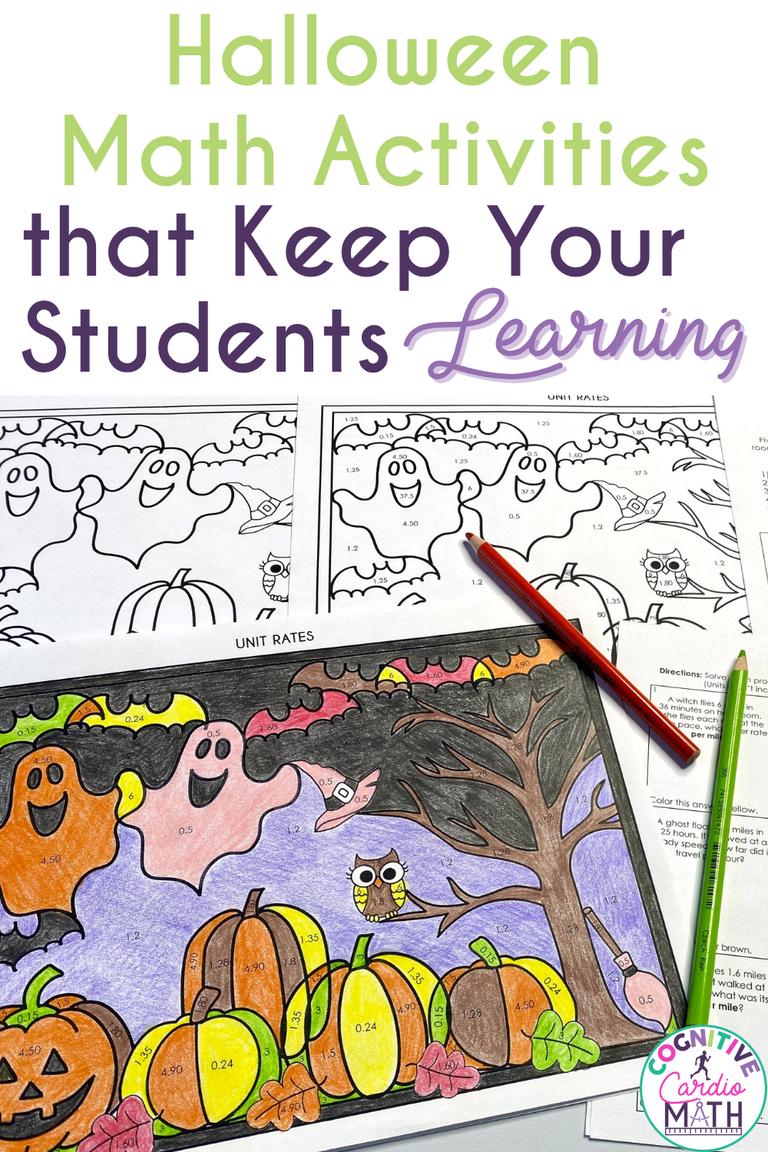
Since your students must solve each problem correctly to color the design accurately, the math remains the focus. The coloring is more a motivator than a distractor. Your students will naturally slow down, check their work, and stay engaged longer because they care about the final result.
From a planning standpoint, this format is especially helpful. Once your students understand how color by number works, it can be reused throughout the year as part of a spiral review routine. The consistency saves time while still keeping the review from feeling stale.
Color by number activities fit naturally into this kind of routine because the structure stays the same even when the skills change. Students know how the activity works, which frees up mental energy to solve problems. By rotating skills weekly or monthly and revisiting key concepts throughout the year, spiral review becomes a routine that supports both accuracy and confidence.
How Mixed Math Practice Strengthens Spiral Review

One of the most powerful ways to approach spiral review is through mixed math practice. Instead of isolating one skill at a time, mixed math asks your students to decide which strategy or operation to use. That piece is what makes spiral review so effective. Your students aren’t just practicing math, but also thinking about it.
Mixed math practice mirrors what your students experience on assessments and in realistic situations. Skills don’t show up neatly grouped. Spiral review that includes mixed math helps your students learn to slow down, analyze the problem, and choose an approach intentionally. This builds stronger problem-solving habits and reduces reliance on keywords or guessing.
Color by number activities work especially well for mixed math spiral review because they add structure to what can otherwise feel overwhelming. Your students work through a variety of problem types, but the familiar format helps keep the math approachable. If you want to go deeper into the benefits of mixed math practice and how it connects to skill retention, make sure to explore Five Reasons to Use Mixed Math Practice.
Setting Up a Simple Spiral Review Routine
A successful spiral review routine doesn’t need to be complicated or take up a lot of time. What matters most is consistency. When your students know that spiral review is a regular part of math class, they settle into the routine quickly and approach the work with more confidence. Even a short block of time can make a big impact on retention.
I have found that spiral review works best when it’s built into an existing part of the day rather than added on as something extra. It might happen at the start of math as a warm-up, during a center rotation, or as independent practice while small groups are meeting. Keeping the timing predictable helps your students focus on the math instead of wondering what comes next.
Step 1: What concepts to include?
To create your own spiral review routine, start by thinking about the concepts you teach in the year. I find it helpful to list them in the order I teach them, so I know I am not weaving in concepts before they are being taught. Additionally, don’t underestimate the value of using your spiral review time to reacquaint your students with a skill they learned in previous years. Think about the skills students typically seem to struggle with at the beginning of their year with you. I find it especially helpful to include some of the prior year skills at the beginning of the year and also in the weeks leading up to a related unit (like finding LCM before you jump into adding and subtracting unlike fractions). It’s a natural way to refresh the foundational skill before we take it to the next level.

Step 2: What will spiral review look like in your classroom?
Once you have a list of the skills, decide on how you want to use a spiral review in your classroom. Will it be a bell ringer activity or a center? Will you do it daily or weekly? Knowing this will help you decide how to structure the spiral review for your classroom. If you are doing it daily, then five problems might be perfect. If you are doing it weekly, then a longer activity might meet your needs. And remember. . . this isn’t set in stone. Give yourself a starting place and try it out. It might need to be tweaked or changed down the road, and that is ok!
Step 3: Choosing the activities
Once you have answered these questions, you can start to pull activities to fill your spiral review ‘vault.’ Remember, the goal is to keep your students engaged, so including a variety of activities is a great way to keep it fresh. Task Cards, Color by Numbers, Math Games, and digital activities are all great options to weave in. Throw in some more traditional worksheet formats, and you have spiral review that is always changing and never boring.
As you begin pulling activities, give yourself permission to look at the activities you have in a new way. If you have 10 minutes at the start of each day, students might complete one color by number page over the course of a week, instead of all at one time. Task cards could be copied onto a sheet of paper or hung around the room. Begin by using what you have to create your spiral structure, then fill in the rest.
My Favorite Color by Numbers for Successful Spiral Review
I hope that you can see not only the benefit of using a spiral review, but also how easy it can be to create a review routine in your classroom. Ready to start building your customized spiral review routine? Here are some of my favorite color by number resources for skills that students need to review again and again.
1. Adding and Subtracting Decimals
Adding and subtracting decimals are skills that require constant attention to place value. That attention can fade quickly if your students don’t revisit the work regularly. Even your strong students may begin lining up numbers incorrectly or rushing through problems without thinking carefully about tenths, hundredths, and thousandths. Spiral review helps bring those details back into focus.

The Adding and Subtracting Decimals color by number gives your students a structured way to practice a range of decimal skills in one activity. Your students solve problems that include adding and subtracting decimals with different place values, working with whole numbers and decimals, and applying those skills in word problems. After solving each problem, they locate their answer on the coloring page and color the matching section.
Since your students must find the correct answer before coloring, this resource naturally encourages accuracy and self-checking. When used for spiral review, it works well as an occasional check-in to reinforce place value understanding and ensure your students are still applying decimal strategies correctly, not just following memorized steps.
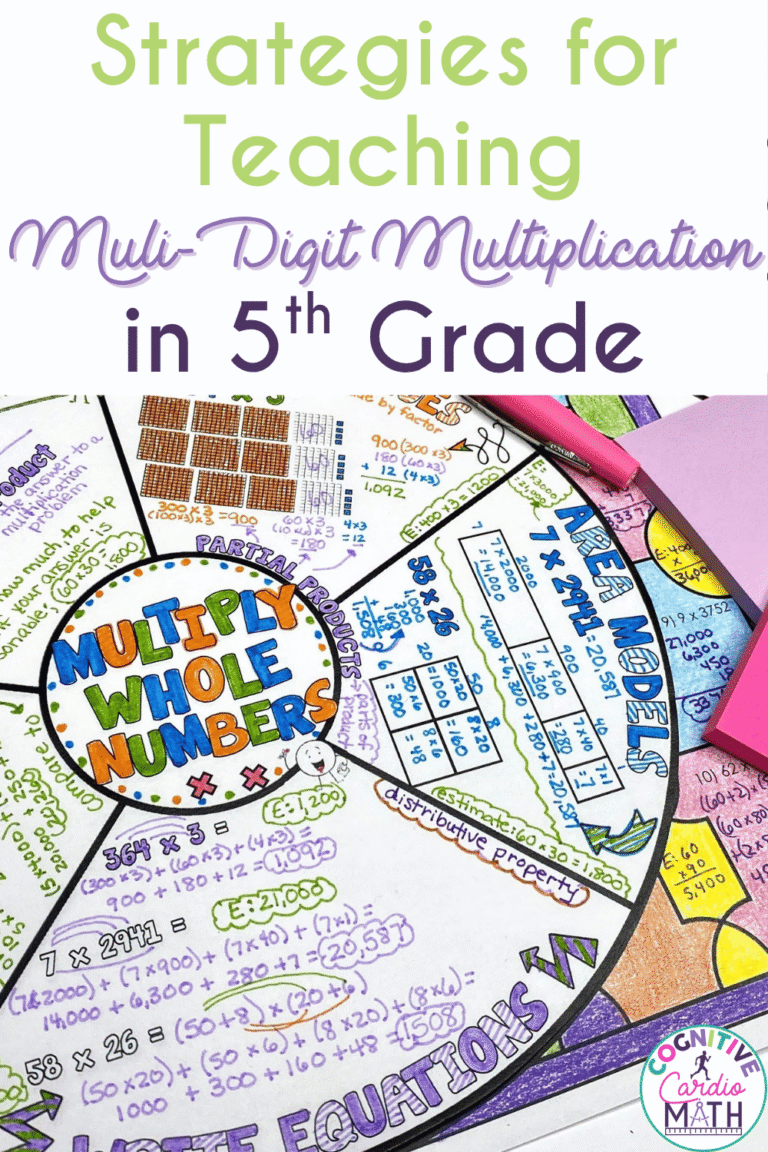
2. Multi-Digit Multiplication
Multi-digit multiplication is a skill that relies heavily on procedural accuracy and sustained focus. Your students may understand the algorithm, but without regular practice, errors in regrouping or partial products can quickly reappear.

The Multi-Digit Multiplication color by number focuses on solving a set of multi-digit problems using the standard algorithm. Your students work through problems that vary in complexity. This requires them to show all the steps before identifying their final answers. Once solved, they match each answer to the coloring page and complete the design.
As part of the spiral review, this resource is especially useful for reinforcing stamina and precision. Your students can practice staying focused across multiple problems while receiving a visual reward for careful work. It’s a strong option for days when you want students to revisit multiplication skills that feel purposeful rather than repetitive.
3. Improper Fractions
Improper fractions and mixed numbers are often taught as a single unit. Your students will benefit greatly from revisiting these concepts over time, in various grade levels. Without reviewing from time to time, your students may remember the steps for converting but lose sight of why the conversions work….or they may completely forget how to convert!

In the Improper Fractions to Mixed Numbers color by number activity, your students are required to convert between forms, compare values, and reason about fractional amounts.
This resource helps keep fraction concepts active throughout the year. Instead of treating fractions as isolated procedures, your students repeatedly engage with the relationship between whole numbers and fractional parts. Over time, this builds stronger conceptual understanding and flexibility with fractions.
4. Multiplying Decimals
Decimal multiplication can feel intimidating for your students because it combines multiplication skills with place value reasoning. Continuing to revisit and review helps break the complex into manageable moments of practice that increase student understanding.

The Multiplying Decimals color by number includes problems that range from multiplying tenths by tenths to tenths by thousandths. It also includes word problems that require your students to apply decimal multiplication in realistic situations. Once your students solve each problem, they should locate the matching answer on the coloring page.
This resource encourages careful thinking and attention to detail. The coloring component motivates your students to slow down and check their work. This is especially important when working with decimal placement. It’s a great option for reinforcing accuracy and confidence with decimal multiplication over time.
Find More Resources to Support Spiral Review
If you’re looking to build a spiral review routine that stays consistent and engaging all year long, having a variety of resources makes a big difference. Visit my TPT shop to find even more activities that reinforce essential math skills, support mixed math practice, and keep spiral review from feeling repetitive. These resources are easy to rotate. They are flexible to use in different settings, and are created to help your students stay focused while building confidence.
Making Spiral Review Work for You
Spiral review doesn’t have to feel repetitive or overwhelming to be effective. When it’s intentional, engaging, and built into your routine, it becomes a powerful way to help your students strengthen skills over time and build confidence in their learning. Using color by number activities adds just enough structure and motivation to keep your students focused while still holding them accountable for their thinking. By rotating skills, mixing in different formats, and revisiting concepts throughout the year, spiral review can feel purposeful instead of routine. That consistency is what leads to growth over time.
Save for Later
Want to come back to these spiral review ideas when you’re planning or need a quick refresh? Save this post to your favorite Pinterest board so it’s easy to reference when you’re building your spiral review routine or looking for engaging ways to revisit math skills throughout the year.






One Comment
Comments are closed.