Have you ever watched your students work through a multi-digit multiplication problem and wondered where things started to fall apart? They may know their multiplication facts. But then they suddenly misalign digits, forget a partial product, or end up with an answer that doesn’t make sense. On top of that, they’re trying to do half the math in their heads because they think showing less work will make the problem easier.
When there are that many places for a problem to go wrong, giving your students more multi-digit multiplication problems isn’t the answer. You may need to slow things down and help them see what’s happening at each step. Let’s look at how you can use estimation, place value, partial products, and the standard algorithm to build that understanding. Then, we’ll look at resources you can use to support your students who need more instruction and opportunities to practice.
Start Multi-Digit Multiplication With Estimation
Estimation shouldn’t be a step your students complete because there’s a blank labeled “estimate” on the page. You want them to use it to decide what a reasonable product should look like before they ever start multiplying. When they finish a problem, they have something to check their answer against instead of assuming everything on the page is right.
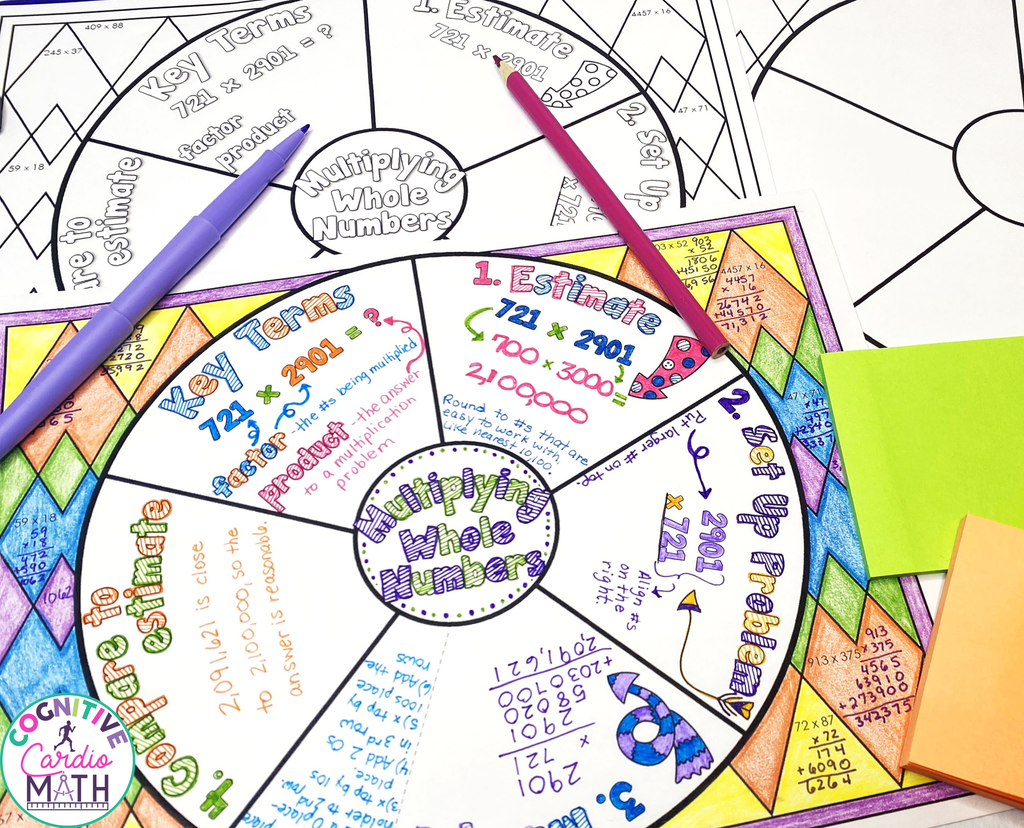
Try writing 721 x 2,901 on the board, but don’t let your students solve it yet. Ask them, “About how large should our product be?” Walk them through how to round 721 to 700 and 2,901 to 3,000, and work through 700 x 3,000 = 2,100,000. Then push their thinking one step further: “So should our exact answer be closer to 200,000, 2,000,000, or 20,000,000?” Now your students are thinking about the size of the product before they calculate it.
Leave 2,100,000 on the board while your students solve the original problem. When they’re finished, resist the urge to confirm answers right away. Instead, send them back to the estimate. If you have a student who gets 210,000, ask, “Does that fit what we predicted? What should you check in your work?” You’re building a routine where your students estimate, solve, and decide whether their answer is reasonable.
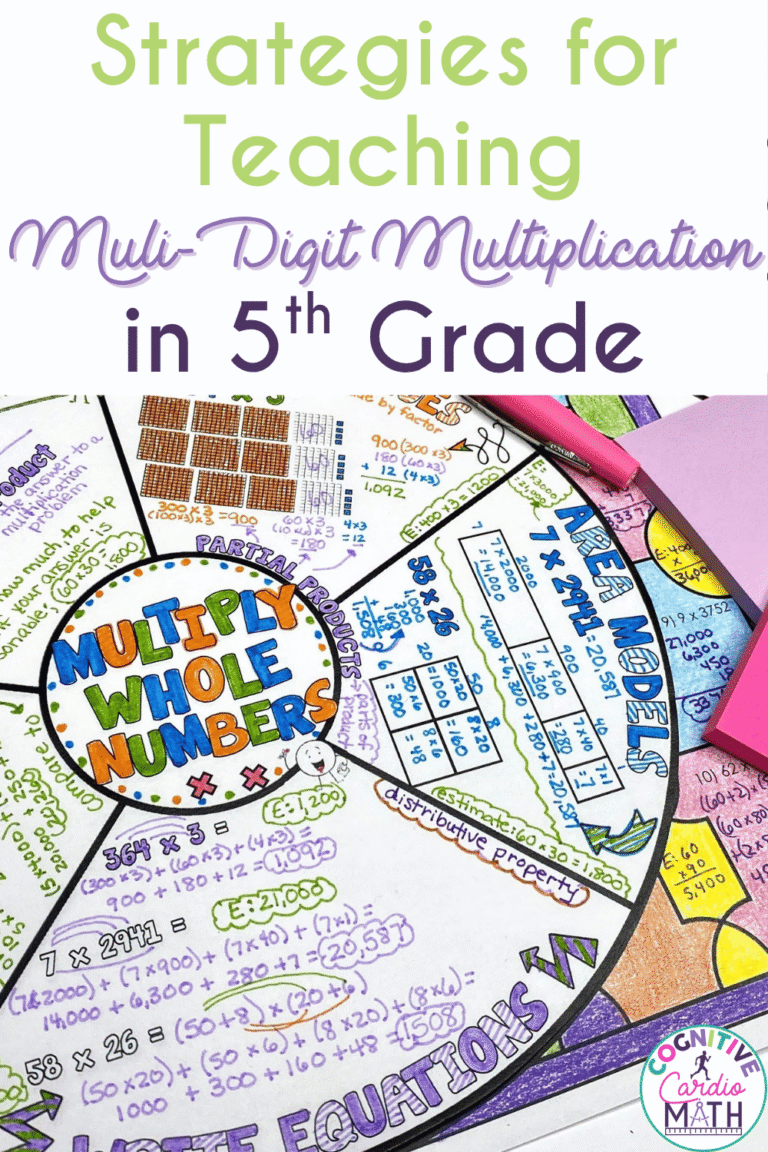
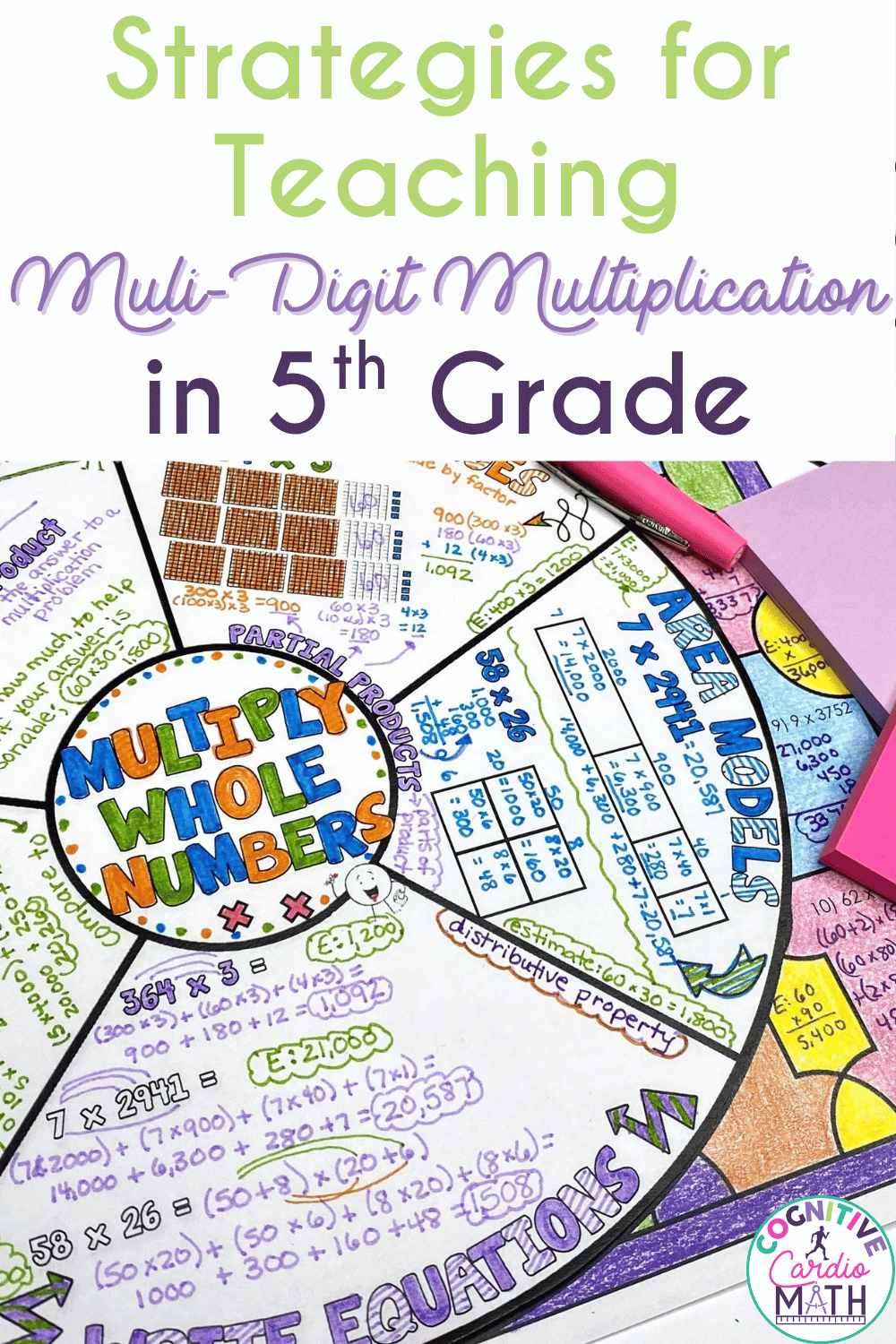
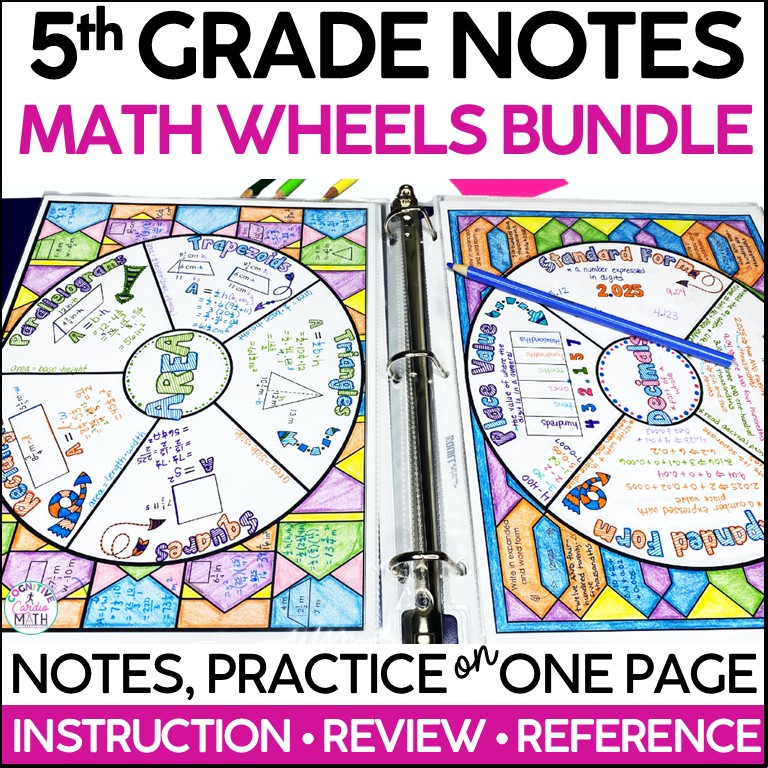
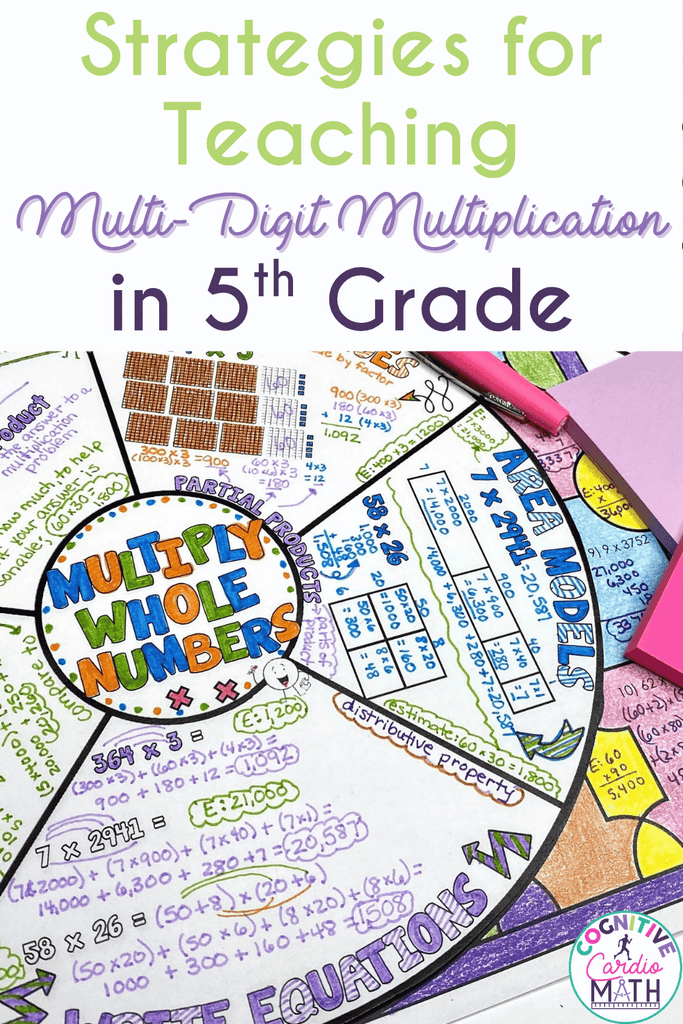
You can reinforce that same routine with my 5th Grade Multiplication Math Wheel. Estimating comes before your students set up and multiply. The final section of the wheel asks them to compare their answer to their estimate. That makes the estimate something they return to after solving instead of something they calculate and immediately forget.
Go Back to Place Value When Students Need It
Sometimes the standard algorithm isn’t really the problem. Your students may be struggling because they don’t have a strong enough understanding of the value of the digits they’re multiplying. If they can tell you 3 x 6 = 18 but don’t see 3 x 60 as 180, moving ahead with a longer algorithm isn’t going to clear up the confusion.
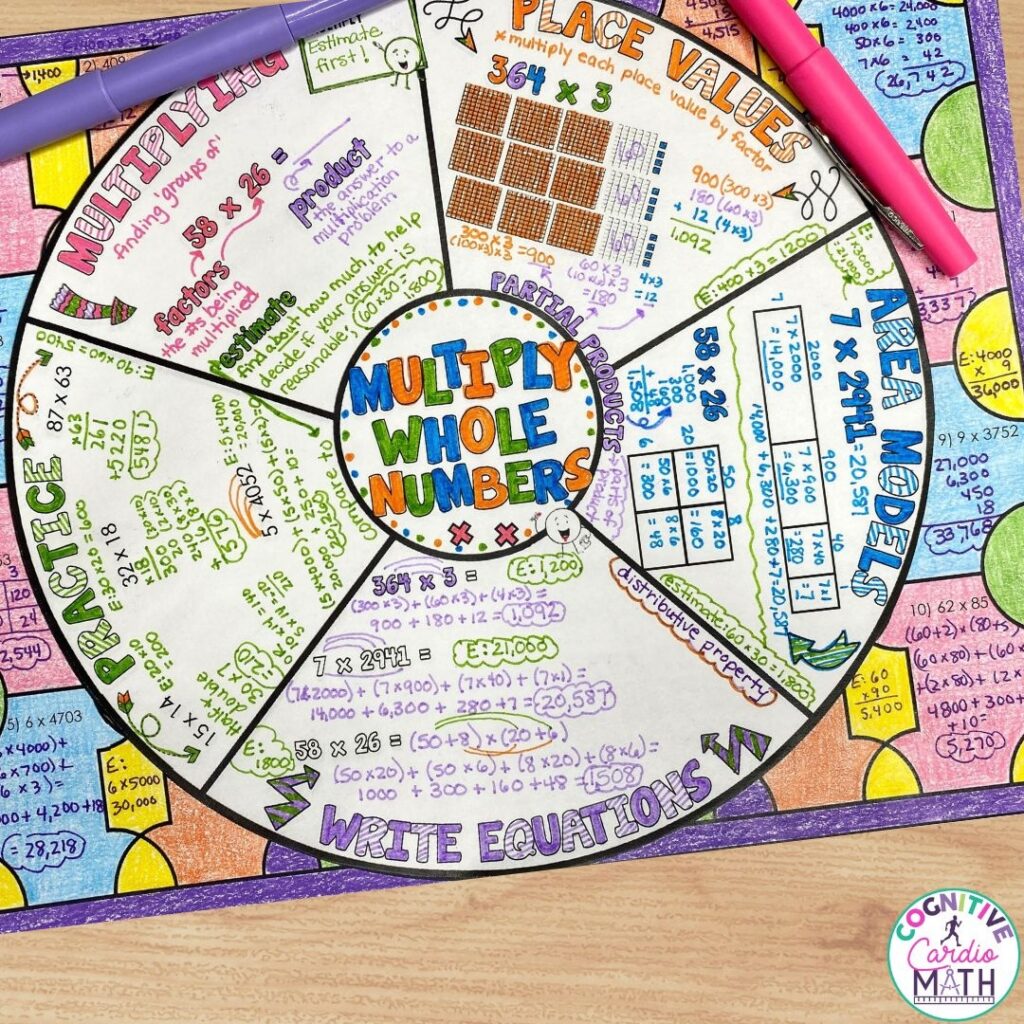
Start with something like 364 x 3. Before setting up the standard algorithm, write 364 as 300 + 60 + 4. Ask, “What does the 3 in 364 represent? What about the 6?” Then work through 300 x 3, 60 x 3, and 4 x 3. As you combine 900 + 180 + 12, keep connecting each partial product to the place value it came from. You want your students to see that they aren’t simply multiplying 3 x 3, 6 x 3, and 4 x 3. They’re multiplying 3 hundreds, 6 tens, and 4 ones by 3.
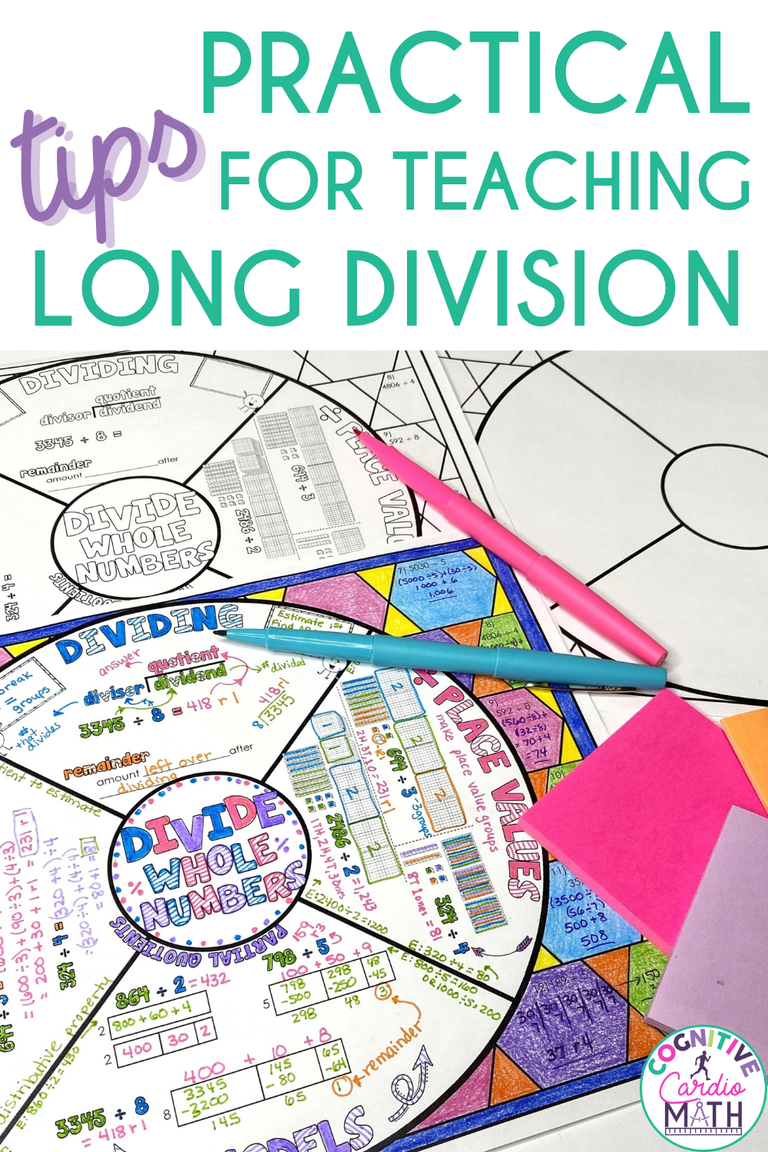
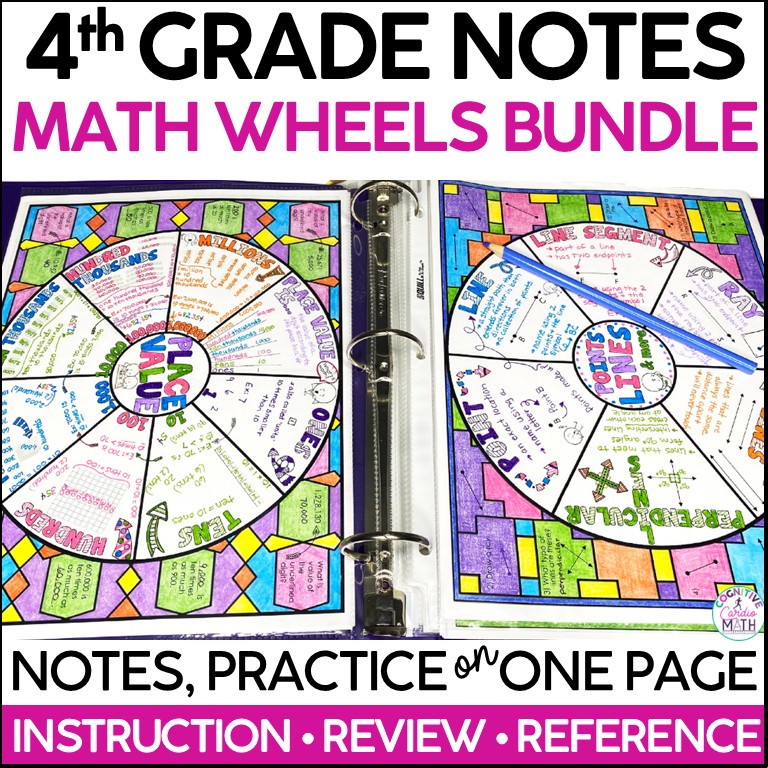
If your students need more practice making those connections, you can pull out my 4th Grade Multiplication Math Wheel. Work through one example with a small group. Have your students follow the same multiplication through the place value, area model, and equation sections of the wheel. The examples repeat across the sections. So instead of treating each model as a separate strategy, ask, “Where do you see the 300 in this model?” or “Which part of our equation matches this part of the area model?” Once your students can connect the different representations, you can move them toward the standard algorithm.
Connect Partial Products to the Standard Algorithm
Once your students are comfortable breaking numbers apart by place value, you can show them that the standard algorithm isn’t completely new math. It’s a more efficient way to organize multiplication they already understand. Instead of introducing a new list of steps, let your students see how the work they’ve already been doing shows up in the algorithm.

Write 34 x 27 on the board and break the factors into 30 + 4 and 20 + 7. Work through the four partial products together: 30 x 20 = 600, 30 x 7 = 210, 4 x 20 = 80, and 4 x 7 = 28. Add the partial products to get 918, but leave all of that work on the board.
Next to it, solve 34 x 27 using the standard algorithm. As you work, keep pointing back to the partial products. Ask, “Where do you see our multiplication by 7?” When you reach the 2 in 27, ask, “What is the value of this 2?” Once your students identify it as 20, connect that directly to the second partial product. Instead of teaching them to “put down a zero because we’re on the second row,” explain that they’re multiplying by 2 tens, not 2 ones. Now the placement of that zero in the partial product means something.
Then try another problem with both methods side by side, but let your students do more of the explaining. Ask them to show where each part of their expanded work appears in the standard algorithm. As those connections become easier for them to explain, you can start taking away the expanded work until they’re ready to use the standard algorithm on its own.
Show Your Students How to Keep Their Work Organized
A student can understand multi-digit multiplication and still get the wrong answer because their work gets messy. Digits shift into the wrong columns, partial products run together, or numbers get squeezed into whatever space is left. Before you chalk those mistakes up to carelessness, spend some time showing your students what organized multiplication work looks like.
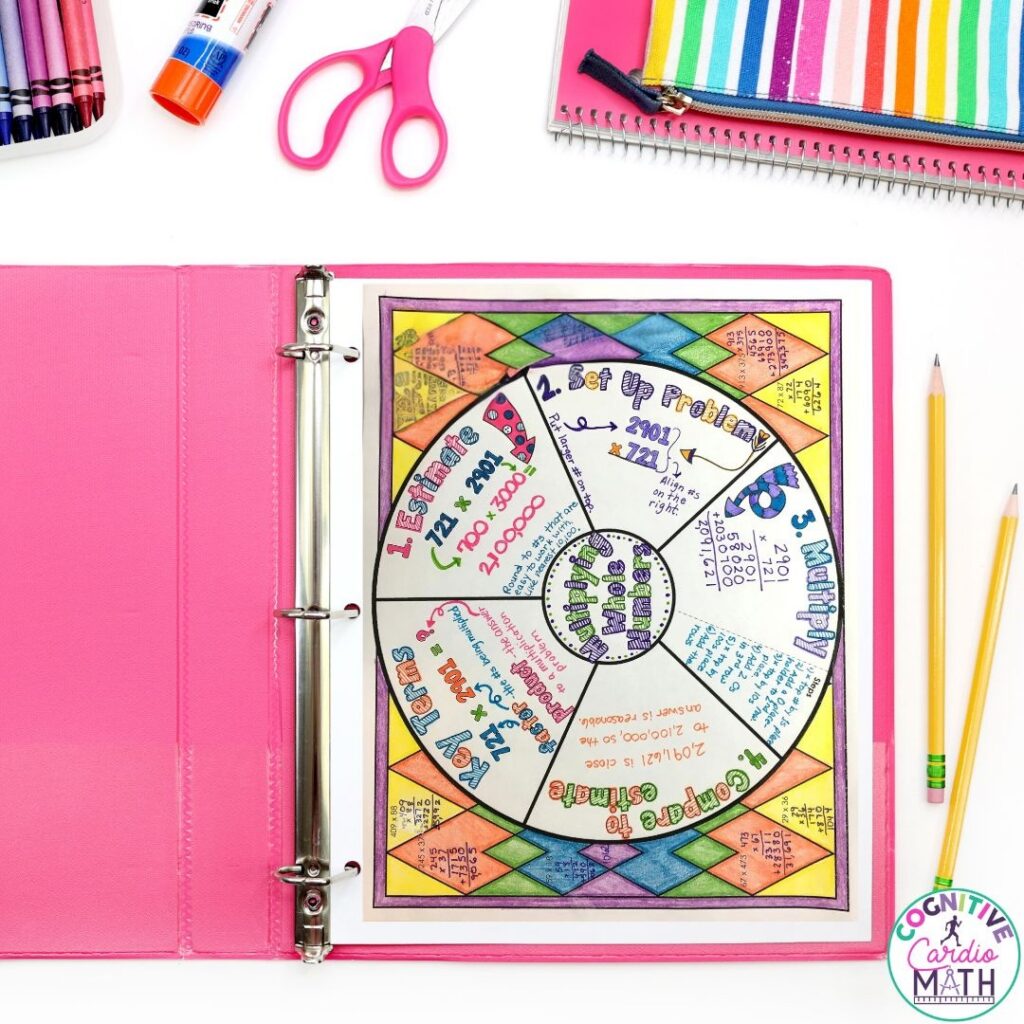
Choose a problem and model the setup before you solve anything. Line up the factors by place value, and talk through what you’re doing: “I’m putting the ones under the ones and the tens under the tens.” As you solve, keep each partial product lined up with the value you’re multiplying. Then put a poorly organized example beside your work. You might shift one factor out of place or misalign a partial product. Ask your students, “What would you change before you even start solving this problem?” This gets your students looking at the setup as part of solving the problem, not something that only matters if their final answer is wrong.
This is also a good time to have your students keep their 5th Grade Multiplication Math Wheel nearby during practice. The wheel includes a section for setting up the problem before your students multiply. If your students get stuck, point them back to that section before stepping in to fix the setup yourself. Over time, you want your students to pause, check their own setup, and make adjustments before they begin multiplying.
Adjusting Your Teaching to Meet Student Needs
If you’re worried this is too much, just know you won’t need to spend the same amount of time on every part of the process. Your students have already been taught many of the steps needed to complete a multi-digit multiplication problem. Connecting all the steps together will be the key to helping your students feel confident about their work. Once you’ve shown them the standard algorithm, watch what happens when your students begin working problems on their own. Their math mistakes can give you some pretty useful clues about what needs more attention.
The strategies above will help you target those trouble spots as they come up. These will help prevent you from reteaching the entire process every time something goes wrong. For example, a few students who know 6 x 4 equals 24 but don’t recognize why 6 x 400 equals 2,400 may need more work with place value. Create a small group to complete the 4th Grade Multiplication Math Wheel together. A student who understands the multiplication but keeps losing track of the second partial product needs help keeping the numbers organized. Have them use their 5th Grade Multiplication Math Wheel to check that their organization is correct while they work.
Give Your Students Different Ways to Practice Multi-Digit Multiplication
Once your students understand how the standard algorithm works, they need to use the process repeatedly for it to stick. That practice doesn’t have to look the same every day. You can move between whole-class practice, independent work, and activities that get your students up and moving. I used to call this controlled chaos because they were moving, but they were practicing the same multi-digit multiplication skills.
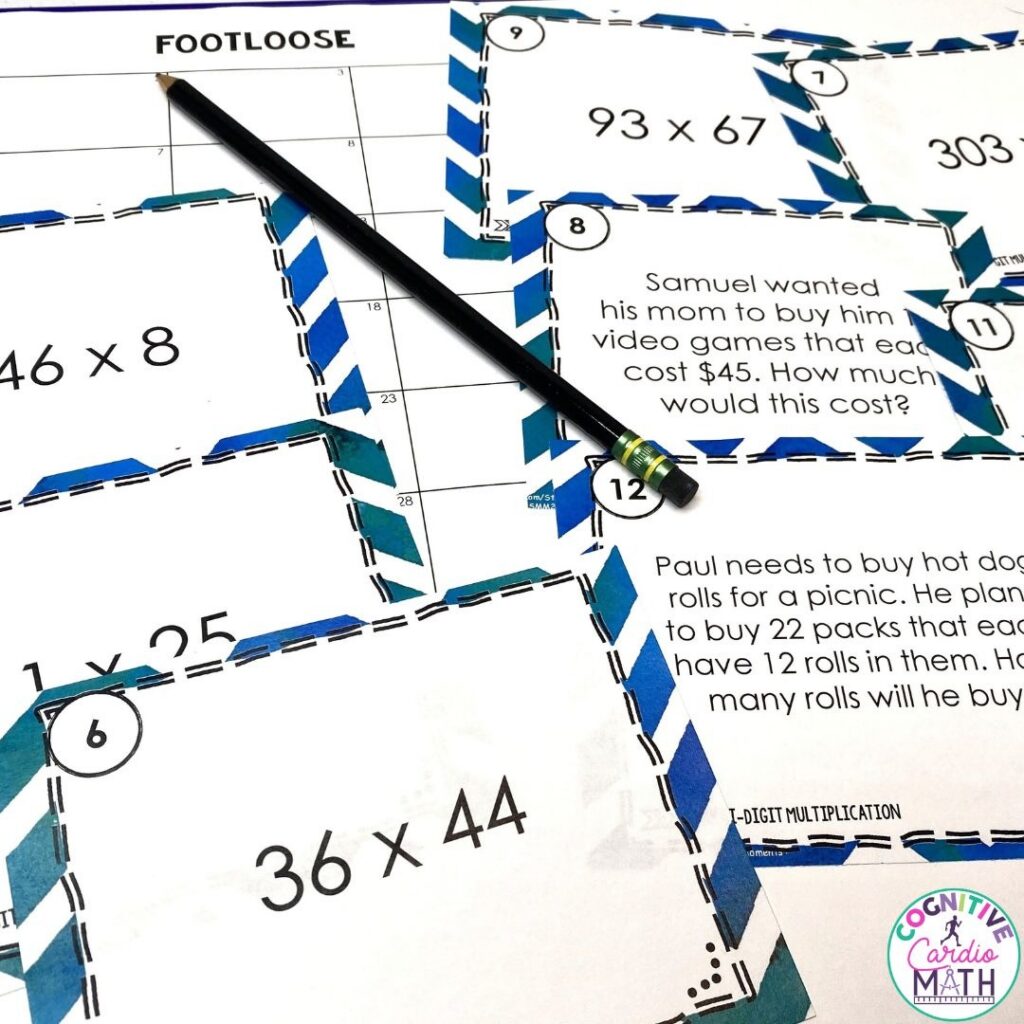
My Multi-Digit Multiplication Footloose task cards add movement to that practice. Give each of your students a recording grid and one of the 30 cards. After solving the problem, your students record their answer in the matching numbered box. Once they return the card, they pick up another. You can also place the cards around the room and have your students move from problem to problem. The set includes standard multiplication problems and seven word problems. This gives your students a chance to decide when multiplication is needed instead of being handed an problem to solve.
Footloose can also work well when you need time to meet with a few of your students. Once the rest of the class understands the routine and can work independently, pull a small group to your table. You can use that time to focus on the specific step that’s still causing trouble for those few while the rest of your students can continue practicing.
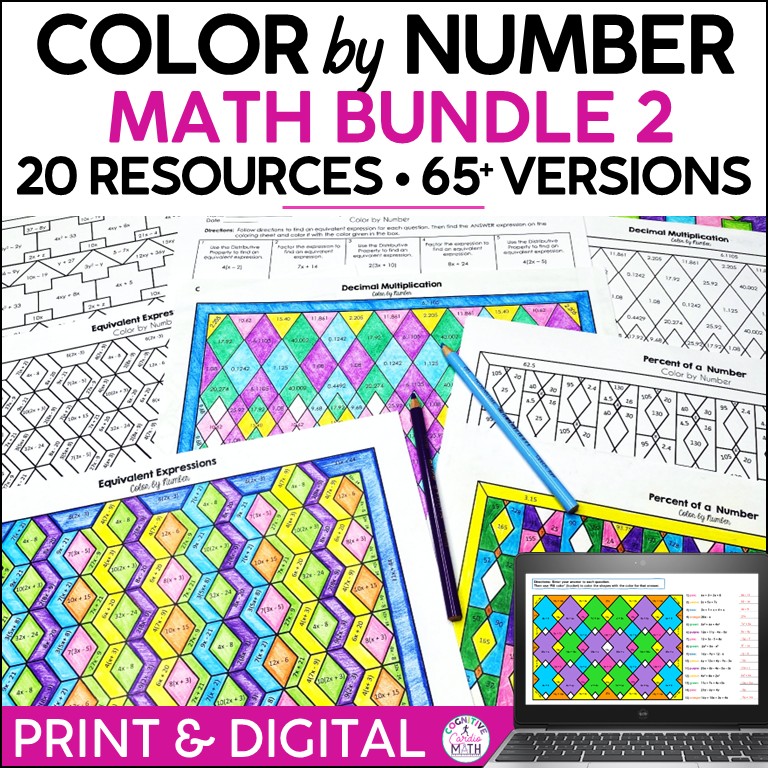
For quieter independent practice, try my Multi-Digit Multiplication Color by Number. Your students will solve each multiplication problem, find the answer on the coloring page, and use the indicated color. The problems include two-digit by two-digit, two-digit by three-digit, and three-digit by three-digit multiplication. You can also choose between the two print versions based on how much practice your students need.
Find More Math Resources for Your Classroom
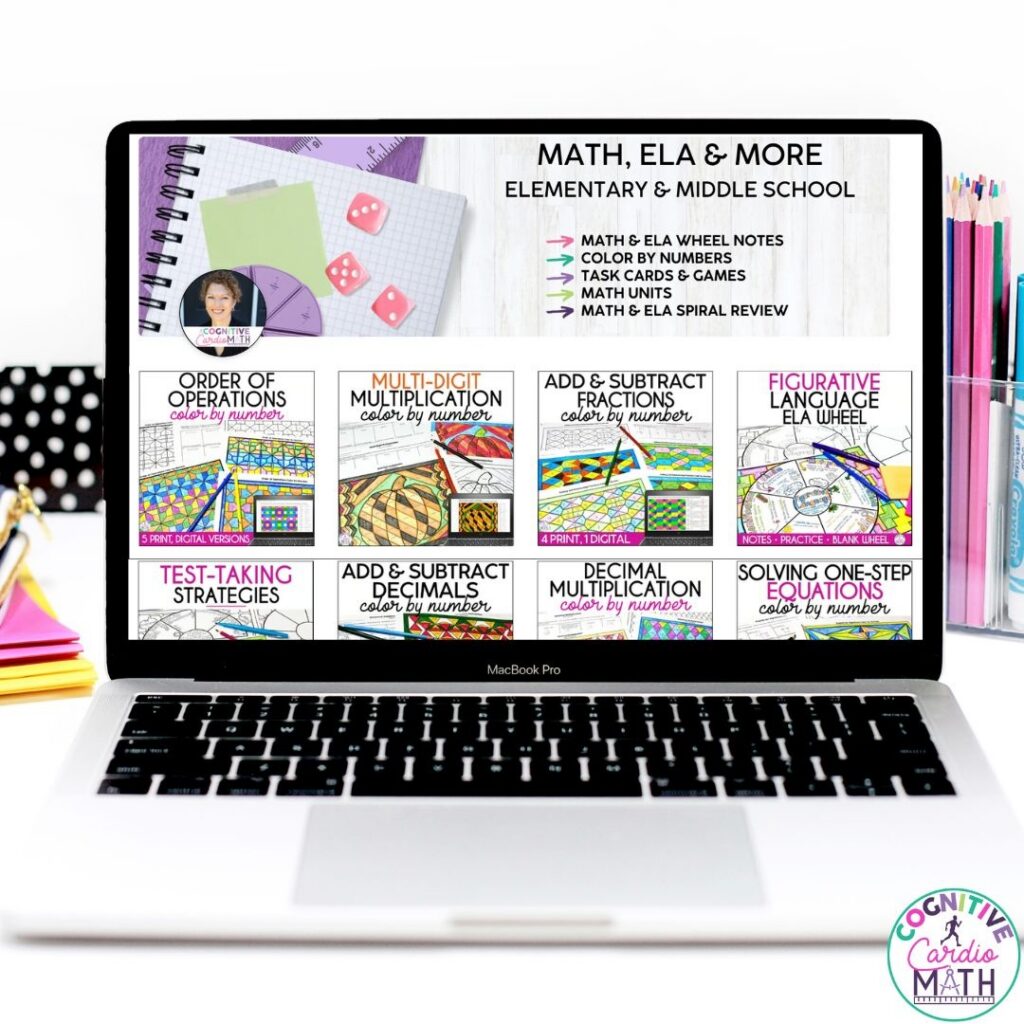
If you’re looking for more ways to support your math instruction without creating everything from scratch, come visit my TPT shop. You’ll find resources designed to help you introduce new skills, give your students meaningful practice, review previously taught concepts, and support all of your learners. As you explore my store, you’ll find Math Doodle Wheels, Truth or Dare task card activities, spiral review, and plenty of other resources you can use throughout the school year. Take a look around and find the resources that fit what you and your students are working on next.
Save for Later
Save this post to your favorite math Pinterest board so you can come back when you’re planning your next multi-digit multiplication unit. You’ll have these teaching strategies, modeling ideas, and practice options ready when you need them.