If you’ve ever graded a math assignment and noticed your students calculating the perimeter when the question clearly asked for area, you know how frustrating that moment can be. I saw this happen regularly in my classroom. The lesson had just been taught, the formulas had been practiced, and yet some of my students still mixed up area and perimeter. Over time, I realized this mistake was rarely just a simple mix-up. When our students confuse area and perimeter, it usually reveals something deeper about how they understand measurement and math language. Once I started paying attention to what their mistakes were telling me, it became easier to adjust my instruction. If you are seeing the same thing in your classroom, there’s a good chance your students are not struggling with the formulas. They are struggling with the concepts behind the formulas.
A Classroom Moment That Reveals the Confusion
I remember one lesson where this confusion became very obvious in my classroom. My students were solving a problem about a rectangular yard. The question asked them to “find the area to determine how much space the yard covers”.
Several of my students added all four sides together and confidently wrote their answers down. When I asked them to explain their thinking, one of my students said, “I added all the sides because that is what you do with rectangles.” That moment told me something important. My students remembered a procedure connected to rectangles. They were not yet thinking about what the measurement actually represented.
Experiences like this helped me realize that when our students confuse area and perimeter, they are not just mixing up formulas. They often rely on patterns they recognize instead of thinking about whether the problem is asking them to measure space or distance. I began adjusting my instruction to focus more on conceptual understanding instead of jumping straight to formulas.
What Student Mistakes Reveal About Area and Perimeter Understanding
One of the most helpful ways to understand where our students are struggling is by looking closely at their mistakes. A mistake I often saw my students make was multiplying length and width when the question asked for perimeter. Many of our students associate rectangles with multiplication because they remember that area involves multiplying. As soon as they see length and width, they multiply without stopping to think about what the problem is asking them to measure.
Other students in our classrooms make the opposite mistake. They add all the sides when they are supposed to find the area. These are the students who remember that rectangles have four sides. The only thing is that they have not fully connected the area with covering a surface using square units.
Sometimes the confusion appears in the units of measurement our students use. I would occasionally see answers written as “24 units”. It didn’t matter if the problem asked for area or perimeter. For perimeter, that unit makes sense because perimeter measures distance. When I saw my students use the same unit for area, I knew they had not yet connected area to square units.
Why Our Students Confuse Area and Perimeter
One of the biggest reasons our students confuse area and perimeter is that the two concepts are often introduced very close together in earlier grades. Even though our students may have seen both ideas before, the difference between them is not always fully understood. By the time your students reach middle school, they may remember the formulas but still rely on memorized procedures.

From our perspective as teachers, the difference feels obvious. Area measures the space inside a shape, while perimeter measures the distance around it. For our students, though, the problems can look very similar. Both often involve the same shapes, the same measurements, and similar-looking numbers.
When lessons quickly move into formulas, some of our students begin to focus on procedures rather than meaning. They start searching for numbers to plug into a formula instead of thinking about what the problem is actually asking them. When this happens, area and perimeter can start to feel interchangeable to our students. They begin to see them as two math problems that look almost the same but use different formulas. Until our students truly understand what each measurement represents, the formulas alone are not enough to prevent that confusion.
Simple Teaching Strategies That Clarify Area and Perimeter
Once you realize where the confusion is stemming from, you can start changing how you introduce these concepts in your classroom. Instead of jumping straight into calculations, you’ll focus on helping your students see what each measurement actually represents.
The following strategies helped my students clarify the difference between area and perimeter. These small shifts in instruction will make a big difference in helping your students understand when to multiply and when to add.
Making Area and Perimeter Visible
One strategy you can use in your classroom is to make the area and perimeter visible to your students. You’ll want to start with hands-on exploration so your students can actually see what each measurement represents.

Grid paper and square tiles worked especially well for this activity. You can draw or provide a rectangle and ask your students to fill the entire shape with square units. Some of your students may use tiles, while others may shade the squares on grid paper. As they fill the rectangle, talk with them about what they are covering. Ask them questions like, “What part of the shape are we measuring right now?” or “What do you notice about the squares inside the rectangle?”
Once the rectangle is filled, you count the total number of squares together. Then, look at how the squares are arranged in rows and columns. This makes it easy for your students to see that multiplying the number of rows by the number of columns finds the total number of square units.
To help your students understand perimeter, shift your focus to the outside edge of the shape. Give each group a piece of string and have them place it along the border of the rectangle. Once the string outlines the entire shape, your students can lift it and measure the total length. This activity will help your students clearly see that perimeter measures the distance around a shape, not the space inside it.
Making Real World Connections
Real-world examples will help your students because they can picture how these measurements are used outside of math class. When our students can connect a math concept to something familiar, it becomes much easier for them to understand what the measurement actually represents.

One example you can use with your students is painting a wall. The area represents the amount of space that needs to be covered with paint. If the wall is larger, you need more paint because the area of the surface increases. The perimeter, on the other hand, represents the trim or border that goes around the edge of the wall. Thinking about the difference between covering the wall and outlining the edges helps your students visualize the two measurements.
You can also talk about the flooring in a room. If you are installing carpet or tile, you need to know the area of the floor because that tells you how much material is needed to cover the space. The perimeter becomes important when you are installing baseboards around the room because it measures the distance around the walls. Situations like these help your students see that area measures space that needs to be covered, while perimeter measures the boundary around that space.
Use Drawing to Bring it to Life
In the classroom, you can take these real-world examples to the next level by getting your students involved. Have them draw along as you describe the problem. For example, if you are using the wall painting example, have them draw the shape of one of the walls. Then ask them to choose their favorite paint color and add color to the shape where they would like to apply paint. Once they are done, ask them to explain why they colored in the shape as opposed to tracing around the edge. This discussion will help them clearly see the difference between measuring for area and perimeter, but it will also tap into the why. And that. . . is what we really want them to understand. Thinking about what they need to measure before choosing a formula.
Comparing Shapes With the Same Perimeter
Another activity that will help your students understand area and perimeter is comparing shapes that have the same perimeter but different areas. You’ll start by giving your students a fixed perimeter, such as 20 units. Then, challenge them to draw or build as many different rectangles as they can using that perimeter. Grid paper or square tiles work well for this because your students can easily adjust the side lengths while keeping the perimeter constant.
Once the rectangles are drawn or built, your students will count the square units inside each one to determine the area. This may be where some will have a lightbulb moment. Even though the perimeter stays the same, the area changes depending on how the rectangle is arranged.
Activities like this can help your students see that area and perimeter measure completely different things. Changing the side lengths while keeping the same perimeter shows them that the space inside the shape can increase or decrease depending on the shape of the rectangle. That visual comparison makes the difference between the two measurements much clearer.
Questions That Help Our Students Think About Area and Perimeter
You’ll also find that asking questions helps your students because they push them to think about what the measurement actually represents before calculating. Instead of immediately asking your students to find the answer, pause and ask a few guiding questions. These questions help them slow down and focus on the meaning of the problem.
For example, when you look at a rectangle together, you might ask:
- Are we measuring the space inside the shape or the distance around the shape?
- If this shape were a garden, would we be measuring the fencing or the grass/dirt space?
- Would the answer make more sense in square units or regular units?
These small pauses make a big difference. Over time, they’ll become much more confident in deciding when to multiply and when to add.
Using a Visual Math Tool
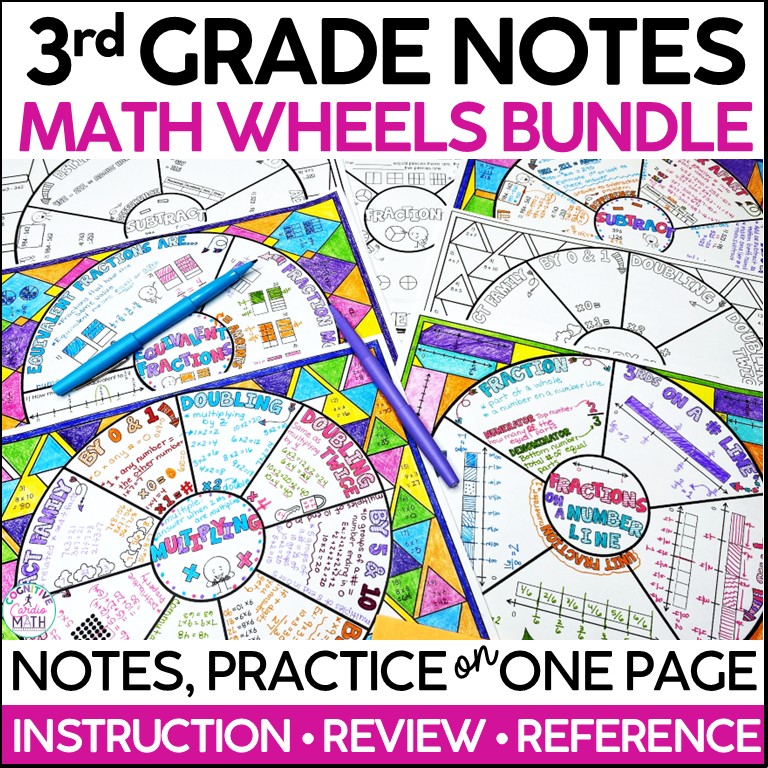
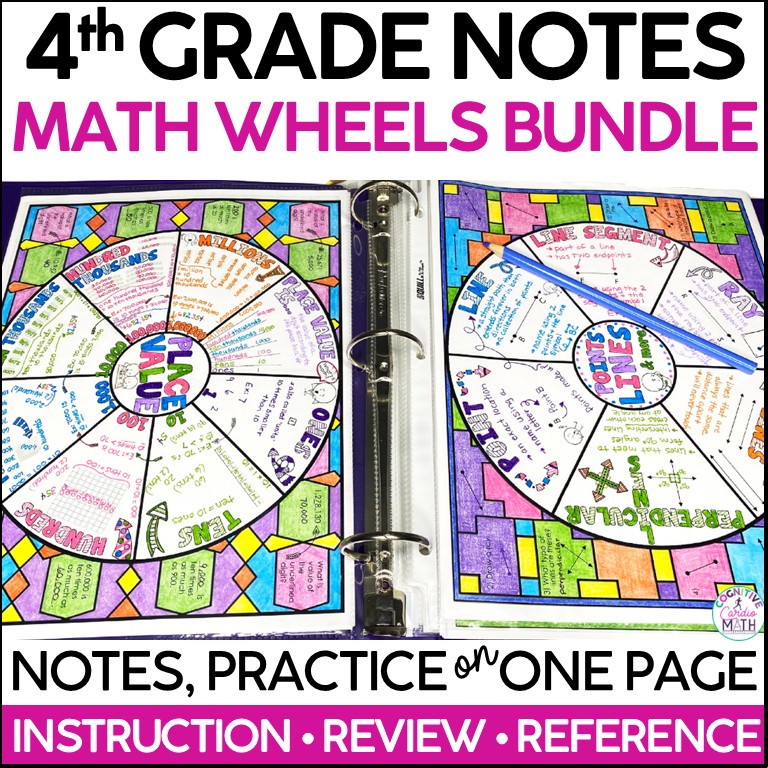
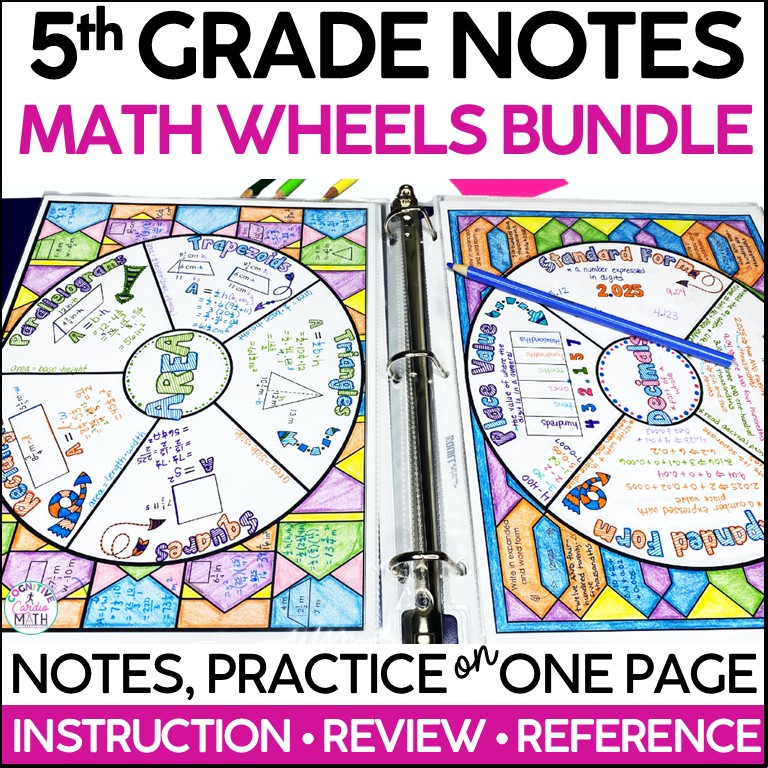
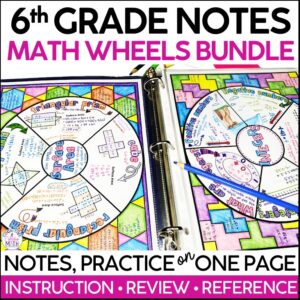
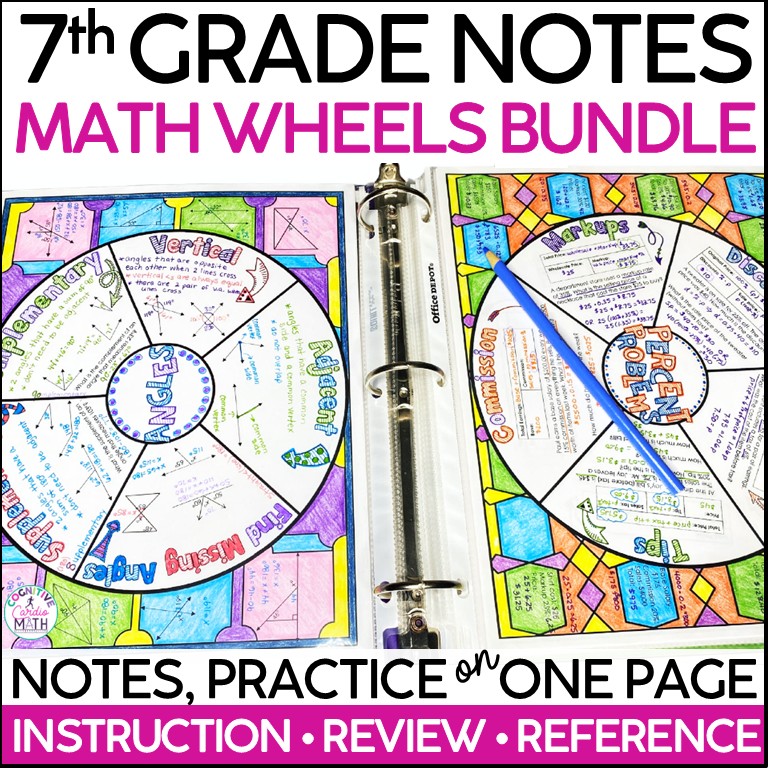
One resource that will help reinforce area and perimeter concepts is an interactive math wheel. My Area and Perimeter math wheel organizes key ideas into sections where your students can see definitions, formulas, and examples all in one place. This structure helps your students connect the concepts of area and perimeter.

The wheel includes sections that explain what area and perimeter represent and how to find them for rectangles and squares. Visual models, simple definitions, and multiple examples help your students see how multiplying length and width finds area, while adding side lengths finds perimeter.
Your students will also complete practice problems around the outside of the wheel. This allows them to apply both concepts while referencing the notes they created. The ability to shade, label, and color sections helps organize the information visually. This math wheel truly becomes a useful reference that your students can keep in their notebooks when reviewing area and perimeter and throughout the year.
Explore Activities That Strengthen Area and Perimeter Understanding
Once your students begin understanding the difference between area and perimeter conceptually, the next step is giving them opportunities to practice. Using a variety of activities keeps your students engaged. It also gives them repeated chances to decide whether a problem requires finding the area or the perimeter.

One activity that works especially well is my Footloose task cards. You can take the cards and place them around the room. Your students will then rotate from card to card, solving problems. As they move through the activity, your students read each question and record their answers on a recording sheet. The movement keeps your students engaged while exposing them to multiple types of problems that require them to think carefully about what they are trying to measure.

Another option is using my Truth or Dare math game. This activity has your students working in small groups and choosing between cards that ask them to evaluate statements about area and perimeter or solve multi-step problems. Activities like this encourage discussion and explanation as your students justify their answers with their group.

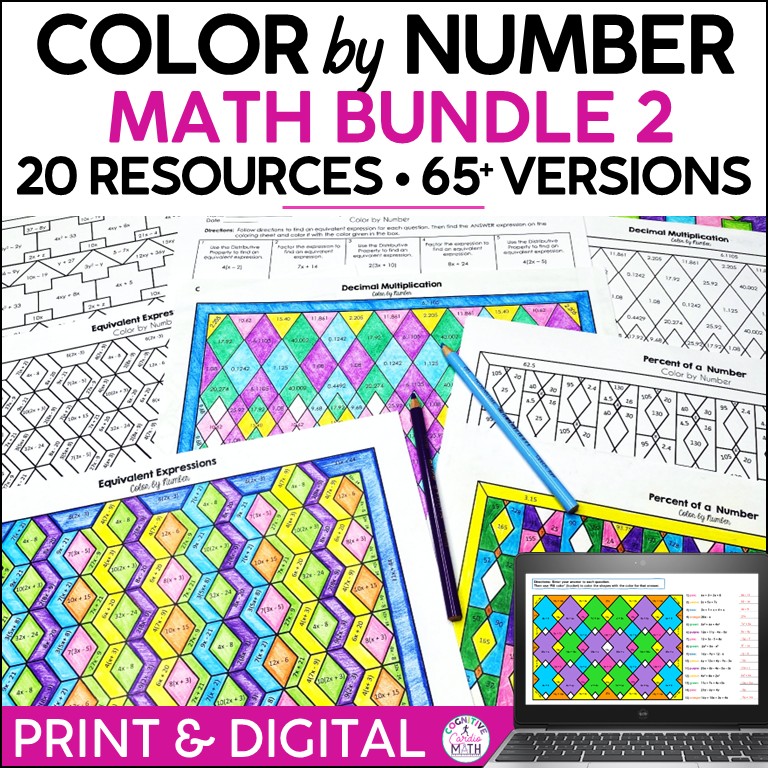
For even more additional practice, color by number activities allow your students to solve area and perimeter problems while coloring in an image. Based on their answers, they’ll receive immediate feedback as the picture develops, depending on whether or not they are correct.
If you are planning an area and perimeter unit or looking for activities to reinforce the concept, you can explore my full collection of resources in my TPT store.
Strengthening Student Understanding of Area and Perimeter
When our students confuse area and perimeter, it usually signals that they need help with understanding the measurement concepts. Helping our students build that understanding early makes a big difference as they move into more advanced topics. When we take the time to strengthen conceptual understanding now, we make it much easier for our students to succeed with more advanced measurement concepts later on.
Save for Later
As a math teacher, chances are you will revisit area and perimeter multiple times throughout the year. Having strategies ready to help students visualize these measurements can make the unit much smoother. Be sure to save this post by pinning it to your favorite Pinterest math boards. Then you can revisit these strategies when you plan your next measurement unit.