Teaching proportional relationships can feel tricky for our seventh graders. That’s where the constant of proportionality comes in. This concept gives our students the key to unlock tables, graphs, and equations in a way that makes sense. Instead of memorizing random formulas, they start to see the consistent “glue” that holds proportional relationships together.
When we give our students clear strategies, engaging visuals, and hands-on practice, the constant of proportionality becomes less intimidating and more exciting. Let’s dig into what it is, why it matters, and how we can use interactive tools like the Constant of Proportionality Wheel to bring this concept to life.
What Is the Constant of Proportionality?

At its core, the constant of proportionality is the number that links two proportional quantities together. In simpler terms, it’s the “k” in the equation y = kx. This constant tells us how one variable grows in relation to another. If you double x, then y doubles too, but only because of the consistent multiplier, k.
When teaching this concept, I recommend connecting this idea to everyday life. For example, if one notebook costs $3, then the total cost is always three times the number of notebooks. That 3 is the constant of proportionality. Your students start to realize they’ve been using this concept all along when comparing prices, recipes, or even speed on a road trip.
By introducing the constant of proportionality in a way that’s concrete and relatable, your students are more likely to stick with the idea when it appears in equations, graphs, and tables. This makes their transition into deeper proportional reasoning much smoother.
Why Your Students Need to Learn the Constant of Proportionality

I’m sure many of your students will ask you our favorite question: “Why do we need to know this?” Understanding the constant of proportionality is a major milestone in middle school math, and it’s one you can answer with confidence. The academic answer is that it connects directly to the math standard on recognizing and representing proportional relationships between quantities. In simple terms, students need to be able to spot and explain the value of k, whether it shows up in a table, graph, equation, diagram, or even a word problem.
But. . . it’s about so much more than just standards. The constant of proportionality sets your students up for success in high school math and beyond. Algebra, geometry, and trigonometry all rely on proportional reasoning. Without this foundation, your students can quickly feel lost when they start working with slope, scale factors, or rate of change. Building this understanding now saves them from a lot of frustration later.
There’s also a real confidence boost that comes when students finally get it. Math can often feel like a jumble of rules. The constant of proportionality shows them that those rules are connected. Once they see how k ties everything together, they start to view math as a logical system instead of a mystery. That perspective shift alone can change how they approach the subject moving forward.
Teaching With the Constant of Proportionality Wheel

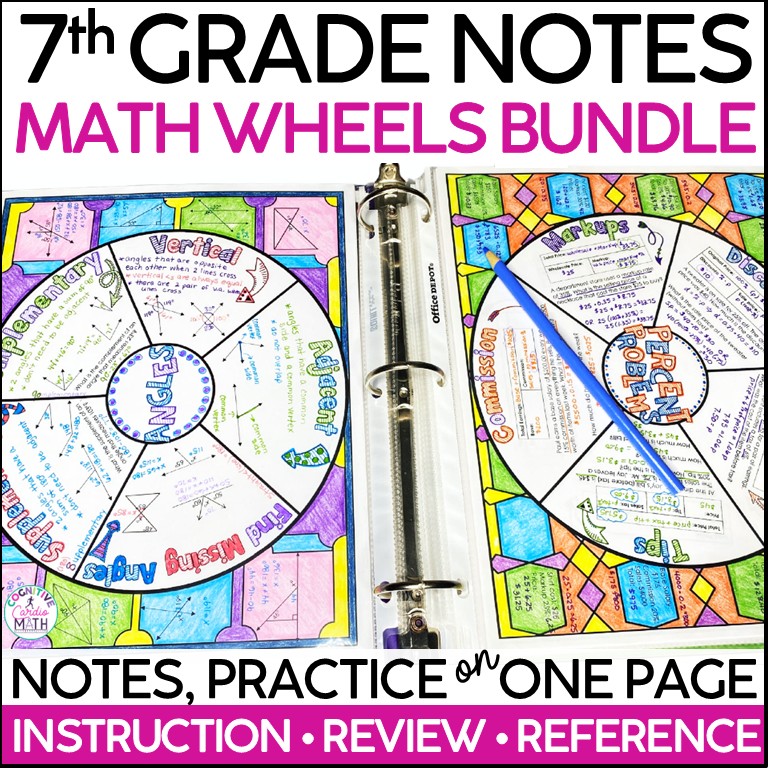
One of my favorite tools to recommend for teaching this topic is the Constant of Proportionality Wheel. This graphic organizer breaks down the concept into different sections, such as What is CoP?, Tables, Graphs, Equations, Compare, and Interpret. Each section is designed to explain the concept and reinforce a different representation of proportionality. This gives your students multiple entry points to understanding.
The wheel is flexible because it comes in several versions to accommodate all of your learners in your classes. There are open-ended notes, fill-in-the-blank notes, or pre-filled in notes. That means you can adjust based on how much scaffolding your students need. For some groups, you might let them take full ownership of completing the wheel. For others, the fill-in notes help guide their thinking while keeping them engaged.
The best part is that the wheel also includes multiple practice problems around the wheel. Your students aren’t just looking at notes and examples. They’re working through them, comparing equations, and interpreting meaning. Plus, the built-in doodle and coloring elements give them a creative outlet that can lower stress and increase focus. When given time to color, your students are also helping their brains retain the different steps with a visual color-based cue. It’s a win-win for both learning and classroom management.
Benefits of Using the Constant of Proportionality Wheel

Using the Constant of Proportionality Wheel isn’t just about organizing notes. It’s also about creating a visual anchor that your students can return to again and again. Having all the representations in one place helps them see the big picture, rather than treating tables, graphs, and equations as separate skills.
Your students also gain a sense of ownership of their learning with the wheel. Since they’re filling it in, comparing problems, and even coloring it, the resource feels more personal. This makes it a stronger study tool than a simple worksheet. You’ll find that your students keep their wheels in their notebooks and refer back to them throughout the unit.
The wheel also builds connections. When your students compare different equations to check if they share the same constant of proportionality, they’re actively reasoning instead of memorizing. When they interpret what the constant means in a real-world context, they’re making math meaningful. Those layers of practice help deepen their understanding and prepare them for more complex concepts ahead.
Setting Your Students Up for Success
The constant of proportionality may seem like just another math topic. But in reality, it’s a building block that connects proportional thinking across tables, graphs, and equations. It also gives your students the tools they’ll carry into algebra and beyond.
When you introduce this concept with clarity and support, you’re setting them up for success in future math classes and real-world situations. Tools like the Constant of Proportionality Wheel make the learning process interactive, engaging, and easier to grasp. By giving your students the chance to see this concept at work and practice on their own, you’re showing them that math makes sense and they are capable of tackling it. That confidence and understanding will serve them well long after your unit ends.
Explore the 7th Grade Bundle
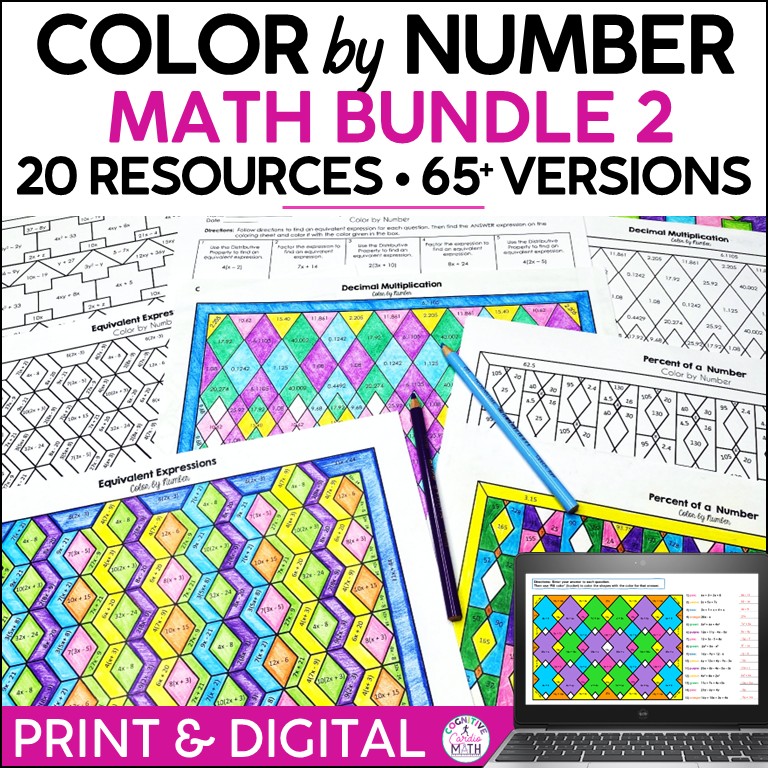
If you’re looking for resources that turn a regular lesson into an engaging experience, you need to check out the 7th Grade Math Bundle. It’s packed with note-taking wheels, color-by-number activities, anchor charts, and spiral warm-up worksheets that make 7th-grade concepts more exciting to learn. The resources are creative, visual ways to help your students understand math concepts by making them approachable and memorable.

Save for Later
Save this post for later! Pin it to your favorite math board or share it with a fellow teacher who’s also diving into the constant of proportionality. That way, when you’re ready to teach proportional relationships, you’ll have these strategies and resources right on hand.