Introducing the properties of addition and multiplication in 3rd grade can feel like a big step. It’s one of the first times we present students with math theory as opposed to ‘how to’ instructions. But. . . it doesn’t have to be intimidating! When taught in a hands-on, visual, and student-centered way, these foundational math properties can click faster than you might expect. Today, I’m walking you through four key properties of addition and multiplication: commutative, associative, distributive, and identity. I’ll also share some tips and ideas on how to make each one stick. Towards the end, I’ll share a helpful post for older grades, so you can revisit these concepts with confidence as your students grow.
Why Teaching the Properties of Addition and Multiplication Matters
Before diving into each property, it’s important to understand why teaching the properties of addition and multiplication is such a big deal in 3rd grade. These aren’t just abstract rules. They give your students the tools they need to solve problems more efficiently, recognize patterns, and develop a deeper number sense.
When your kiddos understand how numbers can be grouped, rearranged, or broken apart, they become more flexible thinkers. That flexibility means they aren’t just memorizing facts. They’re actually making sense of the math. These properties help them tackle everything from multi-digit addition to mental multiplication strategies and even set them up for future concepts like algebra.
Plus, teaching the properties of addition and multiplication early on builds confidence. Once your students see that math follows predictable patterns, it takes away some of the fear and frustration. Instead, they start to feel like detectives, looking for clues in number relationships and solving problems with purpose. That’s the kind of mathematical mindset that sticks.
Teaching the Four Properties
When it comes to introducing the four properties of addition and multiplication, I like to start with a “pep talk.” I get my students excited about learning something new and explain how they are ready for this next step. I then explain how we are going to learn how to think a little more like a mathematician. For most kids, there is excitement in knowing they’re learning something a little more advanced, and that is often all it takes to get buy-in for this topic.
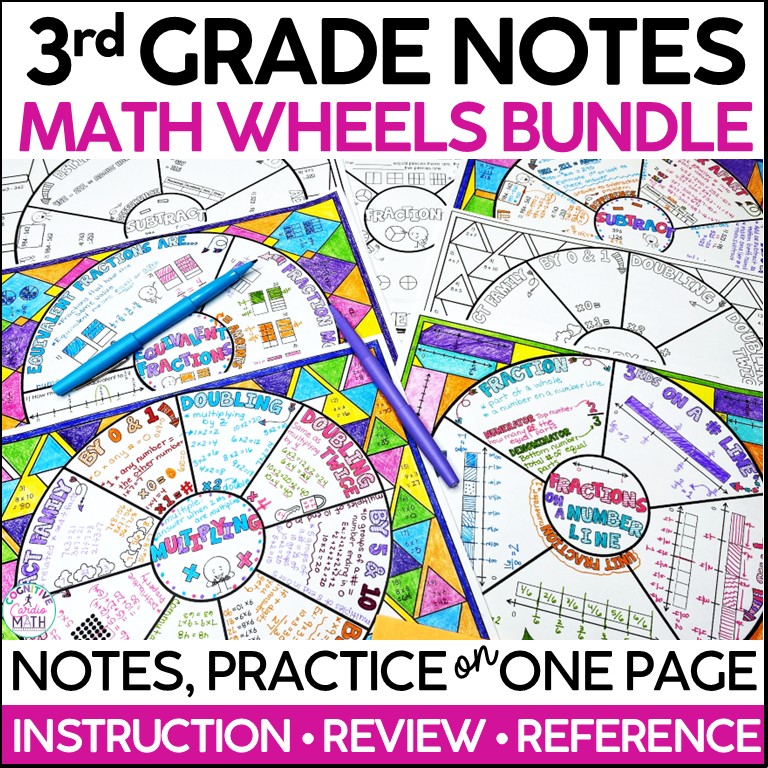
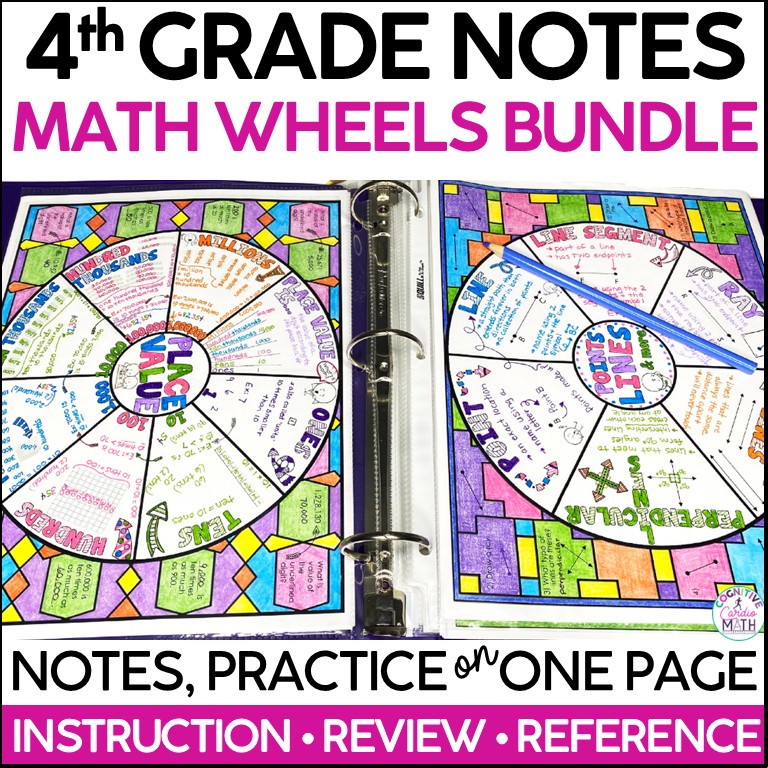
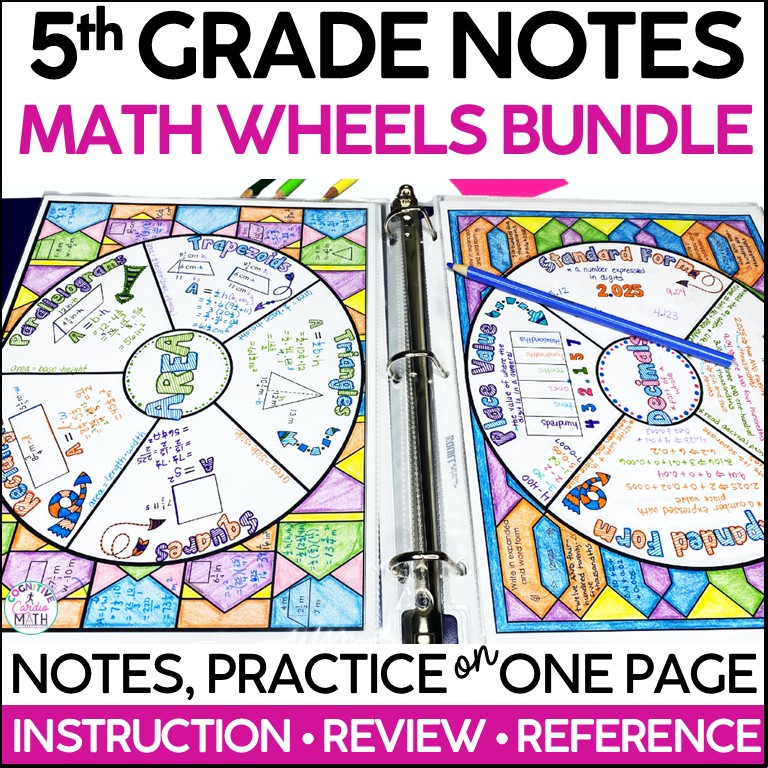
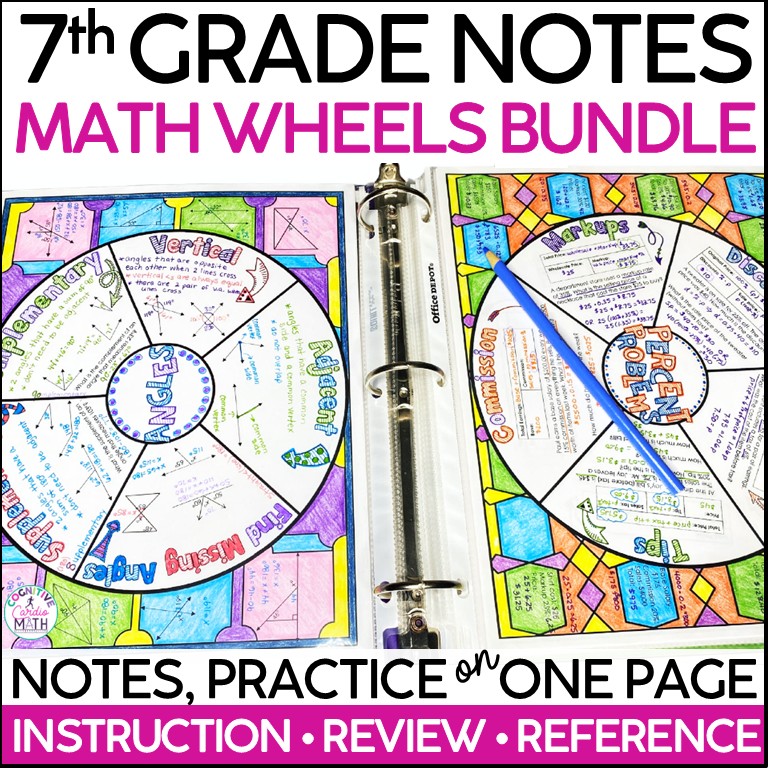
I always teach the properties of addition and multiplication one at a time. And. . . I always use the math wheel as our starting place for notes and examples. Ready to peek into how I teach these properties? Keep reading!
Start with the Commutative Property

I always kick things off with the commutative property of addition and multiplication. I explain to students that this property simply means that numbers can be added or multiplied in any order and the answer stays the same. For example: 2 + 3 = 5 and 3 + 2 = 5, or 4 × 6 = 24 and 6 × 4 = 24.
To help your 3rd graders really understand this idea, you can use the phrase “turn-around facts.” It’s kid-friendly and easy to remember. The math wheel includes this phrase along with visuals and space for your students to write out their own examples. You can also model this concept using objects or drawings in an array format, and then show how it could be worded with the number of rows first or the number of columns. It’s a great visual way for students to see that no matter the order, the answer stays the same.
Once your students complete this section of the wheel, they can color it using the designated color code. This color association supports memory and makes it easy to refer back to during independent practice or assessments.
Model the Associative Property of Addition and Multiplication

The second property I teach is the associative property. This property shows students that the grouping of numbers doesn’t affect the sum or product. The catch is that the numbers stay the same. An example would be:
(2 + 3) + 4 = 9 is the same as 2 + (3 + 4) = 9, or
(1 × 6) × 7 = 42 is the same as 1 × (6 × 7) = 42.
The math wheel includes ball and star images to help your students visualize these groupings. You can walk through these step-by-step, showing how parentheses indicate which numbers to group together first. I’ve found that modeling with visuals or manipulatives (like linking cubes or number cards) helps this concept click.
Coloring this section of the wheel also helps differentiate it from the others. Encourage your students to find their own examples or even challenge them to create a “wrong” example that doesn’t follow the property, and explain why.
Break It Down With the Distributive Property
Next up is the distributive property of multiplication. If you are introducing properties while teaching addition, I would hold off on this one until you teach multiplication and factors. This one tends to be the trickiest of the bunch for many 3rd graders (AND many older students!). With the right visuals and chunked steps, your students can absolutely master it.
This property is all about breaking down a multiplication problem into smaller parts. I like to show students how this property will help them make math easier by allowing them to tap into the multiplication facts they know and addition, which they are comfortable with.

Using the math wheel, model how to break down one number in the multiplication problem using addition. Once we have done that, I show them how multiplying each part by the other number, and then adding the products together, gives them the answer for the original problem.
For example, if you’re solving 4 × 8, your students would first break apart the 8 into 5 and 3. That’s step one. Once the number is split, it’s time to multiply each part by the number outside the parentheses. That means doing 4 × 5 and 4 × 3 separately. This helps your students see how the distributive property makes big multiplication problems feel less overwhelming. Finally, they add the two partial products, 20 + 12, to get the final answer, which is 32. This final step helps reinforce that the distributive property doesn’t change the product. It just makes it easier to get there.
The Properties of Addition and Multiplication Math Wheel does a great job supporting this process. The section for the distributive property walks through these three steps clearly with examples, color-coded visual cues, and even some guided practice problems built into the wheel itself. The model with the circles shows how numbers like 7 can be split into different parts. This helps make the steps feel less abstract. Once your students catch on, this property becomes a great tool for mental math and multiplying larger numbers with confidence. Once this property starts making sense, it often becomes a favorite because your students love how “big” numbers feel smaller when split up.
Reinforce the Identity Property of Addition and Multiplication

Next up is the identity property. Like the Distributive property, this one isn’t the same for addition and multiplication. So I recommend teaching the identity property of addition at the beginning, and when it’s time for multiplication, teach the identity property of multiplication.
This one’s usually a confidence booster because it is something students already know, but they just didn’t know it was a mathematical property! With the identity property of addition, any number plus 0 equals that number. With multiplication, any number times 1 equals that number. A couple of examples would be: 9 + 0 = 9 and 5 × 1 = 5.
The math wheel includes a section for each identity property. There are examples and space for your students to add notes or more examples of their own. I recommend framing these as the “super-simple” properties. Invite your students to come up with the biggest number they can think of, then apply the identity property to it.
Using the Properties of Addition and Multiplication Math Wheel
This math wheel is a fun and effective way to help students learn the properties of addition and multiplication. I know that in your math classroom, you have a variety of student levels and needs. That’s why I created three differentiated versions of this and all of my math wheels. This allows you to choose the version that best supports you and your students. One version is completely blank for full note-taking abilities. Another version has fill-in-the-blank notes, and the third option includes all of the notes written on the wheel for your students who need more support. AND each of these versions comes with a patterned background and with no pattern in the background, in case students need a more simple background and more organized space for the practice problems.

Each section of the wheel focuses on a specific property, complete with definitions, examples, and color-coding suggestions. There are also 18 practice problems circling the outside of the wheel. Your students can apply the property that fits best and even color-code their answers based on the property used.
My favorite part is that the wheel becomes a visual anchor your learners can refer to again and again throughout your unit and throughout the year. Pop it into their math notebooks or hang a few examples around your classroom. It’s the kind of tool that supports both introduction and review seamlessly.
Extra Tips for Teaching the Properties of Addition and Multiplication

Once your students are familiar with the properties of addition and multiplication and have their math wheels in hand, you can reinforce these concepts with a few simple activities. A quick and easy idea is to start your math block with a one-problem warm-up. Write an equation like 6 + 0 = 6 or (2 × 3) × 4 = 2 × (3 × 4) on the board and ask, “Which property is this and how do you know?” This takes just a couple of minutes but keeps the vocabulary fresh and encourages your students to explain their thinking.
Another no-prep strategy is to use quick property sorts. Write 6 to 8 sample equations on sticky notes or index cards and have your students sort them under headings for commutative, associative, distributive, and identity. This can be done at a center, in partners, or even on the floor with small groups. You can reuse the same cards over and over again. You can even have your students create their own once they’ve gotten the hang of each property.
To add some movement, try a “property hunt” around the classroom. Tape equations to the walls and have your learners walk around with clipboards, identifying which property each one demonstrates. You don’t need to reinvent anything. Just use problems from your curriculum or even the examples from the math wheel. These types of activities get your students up, thinking, and talking about math in a way that makes it stick.
Build on These Ideas with Upper Grade Strategies
If you’re ready to take your understanding of the properties of addition and multiplication a step further, or you’re already thinking about how these concepts spiral into higher grades, don’t miss this helpful blog post on Properties of Multiplication and Addition for Upper Grades. It dives deeper into how these properties continue to show up in more complex math and offers great examples you can use to stretch your high flyers or prep for what’s coming next.
Build a Strong Foundation with the Properties of Addition and Multiplication
Teaching the properties of addition and multiplication in 3rd grade doesn’t have to feel overwhelming. With visual tools like the math wheel, low-prep activities, and intentional modeling, you can help your students build a solid foundation that sets them up for success. Not just this year, but in all the math learning to come.

These properties are more than just standards to check off. They’re the building blocks of number sense and problem-solving flexibility. When your students understand why math works the way it does, they gain confidence, independence, and a deeper love for learning. You’re not just helping them memorize a rule, you’re helping them become thinkers.
Whether you’re just introducing these concepts or looking for creative ways to review them, lean on the strategies and resources that make the learning stick. With the right supports in place, your students will be able to spot the commutative, associative, distributive, and identity properties throughout the year and feel proud of it.
Save for Later
Not ready to dive into the properties of addition and multiplication just yet? No problem! Go ahead and pin this post or bookmark it so you’ll have everything you need when it’s time to teach these essential 3rd grade math concepts. Whether you’re planning ahead or circling back for review, these tips and strategies will be right here waiting for you!