I can still remember those nights when I would look at my pacing guide and realize my ratios unit was coming up next. My computer would have multiple tabs open, digging through old files, trying to remember what worked well and what left my students confused. I wanted my students to understand the relationships behind the numbers. I wanted them to see how everything connected. Over time, I realized I needed more than scattered resources. I needed a clear path from the introduction to the application. If you are preparing to teach ratios and rates, this blog post brings everything together so you don’t have to scramble. I am highlighting 6 ratio blog posts that will guide you through every part of your ratio unit. Each section gives you a snapshot of the strategy, along with links to where you’ll find the full breakdown and classroom examples.
Where to Start When Teaching Ratios
When you begin teaching ratios, start with my post, Teaching Ratios and Rates: Easy Strategies for 6th Grade Math. This is where I lay the groundwork. I walk through what a ratio actually is, the three ways to write a ratio, and how to distinguish between part-to-part and part-to-whole comparisons. You never want to assume your students remember these distinctions clearly, so I model them carefully.

The paired teaching videos within the post are especially helpful because they model the language and pacing you can use in your class. They include real-world examples and emphasize labeling units clearly.
Starting here gives the unit direction. When you teach ratios with a clear and intentional beginning, everything that follows feels smoother. The foundation becomes solid enough to support more complex reasoning later.
How to Confidently Teach Equivalent Ratios

Once your students understand what a ratio is, you move into equivalent ratios. This is where the real reasoning begins. In my post How to Confidently Teach Equivalent Ratios, you will learn practical and effective tips for teaching how to find equivalent ratios.
You will see how ratio tables and double number lines are used to make the relationships visible. Instead of memorizing a rule, your students see the numbers grow together. The examples are intentional and modeled step by step so you can mirror that instruction in your own classroom.
I also share my favorite resource that I used to teach equivalent ratios. The resource includes guided notes, structured practice problems, real-world scenarios, and an exit ticket. It’s everything you need to teach equivalent ratios.
Teach Ratios By Connecting to Proportions
As you continue through the unit, you want to help your students see that proportions are not a new concept. They are built directly on equivalent ratios. My post on Teaching Ratios and Proportions walks you through that connection clearly and intentionally.

In this post, we explore proportional reasoning using multiple representations. These include ratio tables, double number lines, and tape diagrams. Seeing the same relationship shown in different ways helps your students develop flexibility. When one method does not click right away, another often does.
The full Ratios and Proportions Unit that accompanies this post provides a consistent lesson routine. It includes guided notes, fold-it-up vocabulary tools, practice pages, exit tickets, and assessments. That structure makes planning easier for you and creates consistency for your students. When your lessons follow a predictable pattern, your students can focus more on understanding the math instead of trying to figure out what comes next.
Teach Ratios While Making Them Relevant
If you are teaching ratios and proportions, then you definitely don’t want to miss this blog post. It guides you through everything you need to know to implement my favorite hands-on Ratios and Proportions activity. The goldfish lesson simulates the capture-recapture method scientists use to estimate animal populations. Instead of working with real fish, your students use Goldfish crackers.
Check out this blog post for your step-by-step guide to completing the goldfish activity in your classroom.
Teach Ratios With the Math Wheel for Structure Notes

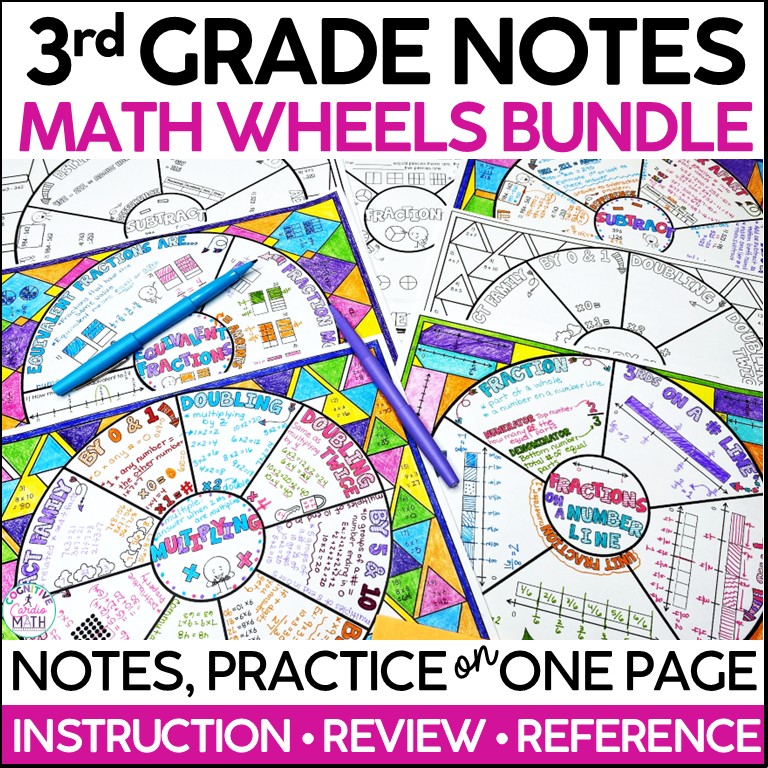
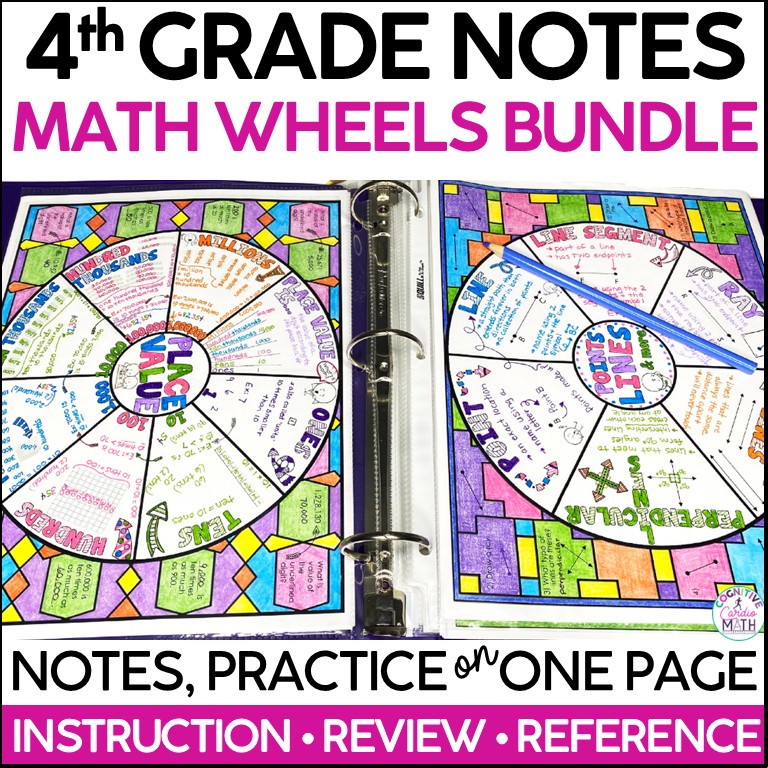
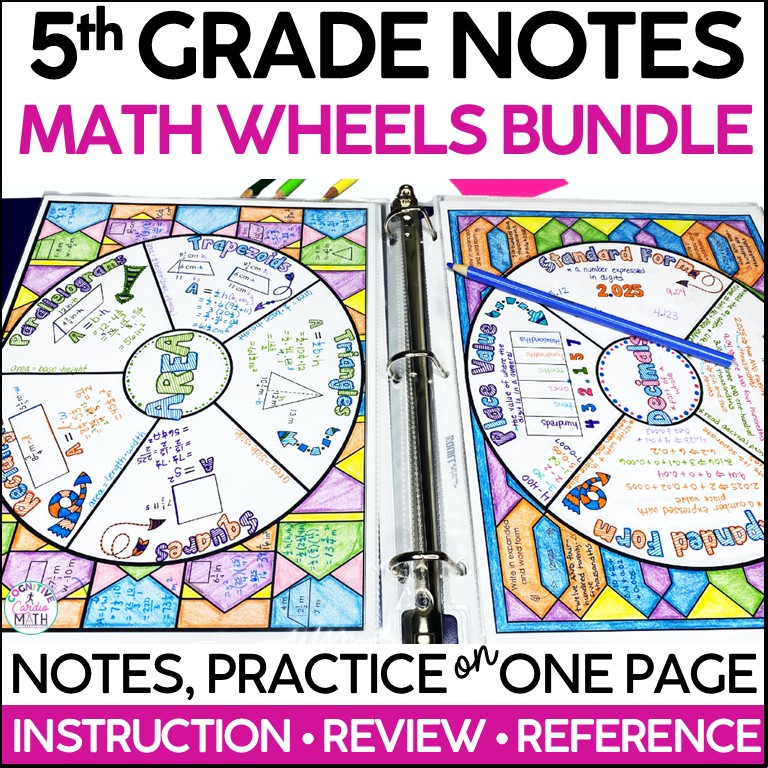
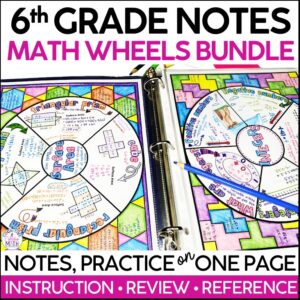
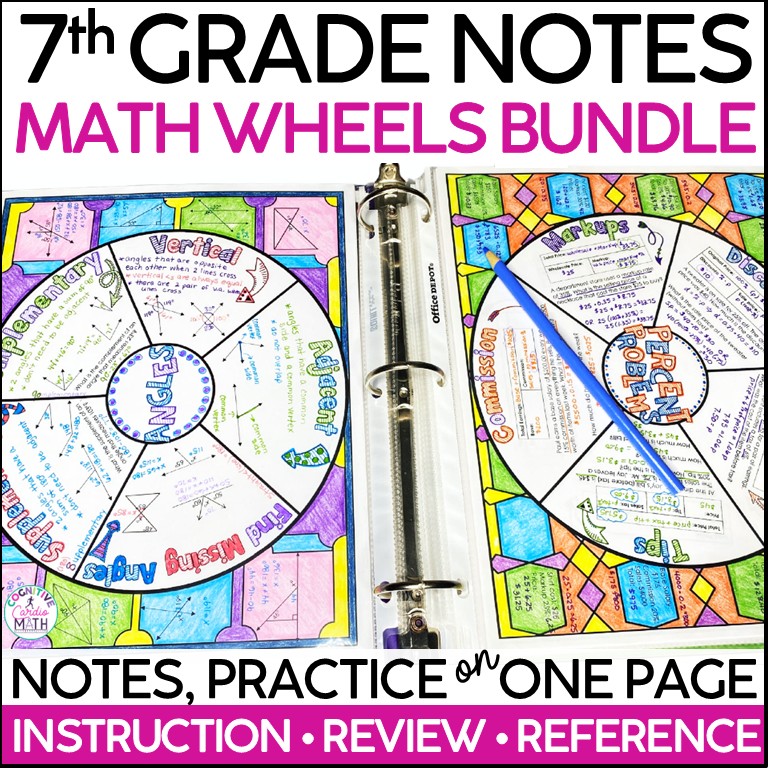
Do your students struggle with note-taking when you introduce a new skill or concept? If so, this blog post is for you! In this post you will learn about the Ratios and Rates Math Wheel. It provides a structured way to walk through definitions, writing ratios in multiple forms, equivalent ratios, and ratio tables, all in one place. Instead of scattered notes across several pages, everything lives on one interactive graphic organizer that your students build step by step with you.
As you complete the math wheel with your students, they are actively building a visual reference tool they can keep in their notebooks all year. The wheel includes the key topics students need to learn. The important definitions are included, as are step-by-step examples. Around the outer edge of the wheel, there are practice problems that allow your students to immediately apply what you just taught. It is one of the best note-taking tools I have ever used in the classroom. Check out the blog post to learn more about teaching ratios and rates with the doodle wheel.
Reinforce the Basics: Free Ratios, Equivalent Ratios, and Rates Fold It Up

If you’re looking for a simple reinforcement tool that requires little prep, this foldable is a great addition to your ratios unit. It’s the perfect way to review the difference between ratios and rates. And. . . the fact that the activity is a little different than normal notes gets students engaged. Head over to the Ratios, Equivalent Ratios, and Rates Fold It Up blog post to grab your copy.
In this blog post, you will learn everything you need to know in order to use this free fold it up activity in your classroom.
This foldable is especially helpful at the beginning of your unit or after a pretest reveals gaps in understanding. If you notice your students leaving ratio questions blank or writing something that does not resemble a ratio at all, this gives you a structured way to reset and clarify expectations. It strengthens understanding without adding complexity to your prep time. You can introduce it in one class period and immediately give your students a reference tool they will continue using throughout the unit.
Extend the Unit to Cover Unit Rates
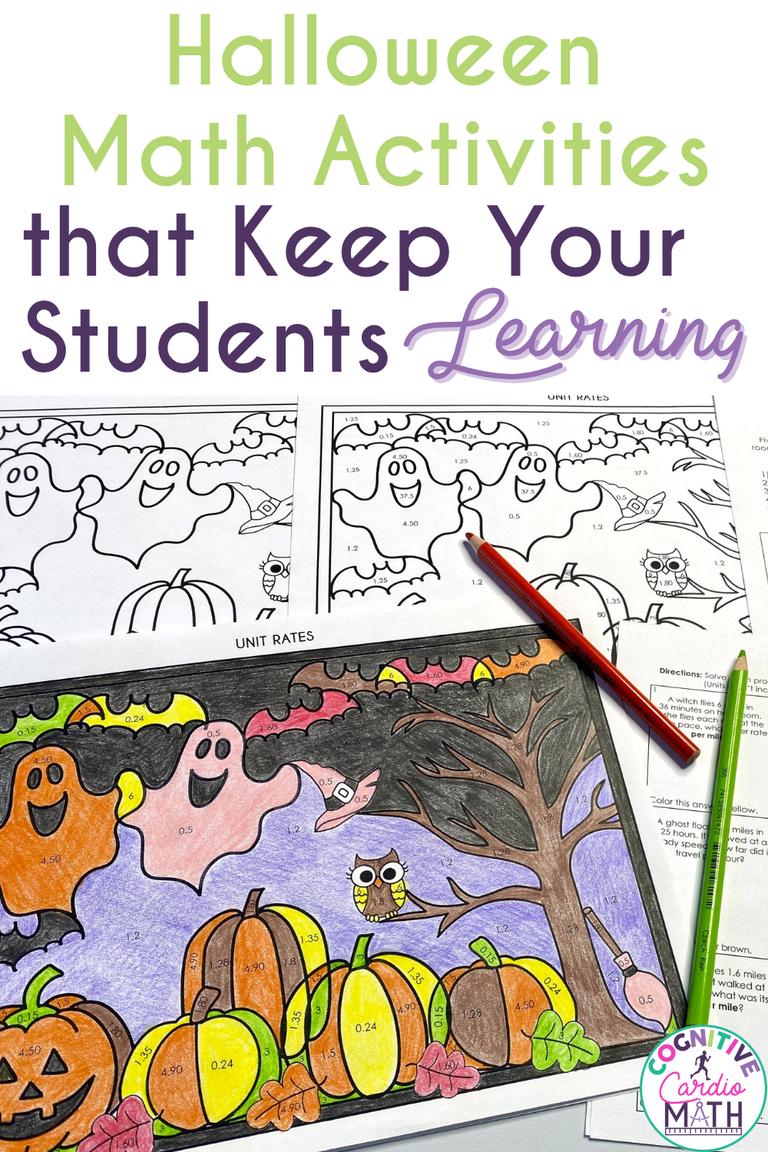
Once your students understand ratios and proportions, you are ready to extend the learning into unit rates. My post, Everything You Need to Know About Teaching Unit Rates, walks you through exactly how to introduce the concept in a way that feels practical and relatable.

By connecting unit rates to real-world examples, your students will see just how unit rates are used in a way that has meaning in real life. Head over to the unit rates blog post to learn more about connecting this concept to everyday life.
The Unit Rates blog post also shares a resource that includes everything you need to teach unit rates in your classroom. If you want your ratios unit to feel complete and connected, this final piece ties everything together.
A Clear Path to Teach Ratios From Start to Finish
When you look at all of these posts together, you see a complete instructional pathway. Instead of scrambling for disconnected resources, you have a clear progression. Each piece builds on the last, giving you confidence as you plan and teach. If you are preparing to teach ratios and rates (and proportions), everything you need is here. You can follow this path step by step and know that your instruction is intentional, organized, and designed to help your students truly understand the concept of ratios and rates.
Save for Later
If your ratios unit is coming up soon, don’t leave this until the night before. Pin this post so you have a clear plan ready when it’s time to start teaching. Future you will be so glad you did!