I remember those October math classes when my students were already thinking about costumes, candy, and Halloween plans. Their excitement grew as Halloween got closer, but my math plans were not disappearing. Of course, that would probably have been the ultimate Halloween trick my students were hoping for! I never spent much class time focusing on Halloween activities, but I still liked acknowledging the holiday. When I did, I wanted my Halloween math activities to keep my students learning and practicing the skills they actually needed.
Keep the Math at the Center of Your Halloween Math Activities
I think there is a happy middle ground when it comes to holidays in math class. You can acknowledge Halloween without putting your regular instruction on hold. The easiest way is to start with the math rather than the holiday. Think about what your students need to learn or practice first, and let that guide your choice of activity.
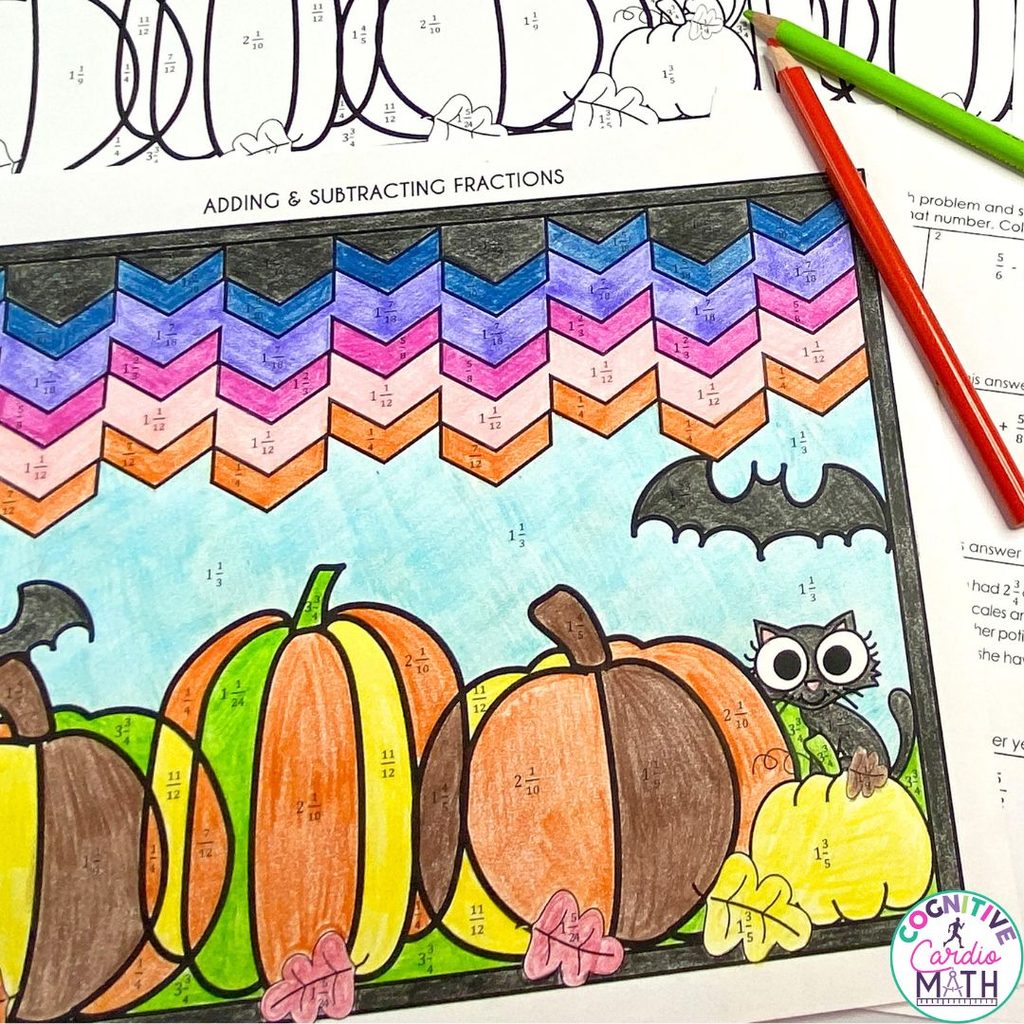
Maybe you’re working on equivalent fractions, one-step equations, or unit rates when Halloween rolls around. There’s no reason to stop that instruction just to fit in something seasonal. Instead, look for Halloween math practice that reinforces the same skill. Your students can enjoy the Halloween theme while continuing with the math already on your lesson plans.
This approach also takes some pressure off you as the teacher. You do not need to plan an elaborate Halloween math lesson just because October 31st is approaching. Teach the skill, model it, and give your students the guided practice they need. Then, use a seasonal activity when your students are ready to practice more independently.
That was always the balance I wanted when bringing holidays into my classroom. I wanted my students to notice that something was different without losing an entire class period. The activity could feel seasonal while the expectations remained the same. For me, that is what makes a Halloween math activity worth using.
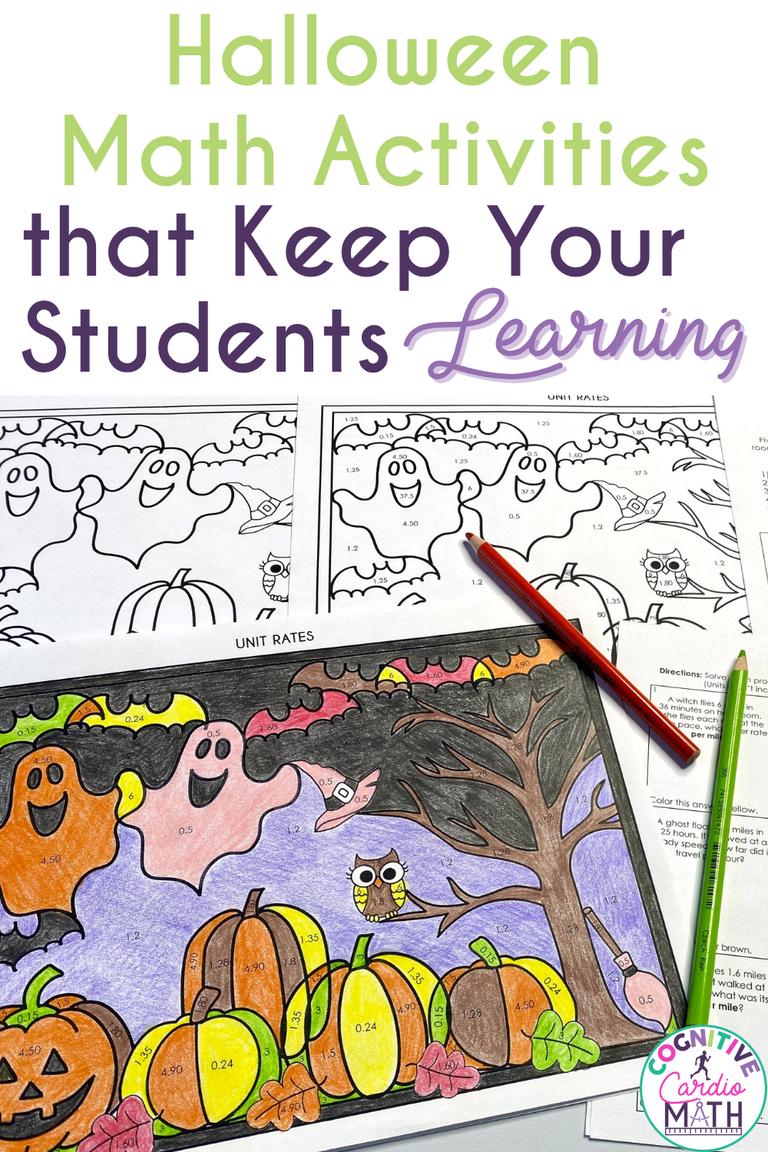
Use Halloween Math Color by Number Activities for Focused Practice
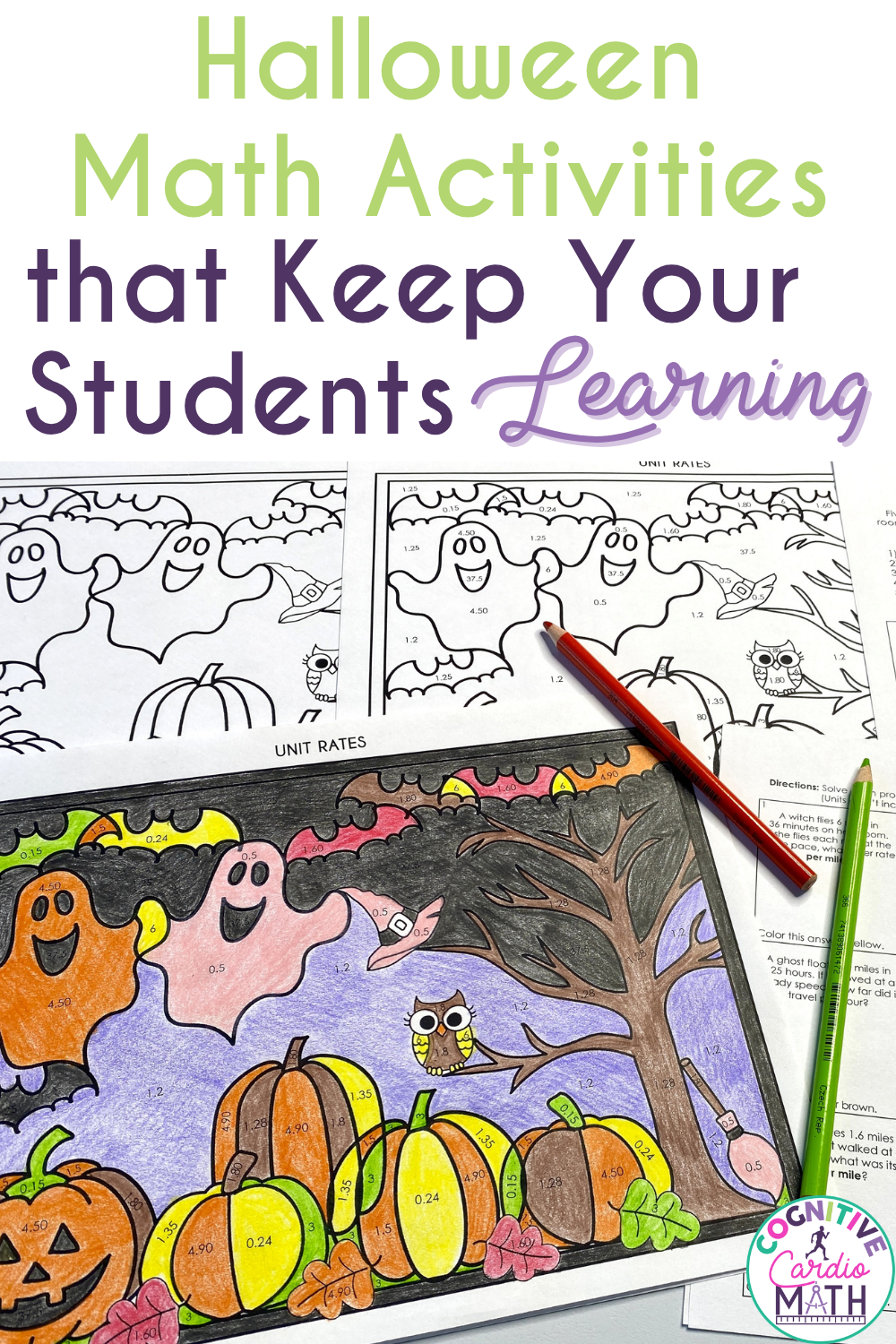
Sometimes your students understand a skill during the lesson but still need plenty of practice before it sticks. That is where a color by number activity can fit nicely into your Halloween math plans. The seasonal picture changes the feel of practice without changing what your students need to accomplish.
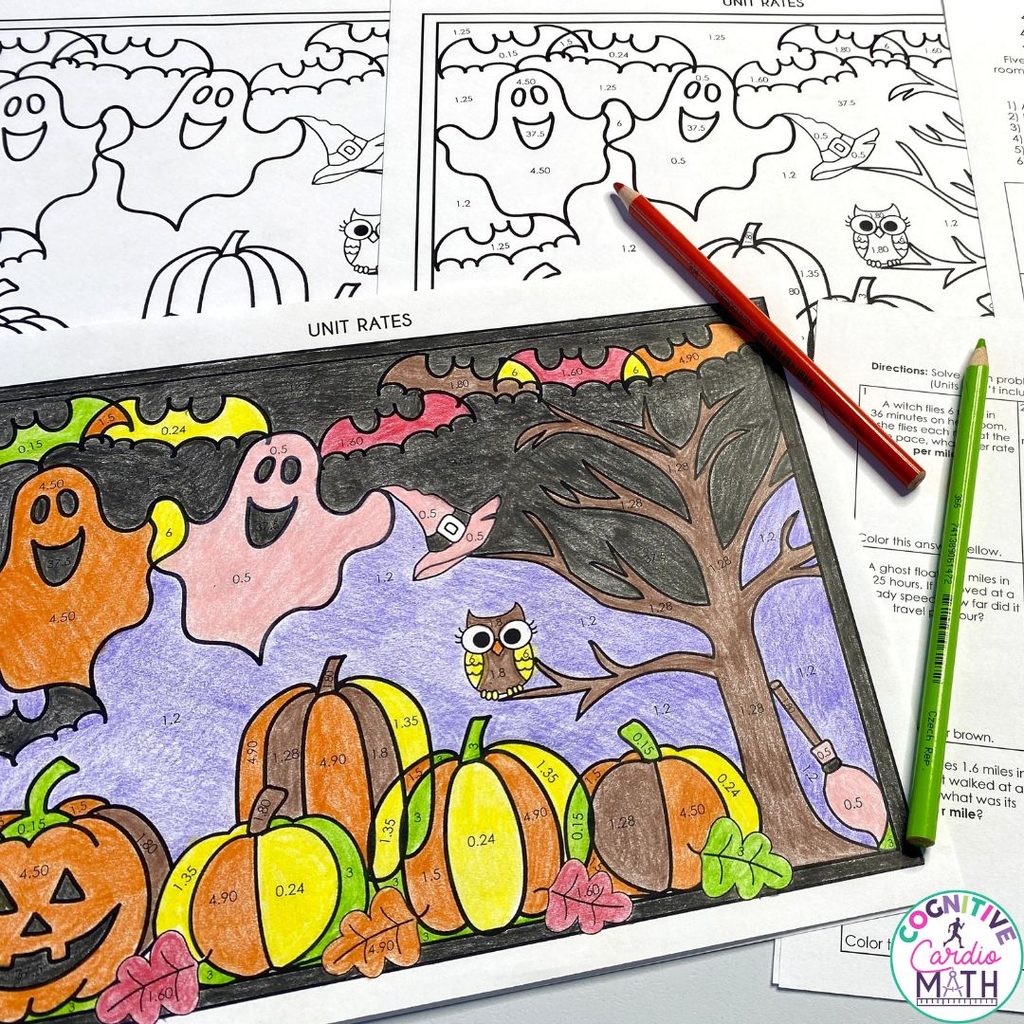
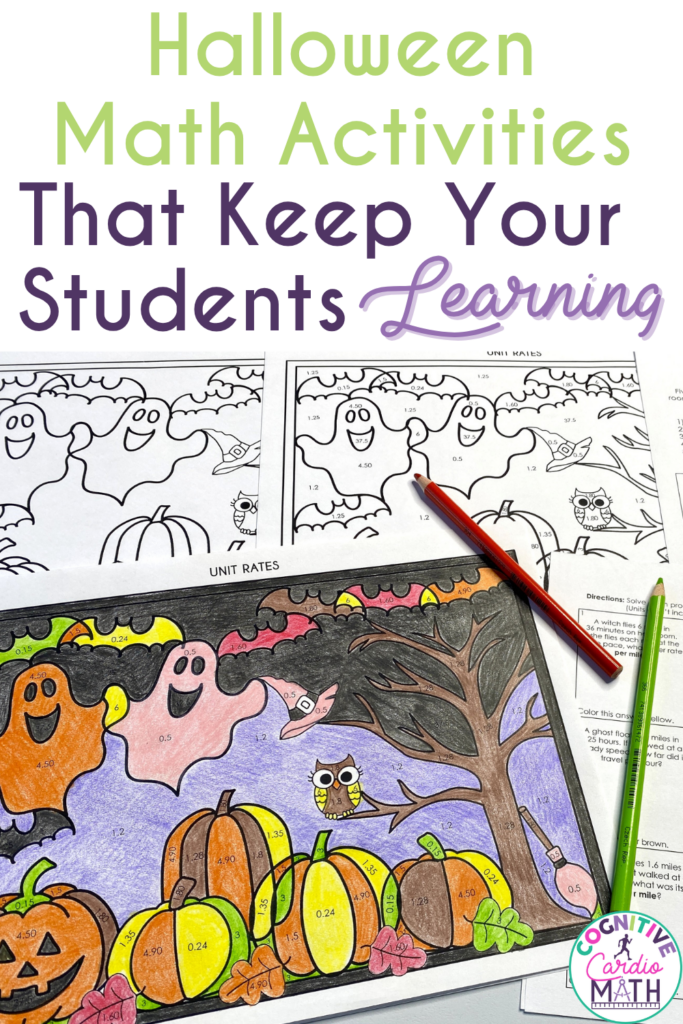
I have created Halloween color by number activities for one-step equations, unit rates, equivalent fractions, and adding and subtracting unlike fractions. Each activity begins with math problems your students will solve. Once they solve the problems, they find their answers on the coloring page and use the assigned colors. The coloring adds a fun element to the activity and gives them something seasonal to work toward, while the math remains the main task.
Before passing everything out, I recommend completing one problem with the class. Put the question page and coloring sheet on the board or under your document camera. Solve the problem together, and then demonstrate how your students use that answer on the coloring page. This quick example can prevent confusion once everyone begins working independently.
I would also have your students show their math work instead of treating the activity like a guessing game. This is especially important with equations, unit rates, and unlike fractions. You want to see the thinking that produced the answer, not only the finished Halloween picture. Decide before class where your students should show that work so your expectations are clear from the beginning.
While your students work, walk around your room and look at your students’ math work before focusing on whether their colors match. A student repeatedly finding incorrect answers probably needs help with the math skill. You can stop and work through another problem with that student before the errors continue.
Match Your Halloween Math Practice to What You Are Teaching
Choose a Halloween math activity that fits where you are in your curriculum. Each resource targets a different skill, so your current lesson can drive that decision. This keeps you from changing your pacing simply because a holiday is approaching.
One-Step Equations
If you are teaching one-step equations, your students can practice with 20 equations using all four operations. They solve each equation before finding the corresponding answer on the coloring sheet. This makes the activity a natural follow-up to your students’ learning how to solve one-step equations. You could use it for independent practice after completing examples together.
Unit Rates
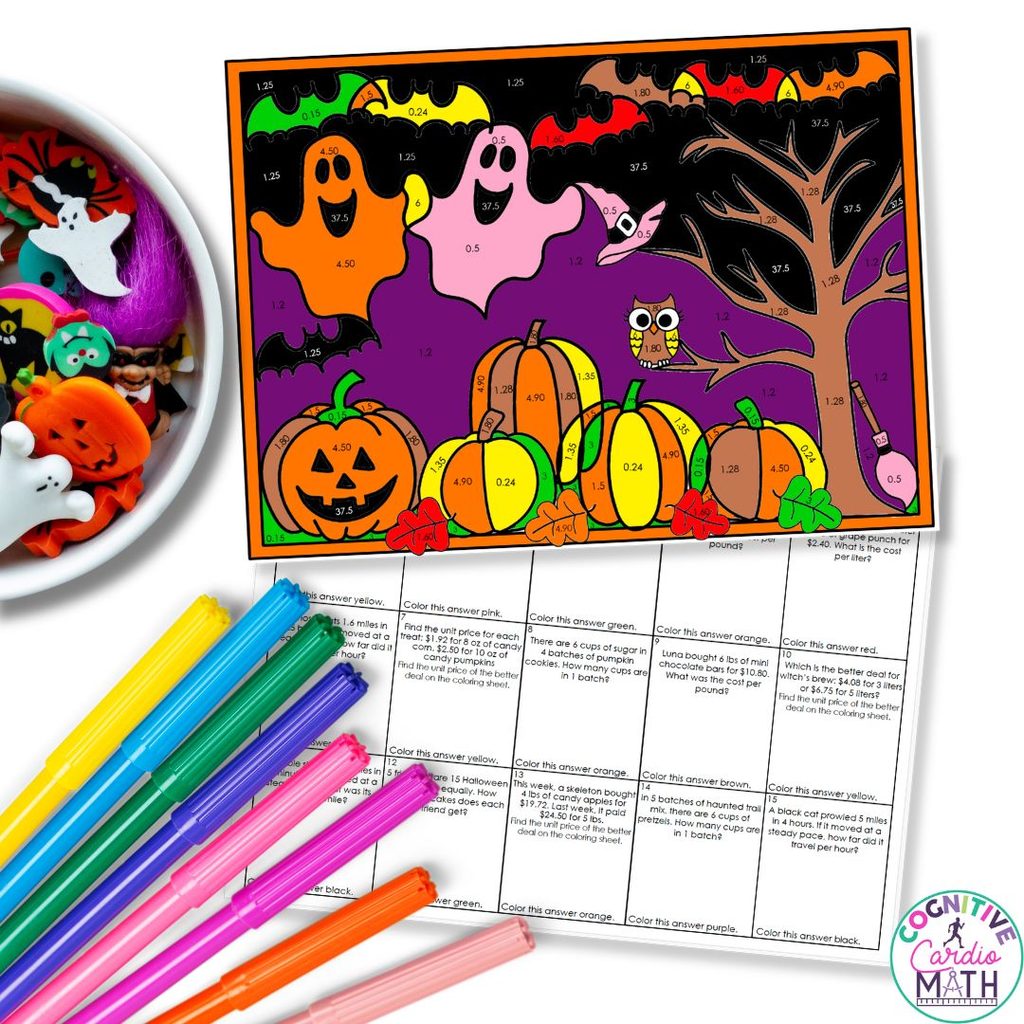
If you are working on unit rates, this Halloween math activity gives your students 15 word problems. They find unit rates and unit prices while working through Halloween-themed situations. Some questions also require your students to compare unit prices and identify the better deal. This gives your students practice applying unit rates instead of only calculating them from isolated numbers.
Equivalent Fractions
For equivalent fractions, your students complete 20 problems using several common denominators. They find equivalent fractions with larger and smaller numerators and denominators. Some questions also place the fraction work into Halloween-themed word problems. You will have two versions of the question page, which can help when your students need different levels of support.
In Version A, your students interpret the word problem and determine how to represent the equivalent fractions themselves. Version B provides the fraction equivalence with the missing number already set up. Your students practice the same skill, but Version B gives them additional structure before solving. You can choose the version that best matches what your students are ready to do independently.
Adding and Subtracting Unlike Fractions
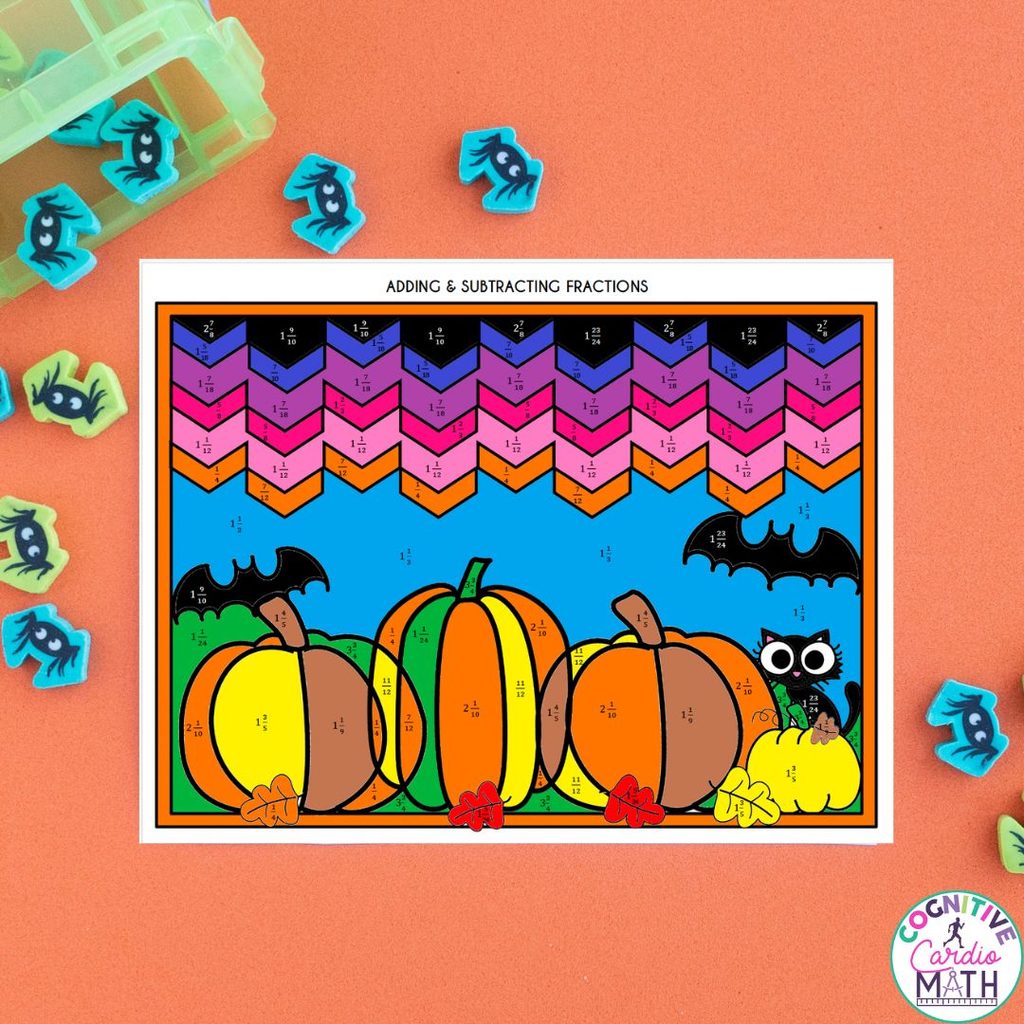
The adding and subtracting unlike fractions activity includes 20 questions with fractions and mixed numbers. Three subtraction problems require regrouping or converting to improper fractions. About half of the answers also require your students to simplify their answers. There are word problems mixed into the practice, so your students encounter the skill in multiple formats.
The point is not to find a reason to squeeze Halloween into your math plans. Start with what your students need to practice and choose from there. If one of these Halloween math activities matches that skill, you have seasonal practice ready to go. If it does not match what you are teaching, save it for a time when it does. Having activities with a theme always increases engagement among your students no matter what time of year!
Add Logic Puzzles to Your Halloween Math Plans
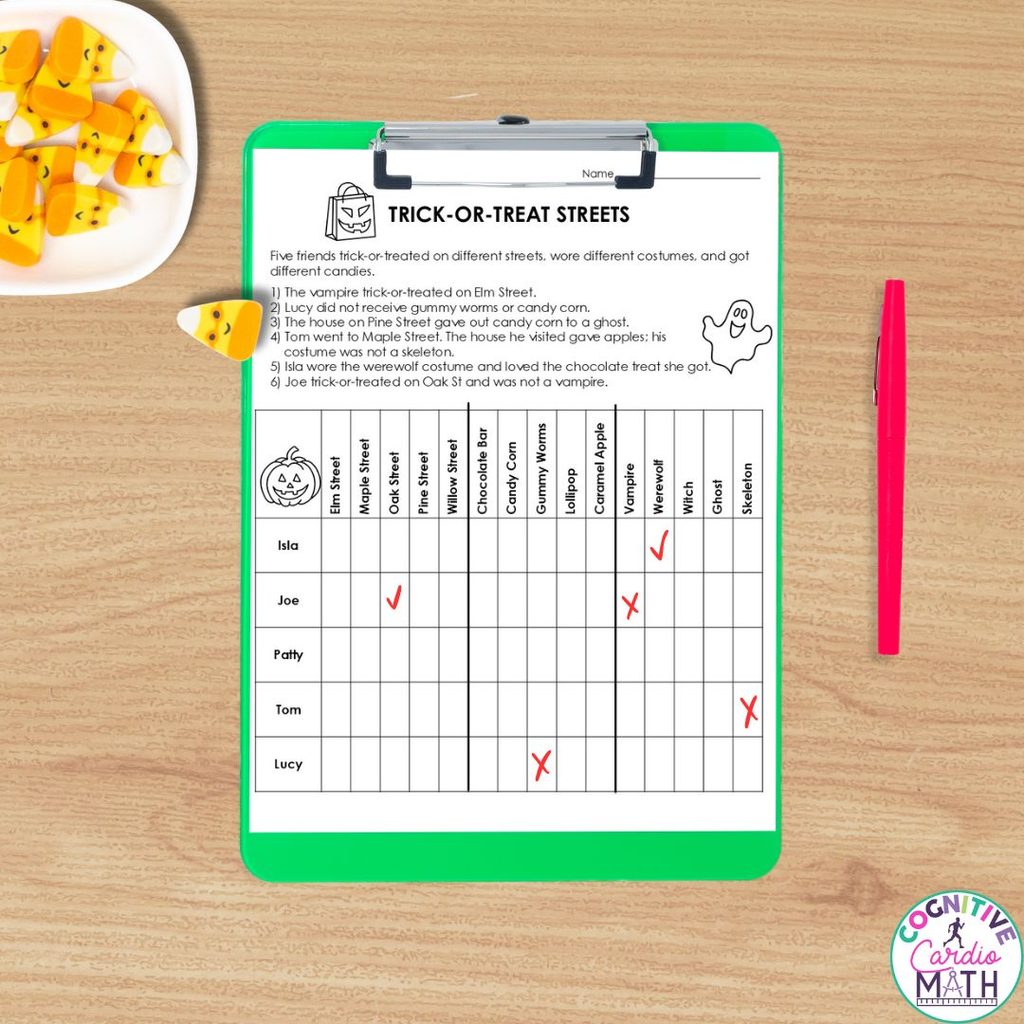
There are also times when your students have done enough computation, and you want them thinking in another way. The logic puzzles included with my Halloween math resources give you that option. They are separate activities rather than additional practice with the featured math skill. Your students read clues and use a grid to determine which possibilities belong together.
One puzzle asks your students to match children with Halloween costumes and favorite treats. Another has your students determine each child’s spooky pet, its favorite food, and its cage color. The other puzzles feature scenarios involving trick-or-treating and a haunted-house sleepover. Your students must use the information in each clue to eliminate possibilities.
They continue narrowing their choices until they can complete the grid. The answer does not come from one clue, so your students need to keep connecting information as they work.
Tips for Introducing Logic Puzzles
If your students have never solved a logic puzzle, spend a few minutes teaching them how the grid works. Start with a clue that gives your students definite information. Show them where to mark the match and which other possibilities you can now eliminate. Think aloud as you go so your students hear how you use the clue.
Next, choose a clue that does not immediately provide the complete answer. Talk through what you know and what you can rule out. This way, your students can see that solving a logic puzzle often requires combining information from several clues. This is also a good time to show them that getting stuck does not mean they guessed incorrectly.
After that modeling, your students can continue independently or work with a partner. If they work together, have them explain their reasoning instead of simply sharing answers. Asking, “Which clue proves that?” is an easy way to keep the conversation focused. If they cannot point to a clue, they may be making an assumption instead of using the information provided.
Decide Where Logic Puzzles Fit Into Your Halloween Math Time
I would not try to squeeze the color by number and logic puzzle into the same math period. There is no reason your students need to complete both at once. Think of them as two Halloween math options you can use at different times. That gives you more flexibility without trying to rush your students through either activity.
You might use the color by number for independent practice after teaching the skill. Then, save the logic puzzle for later in the week. Logic puzzles can work well when your students finish their assigned math at different times. Keep copies available for your students who are ready for another challenge. This gives early finishers something purposeful instead of simply giving them more problems.
Another option is to let your students solve a puzzle with a partner during a shorter class period. You could stop everyone after several minutes and discuss one challenging clue together. Ask your students to share what they eliminated and how they knew. They can then return to their grids and use that information to continue.
However you use them, remember that logic puzzles serve a different purpose than the color by number activities. One provides focused math skill practice, while the other emphasizes reasoning and deduction. You do not need to make one activity do both jobs. Choose whichever type of thinking makes the most sense for that part of your Halloween math plans.
Get Students Moving With Halloween Math Task Cards
Some October days have a little more energy than others. If your students need movement, my Fall and Halloween Footloose activity gives you another option for Halloween math practice. Instead of focusing on one skill, these task cards provide mixed review. Your students can get out of their seats without leaving the math behind.
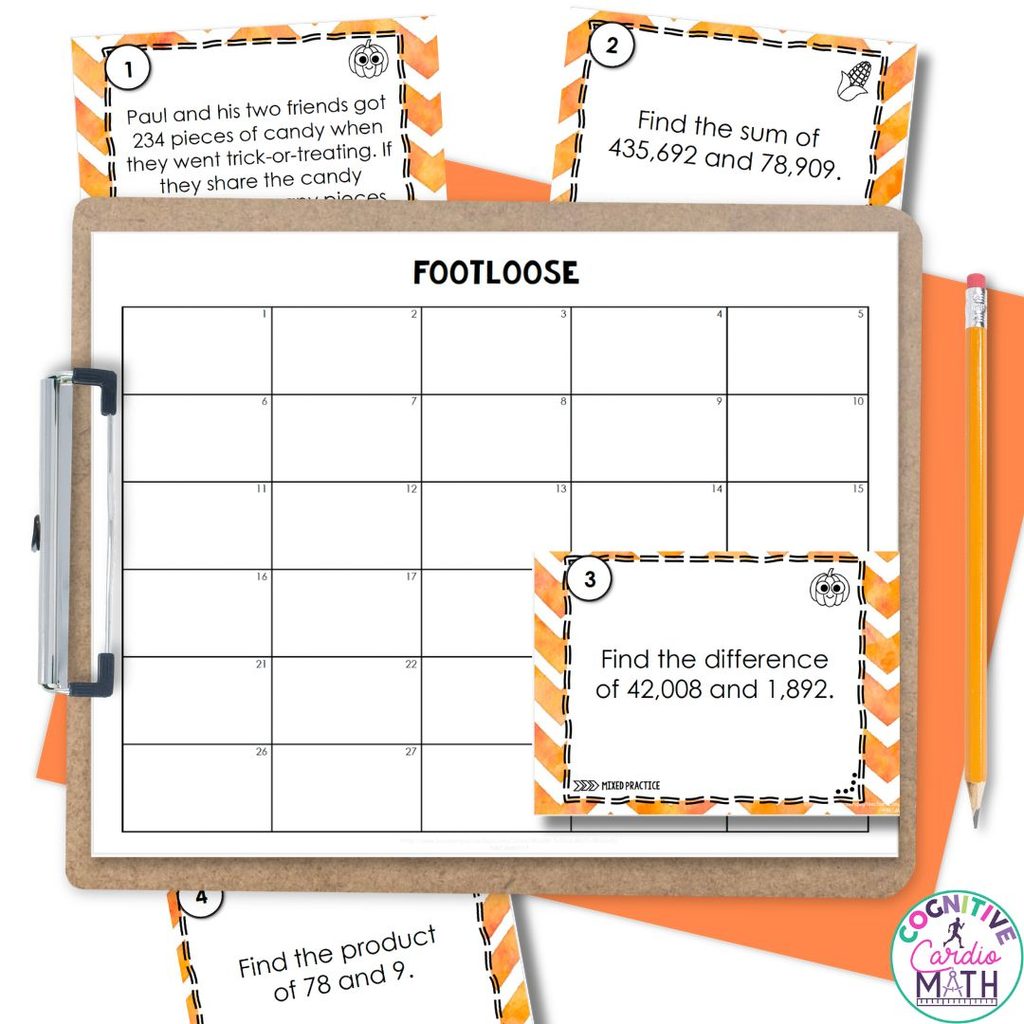
I included 30 Footloose task cards, a student recording grid, and an answer key. In this Halloween math activity, your students practice addition, subtraction, multiplication, division, money, elapsed time, and word problems. There is also a question requiring your students to convert a fraction of an hour to minutes. That variety makes the activity useful when several previously taught skills need attention.
Some cards use Halloween and fall situations to create the seasonal connection. Your students might calculate how much candy was shared during trick-or-treating or determine how long someone spent trick-or-treating. Other cards simply ask your students to complete a computation problem. I like that balance because not every question needs a pumpkin or a piece of candy attached to it.
That mixture makes Footloose task cards useful when your students need to revisit several previously taught skills. I would not use it to introduce any of these concepts. Instead, bring it out when your students are ready to apply skills they have already learned. This allows the activity to function as actual review rather than asking your students to figure out unfamiliar math independently.
It can also give you useful information while students are working. If several students stop when they reach an elapsed time problem, make a note of it. If multiplication is slowing everyone down, that tells you something too. Those observations can help you decide what deserves a quick review during an upcoming lesson.
Tips for Setting Up and Running Footloose Task Cards
For more movement, you can tape the cards around the room and let your students travel between them. Before starting, explain what happens when another student is already using the card they want. Your students can simply move to another available card and return later. Since the cards do not need to be completed in order, there is no reason to wait around one problem. If you want more structure, you can also have a task card at each student spot. They have a certain amount of time to solve. Then, you can say a word of your choosing to signal time’s up, and your students move to the next seat to solve the new card.
You also do not have to require everyone to finish all 30 cards. Decide how much time you want to give your students for the overall activity. Then, set your expectations before they begin. I would rather see thoughtful work on fewer cards than rushed answers just to fill every box. You can adjust the number of required cards based on your class period and your students.
Keep Halloween Math Focused on Learning
Halloween does not need to take over your math class for your students to enjoy a little seasonal fun. You can keep teaching equations, fractions, unit rates, or whatever else appears in your plans. The Halloween theme simply gives your students a different way to practice. Your learning goals can stay exactly where they were before the costumes and candy entered the conversation.
That is what I always wanted from Halloween math activities in my own classroom. I could acknowledge what my students were excited about without giving up an entire math period. They got some Halloween fun, and I still got to keep the math at the center. I would call that a pretty good treat for everyone!
Explore More Halloween Math Activities
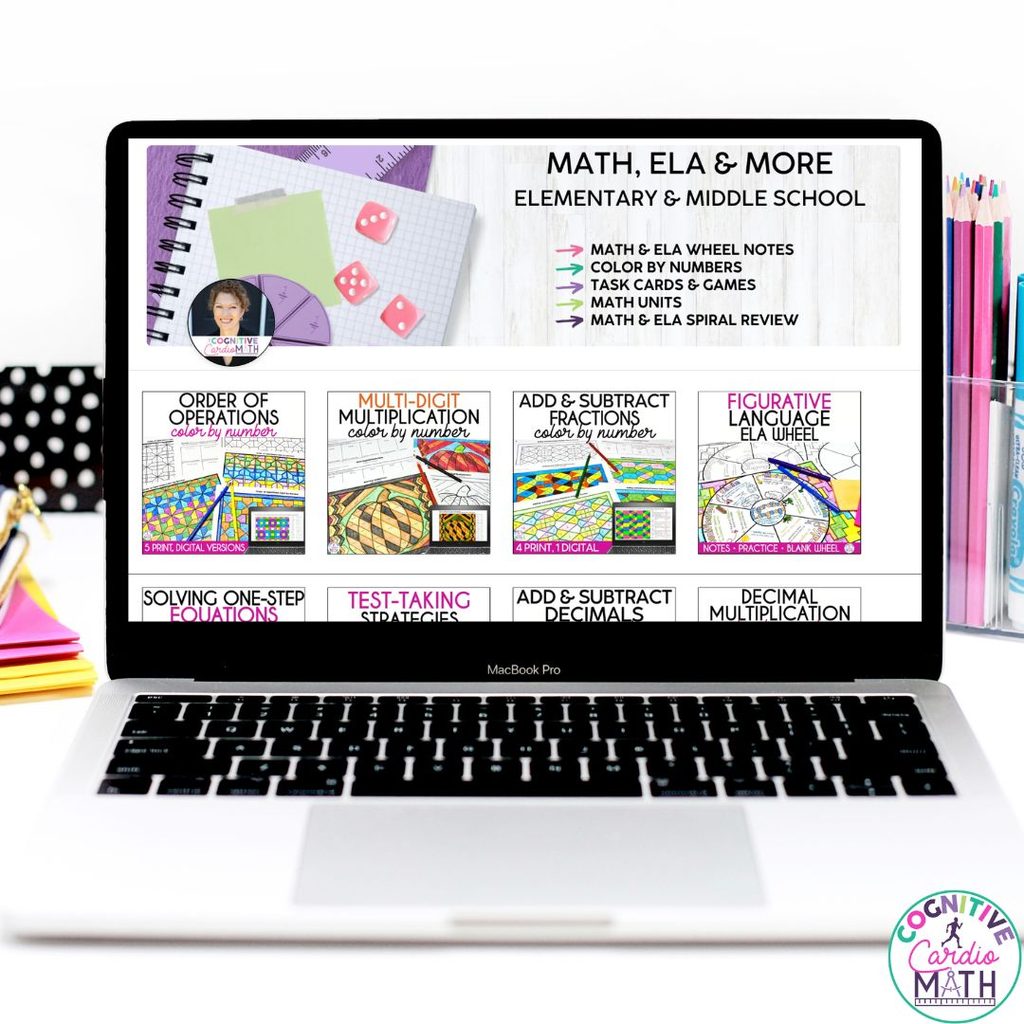
These Halloween math resources give you several ways to keep your students working on meaningful skills. Choose the activity that matches what your students are learning, and you have practice ready without changing your plans.
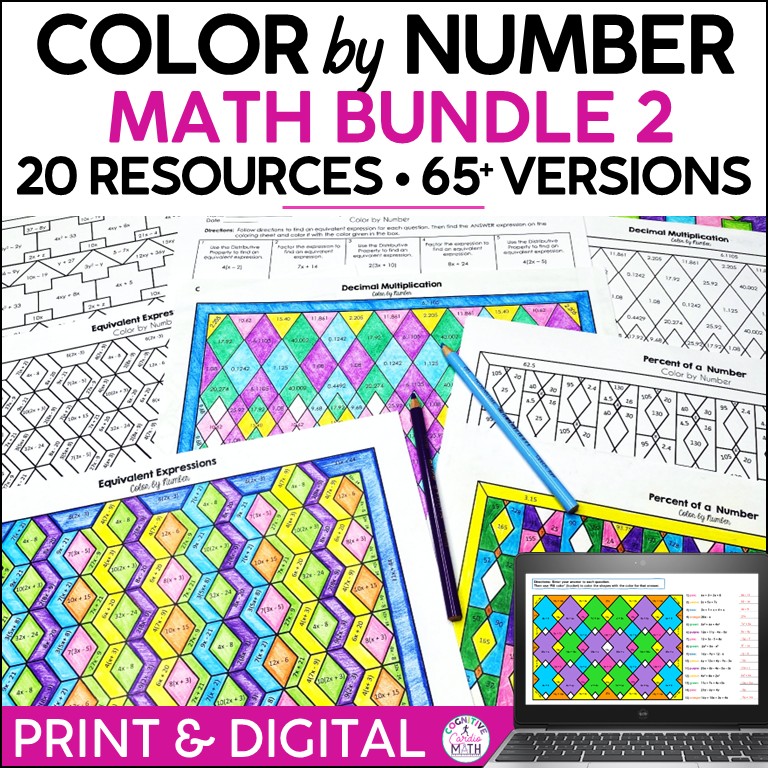
If you like the color by number Halloween math activities or Footloose task cards, visit my TPT shop for even more options. You can find these same activity styles for many other math topics you will teach throughout the year. That makes it easy to use a format your students already know while changing the math skills they practice.
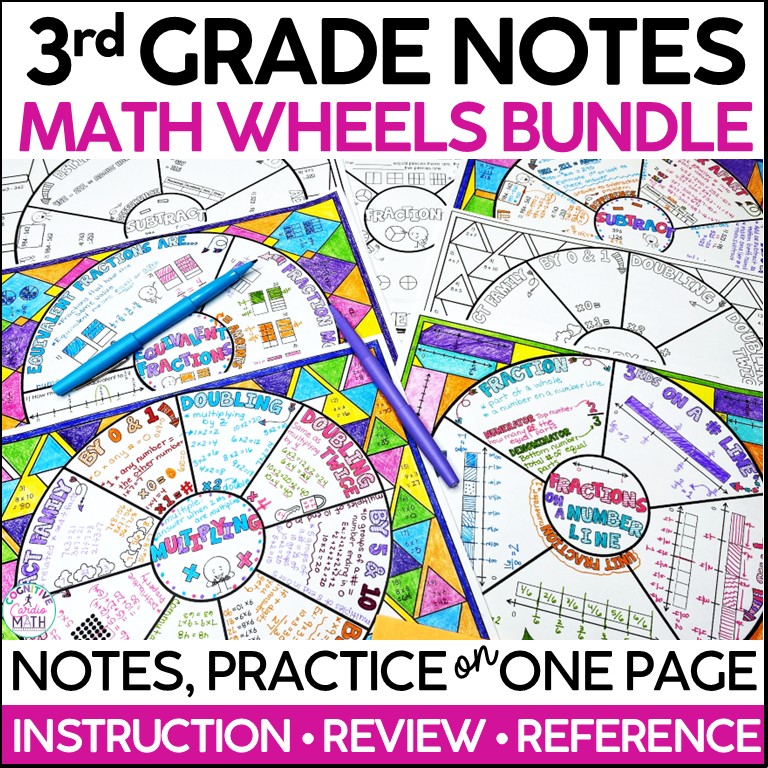
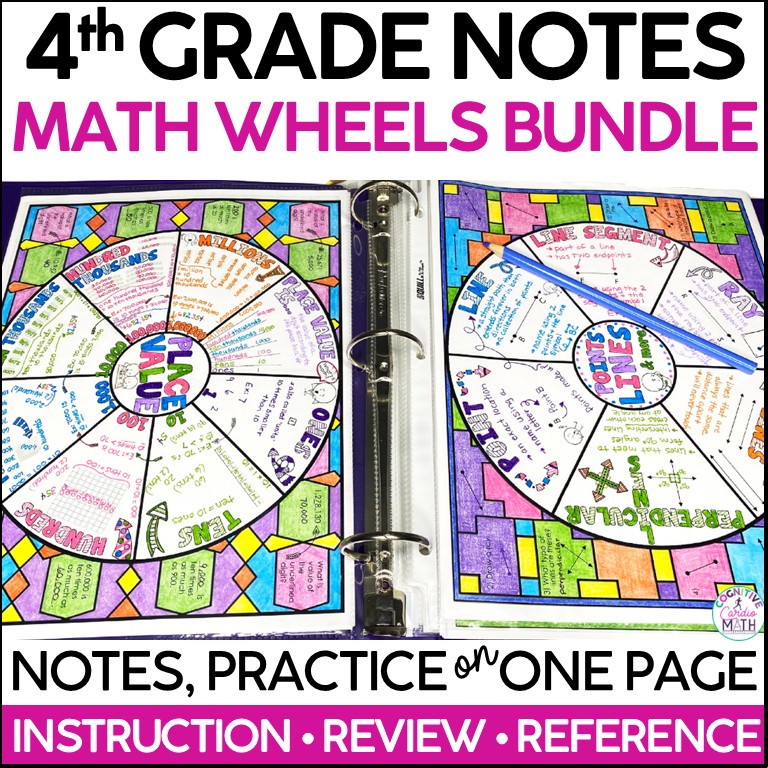
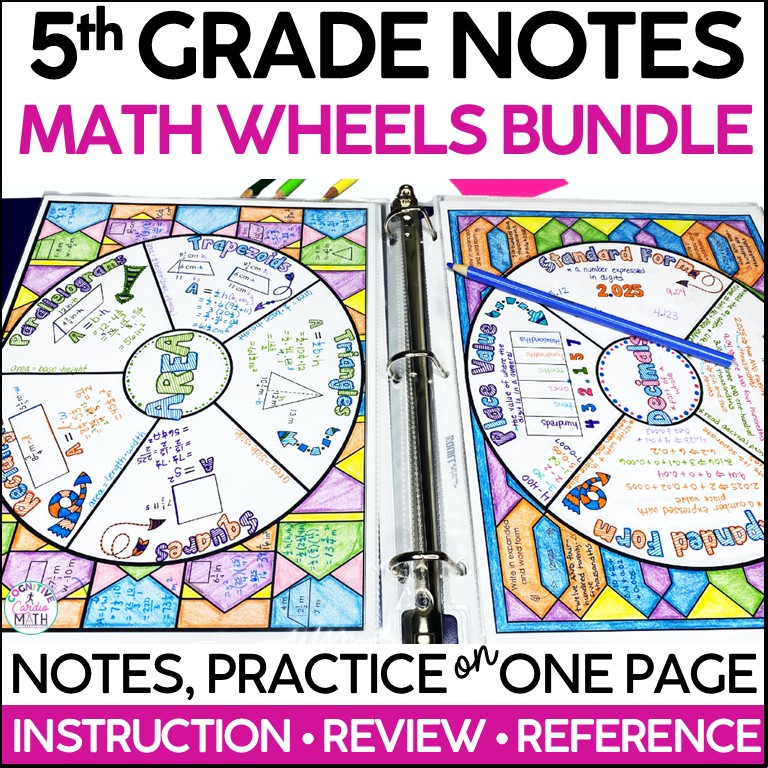
You will also find complete math units, Math Doodle Wheels for visual note-taking, and Truth or Dare task cards in my shop. These resources can help you introduce new skills, provide additional practice, and review concepts throughout your units. Explore my TPT shop to find resources that make planning easier and math more approachable for your learners.
Save These Halloween Math Ideas for Later
Save this post to your favorite math Pinterest board so these Halloween math ideas are easy to find in October. When Halloween excitement starts building, you will already have activities ready for your math class.